Last updated on November 6, 2026 by Shannon

There’s usually no reason to sell someone on a trip to Thailand—it has a strong tourism industry and a reputation as the gateway to Southeast Asia. Its positive reputation is rightfully earned; Thailand has a beautiful, welcoming culture. And let’s not even get started on the tasty food.
That’s not to say that it’s not complex too. It’s the country’s contradictions and accessibility that keeps tourists (myself included) coming back to Thailand time and again. Thai cultural norms are complex, and with a vastly different language than English, there’s a lot under the surface that you’ll need time to even begin uncovering.

I lived in Thailand for about a year total, and I spent most of that time in the north. Even in that time, I missed doing, seeing, and learning so many things. Thailand is one of my favorite spots in Southeast Asia precisely because of its developed tourism infrastructure, as well as the huge community of expats. There’s also a lot of NGOs at work; there are volunteer and socially responsible travel options.
Many travelers use Thailand as a base—or at least a starting point—for backpacking Southeast Asia. This works well because it has solid internet, great accommodation, good food, and it’s has well-connected transportation options (flights, buses, and trains) to nearby countries.
Either read on for more things you should know before you go, or jump straight to city and regional guides for Thailand.
Is Thailand Safe for Travelers?

Thailand is a safe for all types of backpackers and travelers—violent crime against tourists is rare. I felt safe traveling Thailand as a solo female traveler, and as a family traveler when I backpacked for seven months with my niece.
Southeast Asia, on the whole, is a safe region of the world for backpackers and travelers. It’s actually one of the first places I recommend for solo and new travelers. Thailand has the most developed tourism network in the region and is usually the hub for backpacking trips in SEA.
You will need to exercise a normal amount of caution, however. Opportunistic crimes like theft and pickpocketing happen if you’re not cautious (and can even befall the vigilant). There are also scams a fair few scams scattered across the country, usually in places tourists congregate like Bangkok, border crossings, and the Thai islands.
One more thing worth taking seriously: Thailand’s political situation is genuinely complex, and even expats who’ve lived here for years don’t always track the nuances as the political climate shifts every few years. For tourists, the safest move is to steer clear of political discussions entirely. Ancient politics are fair game to study given their role in the country’s archaeological sites, but be wary of offering opinions on protests, the monarchy, the government, or political parties. I don’t say this lightly—you can face jail time here for comments or actions that would be unremarkable at home (handing out political leaflets, speaking against the government) if they’re perceived as sedition.
Traffic accidents are the biggest threat to your safety in Thailand, not crime. Anything can happen on the road, particularly since many travelers rent motorbikes. You should only rent a motorbike if you’re already licensed to drive one in your home country, and if you’re comfortable driving on the left, in an environment where lanes and dividers are suggestions, not rules.
I believe every traveler needs a good insurance policy. I like IMG Global for most travelers, and SafetyWing for digital nomads and those traveling long-term; for a full review, these are my top tips for picking a good travel insurance.

Fast Facts About Thailand Travel
Thailand uses the Baht (THB) (current exchange rate), and electricity is 220V/50Hz, with outlets taking both North American-style flat prongs and two-prong round plugs. The main airports are Bangkok’s Suvarnabhumi (BKK), Chiang Mai (CNX), and Phuket (HKT).
Is the water safe to drink in Thailand?
The water is not safe to drink in Thailand. But the water served at restaurants in jugs is always filtered. Especially in rural areas, use a SteriPen or LifeStraw if you can’t drink bottled water.
How is the wifi in Thailand?
Thai internet is reliable and downright speedy in some areas. It’s not the fastest in others, but it always works, and most cities can promise good uptime too.
If your hotel internet doesn’t work, then you can guaranteed find a dozen or more cafes or coworking spots in the city with good speeds and tasty coffee. Nomadic Notes has a fantastic collection of wifi-friendly cafes across many cities in Southeast Asia.
You’ll need a VPN if you plan to access many U.S. sites and to stream U.S. Netflix. A VPN is also crucial for those working from abroad since many U.S. sites either IP block or serve an international version of their sites. I’ve used NordVPN since 2016 while living abroad and it’s never failed me once.
Thai Festivals of Note

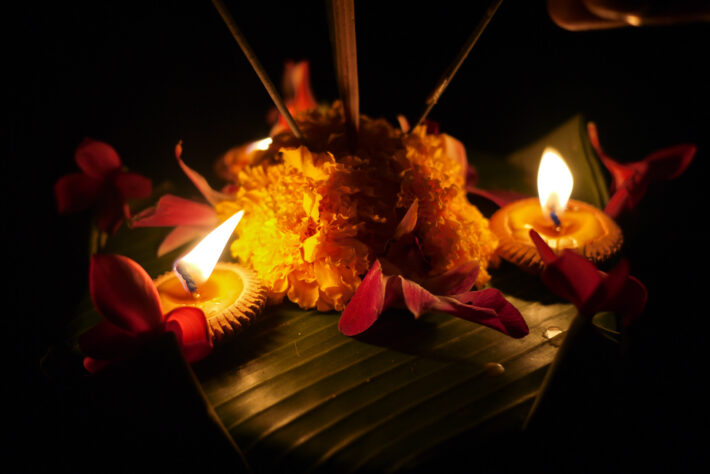
- Loy Krathong in Chiang Mai in the late fall is remarkable
- Bo Sang Umbrella Festival, Chiang Mai (January)
- The Chiang Mai Flower Festival (February)
- Songkran Water Festival (April)
- Hua Hin Jazz Festival (June)
- Vegetarian Festival, Phuket & Bangkok (September/October)
Food Considerations

Thailand has amazing food options for travelers of every ilk. You can find vegetarian food pretty easily with just a few words under your belt. If you’re a meat-eater, Mark’s site is about the best guide possible for eating in Thailand.
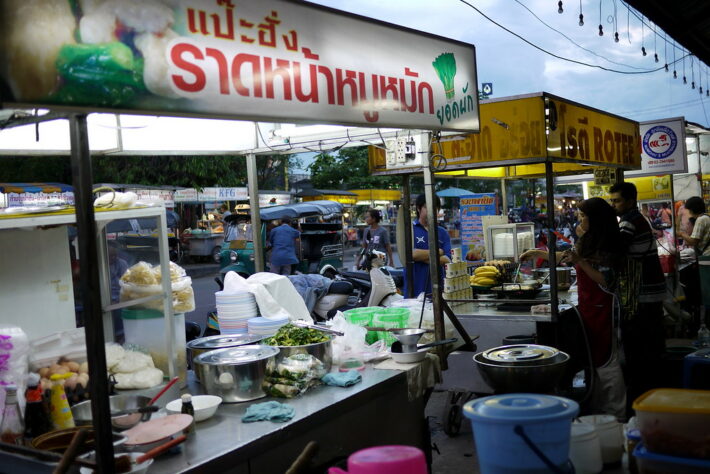
Street food is everywhere in Thailand—carts of fruit, meat, curry, and desserts in just about every city and village. The trick to finding the best of it is the same trick that works anywhere: eat where the locals eat, both for flavor and for food safety. Pull up a tiny plastic stool, check out a shopping mall food court (some are surprisingly good, if a little pricier), and pick up snacks from a fresh market. Don’t skip the street food markets anywhere, but Bangkok and Chiang Mai have the most vibrant ones.
The individual city guides have additional restaurant recommendations for vegetarian travelers.
Local SIM Cards
Getting service for your phone is a cinch, and it’s cheap to boot. Read this SIM card guide for tips on how to get one, how to top up, and what that whole process will look like. You might also need a VPN on your phone, so consider one like NordVPN, which works on your phone.
Accommodation
When you’re in Southeast Asia, Agoda is pretty much the best booking site. While it lists accommodation around the world, its coverage and reviews are best in SEA.
Although I use Agoda for a lot of my bookings, Booking.com is a solid backup of options and reviews. You could also use Hostelworld—though I only stay in hostels in the larger cities as my budget accommodation. If you need some more help on navigating where to stay each night, check out my detailed guide to finding good places to stay.
Best Time to Visit Thailand
Cool season (November–February) is the best all-around window—dry, and the only stretch it’s comfortably cool in the north. March–May is hot season, and April is brutal almost everywhere; avoid it if you can. June–October is the rainy season for most of the mainland and the west-coast islands (Phuket, Krabi), with showers that are usually short but heavy. One thing that trips people up: the Gulf islands—Koh Samui, Koh Phangan, Koh Tao—run on the opposite pattern, with their wettest stretch in October–November instead. If Samui’s on your list, don’t assume late autumn is safe just because it’s dry everywhere else.
How Long You Need in Thailand
A week covers Bangkok plus one add-on—Chiang Mai or a couple of island days—without rushing. Two weeks lets you do Bangkok, the north (Chiang Mai and Chiang Rai), and a few days on an island. Three weeks or more is what it actually takes to cover north, central, and south without the trip becoming mostly transit days—Thailand’s distances are bigger than they look on a map.
Thailand Visas
Entry rules changed significantly in September 2026, so ignore anything written before then, including older versions of this guide. Most US, UK, and EU travelers get 30 days visa-free just by showing up, with one 30-day extension available at an immigration office once you’re there—60 days total, capped at two entries per calendar year for most nationalities. If you want a longer single stay, apply in advance for the e-Visa at thaievisa.go.th for 60 days, extendable to 90.
This is a real tightening from the 60-day exemption many guides still describe—far more countries lost visa-on-arrival eligibility than kept it. Always confirm your own nationality’s current rules directly: the Royal Thai Embassy’s visa exemption & VOA page, or the official e-Visa portal.


How much should you budget for Thailand travel?
Once you are on the ground (so excluding flights), backpackers seem to universally average about USD $30 a day, this is both as solo and couple travelers. Each day fluctuates a bit. It’s cheaper in the north compared to the Thai islands, but overall the bare basic budget if you plan to travel around is about $30. That’s if you’re truly going backpacker style.
You can get a lot of bang for your buck on about $40-50 per day average. This means some nicer digs (perhaps with A/C), and definitely if you plan to eat more than street food every day. If you’re looking to make Thailand a base, here’s a detailed look at the cost of living.
Possible Travel Issues
Be very aware of the scams in Bangkok, there are many and the scams primarily center on the tourist areas of town. Please, please read up on these: here and here. Even experienced travelers have fallen victim to these scams.
How to Get Around Thailand

Thailand has a well-developed transportation infrastructure. If you want to get somewhere, you can be sure there’s a way to do it on public transport. There is a network of trains (these are the slowest transport option, but cheap), and an extensive network of long-distances buses that rocket out into every corner of the country.
Within the cities, you can take buses, taxi, songthaew (shared public truck-taxis), and tuk-tuks. That being said, traffic accidents are a major problem and have a high fatality rate. Be careful, particularly if you are renting a motorbike and are not familiar with the road customs. Grab (which replaced Uber across Southeast Asia back in 2018) works well in the big cities for rides, food, and motorbike taxis.
I have an extensive page dedicated to transportation in Thailand, covering how to get around to major cities and sights, as well as onward travel to other places in Southeast Asia.
And Bookaway shares the best specifics on exactly which types of transportation are available between two cities in Thailand, so you can figure out if you need to fly, bus, or take the train.
History to Know Before Traveling to Thailand
Thailand remains the only Southeast Asian country never colonized; visiting the country provides a distinct and interesting contrast to the French-influenced Laos and the British-influenced Burma. The country’s tourism industry thrives and it’s a unique spot in the region.
Travelers visiting Southeast Asia have a long and complex history to unravel on their trip. The countries of China, Thailand, Cambodia, Myanmar, and Laos are not only neighbors, but the cultures culturally and politically mixed throughout the centuries. The history of Thailand is long; earliest inhabitants date back to 3,000 BC. The history pressing on the current Kingdom of Thailand, however, dates back to about the 13th century.
In the 13th century, modern-day Thailand established sovereignty from the Khmer Empire, the culture of which is still present in modern-day Cambodia. Over the next few centuries, Thailand would see the rise and fall of several Kingdoms—the remains of this history is still in evidence—including the Kingdoms of Sukhothai and Ayutthaya.
The Burmese destroyed Ayutthaya in the late 1700s, and this is also about the time Europeans began claiming pieces of Southeast Asia. Thailand remains the only Southeast Asian country never colonized, so it’s a distinct and interesting contrast to the French-influenced Laos and the British-influenced Myanmar. Power changed hands many times over the next few centuries, shifting with military and monarchy influences.


In 1946, King Bhumibol—the long-reigning and much beloved king—started his reign. He would remain king for 70 years, one of the longest reigns in history. His passing in late 2016 brought Thailand a year of mourning; his son, King Vajiralongkorn, has now reigned for nearly a decade.
The political situation in Thailand is very complex, and even expats living in the country for years barely understand the nuances that shift and change the political climate every few years. For tourists, it’s best to steer clear of political discussions. Ancient politics are up for study because of the impact on the beautiful archaeological sites, but be wary of offering opinions on any protests, on the monarchy, on the government, or on the political parties.
Read a deeper overview of Thailand’s history, or check out the long-reads below for interesting perspectives on this fascinating country.
travel tip
World Travel Planning Resources
From the best travel gear to how to pick travel insurance—a detailed list of resources, tips, and advice to help you plan an amazing trip.
Pre-Trip Reading Inspiration: Books About Thailand

Fiction & Nonfiction Books About Thailand:
- Mai Pen Rai Means Never Mind: A classic book to read before you go, this is a fun and light account of a 60s housewife who moved to Thailand and experienced the people and culture before tourism boomed. Her insight has endured time and is a delightful read.
- Sightseeing: Thailand is a land between two worlds: the one tourists see, and the nation facing economic and societal issues. This book looks at both sides in a way that is thoughtful and interesting. The short story format is ideal for bringing it with you and reading as you travel.
- Bangkok 8: A Royal Thai Detective Novel: This fiction book is a favorite of many because it’s a snappy, well-paced whodunit that shares a lot about the seedy underside of Bangkok. If you’re more keen on nonfiction though, Thailand Confidential is similarly fast-paced and looks at a similar aspect of Thai culture.
Podcasts and Online Reads:
- The Worst Party in Asia: The Full Moon Party on Koh Phangan is well-established legend down in the Thai islands. This spot starts of a party scene that runs across SEA for many backpackers, but there’s a darker side to it. Please read this piece before heading that way. (Roads & Kingdoms is still publishing, but this older piece now sits behind their membership paywall.)
- Trafficked into Slavery on Thai Trawlers to Catch Food for Prawns: The relationship between Thailand and Burma (Myanmar) is complicated, and this piece touches on not only that, but a side of the global fishing industry’s impact on Thailand that lies just under the surface.
travel tip
Recommended Guidebook
National Geographic Traveler Thailand is the best guide to plan your route and itinerary. Although the food and transport recs are now out of day, the NatGeo guide has a beautiful focus on the culture and activities in Thailand.
If you want an up-to-date option, I have used and enjoyed the Lonely Planet Thailand. I also have a full page on Thailand transportation to get familiar with your options.


Socially Responsible Travel in Thailand
Let’s talk about socially responsible travel in Thailand, as well as the greater opportunities in SEA. This topic has many layers. From volunteering to donating to beggars to choosing ethical activities. It’s a complex situation. Animal tourism has a dark side, and responsible travelers should research alternatives.
Also, for more general rules of responsible travel, try out these responsible travel tips to lessen your impact on the places you visit. I also suggest that all travelers read this post on giving to child beggars; you will face this conundrum, so best to be prepared.
Let’s jump into things you might want to do in Thailand, as well as alternatives that are just as fun! And at the end are tips for responsible volunteering.
Riding an elephant.

If you’ve long dreamed of riding one of these majestic creatures, you should read up on their treatment and what it takes to actually break an elephant’s will enough for it to perform tricks. It’s a sad industry, and in SEA, this industry grew alongside Thailand’s booming tourism industry.
Traditionally, the Thai’s used elephants for hard labor, to help clear land and forests. Now they make more money from tourism, however, and this has led to a cycle of overworked and abused animals. On the flip side of the debate: Feeding an elephant costs a lot, and tourism (including rides) help the mahouts afford to properly care for their elephant. It’s a complex, complicated issue.
There are options though! Skip any Thailand travel guides that recommend riding elephants. Several elephant sanctuaries in Thailand and Cambodia offer responsible traveler-elephant interactions. Travelers love the responsible experience. They are doing wonderful work to give these elephants a home and a peaceful life. Check out the Save Elephants Foundation to plan your trip.
Hugging a tiger.

Skip any venue in Thailand that lets you touch, feed, or pose with tigers. Cubs used for photos are taken from their mothers early, and adults are often sedated or declawed to make them safe to handle. Animal-welfare groups, including World Animal Protection, list Thailand’s tiger-selfie venues among the worst wildlife attractions in the world.
The most infamous, the Tiger Temple near Kanchanaburi, was shut down in 2016 after a National Geographic investigation into tiger trafficking; authorities found dozens of dead cubs in freezers when they removed the animals.
I visited Tiger Kingdom near Chiang Mai in 2011, and at the time it seemed better run than the Tiger Temple. I wouldn’t go now. It’s still built around handling tigers for photos, which is exactly the model welfare groups have documented as harmful, and there’s no real conservation or education behind it.
Research the issues before you book a trip so you know where you stand on the situation of visiting wild animals in captivity.
Engaging in human tourism.

The two most notable and touristy instances of this are the Karen Padaung Village visits in the north, and the Ping Pong Shows in Bangkok, Phuket, and other areas.
The Karen villagers are the women with the rings around their necks. It’s beautiful, but it’s shady business to spend your money there. They are Burmese refugees and they’re stuck in Thailand as a living zoo for tourists to come take photos. There are treks through hill tribe villages, homestays—there are alternatives to a packaged tour to visit these women.
For the ping-pong shows, this region is plagued by sex trafficking, and by all accounts shows like these—and tourism demand—stoke the situation further.
Volunteering with an NGO in Thailand.
Many travelers are keen to volunteer or support responsible businesses. There are a lot of NGOs and opportunities for this type of travel. But not all are doing great work. Consider this list of vetted independent volunteer opportunities in Thailand.
Supporting responsible businesses.
Consider using some of these Thai social enterprises on your trip. Supporting social enterprises is one of the easiest ways to create a trip with positive impact. This means picking businesses that are using funds to support local communities and to offer training, support, or to protect natural resources. You can do everything from get a massage or pick a trekking guide—all with companies committed to social impact.
Visa Extensions & Border Runs

A frequent question: how do you stay longer than the standard visa-exempt window? As of September 2026, the options look different than they did even a year or two ago—several of the old workarounds, including the six-month double-entry visa and casual back-to-back border runs, no longer work the way they used to.
Longer stays: the standard Tourist Visa
If you want more than 30 or 60 days in one go, apply for a standard Tourist Visa (TR) before you travel, through Thailand’s official e-Visa portal. It’s valid for 60 days and extendable once for 30 more at an immigration office, for 90 days total. Multiple-entry tourist visas and long-stay routes (retirement, education, marriage, work) still exist but have their own financial and documentation requirements that vary by consulate—check with a Thai embassy before building a trip around one.
Border runs, updated
The classic move—getting stamped out of Thailand and walking straight back in to reset your visa-exempt clock—is far less reliable than it used to be. Most nationalities are now capped at two entries per calendar year under the visa-exemption scheme, so a string of weekend hops to Laos or Malaysia isn’t a real long-term strategy anymore (and the land border with Cambodia has been closed to travelers since June 2025). Plan the actual visa you need around how long you’re staying, rather than planning to extend-by-leaving.
Whatever route you take, they’ll mark the date you must leave on every entry or extension—miss it and you’re fined, and it can complicate getting a longer visa later. Rules here shift more often than almost anywhere else in Southeast Asia, so double-check current requirements directly—the Royal Thai Embassy’s visa exemption & VOA page or the official e-Visa portal—rather than a blog, including this one.
These visas are only intended for tourism, so you can only receive a certain number of them in your passport. If you plan to live in Thailand, you have a whole other set of issues to consider if you are using a tourist visa. They likely won’t issue more than two or three visas before assuming you are living there illegally. At this point they will not issue your passport another long-term visa. But if you’re simply on a sabbatical, then you’re golden.
There are also specific visas you can get that let you work and study legally. Student visas are possible if you are studying Thai language. English language teachers can often obtain a work permit. Retirees need to meet age and income requirements. All of these details can change at any moment. While I do my best to make sure this information is accurate, I suggest you check the ThaiVisa Forums for the latest information, and for other answers to common questions.

Thailand Transportation Basics
Although we have an entire page dedicated to transportation in Thailand, if you’re exploring the most popular areas—Chiang Mai, Bangkok, etc—then use the quick guide below to plan how you can navigate the country both overland, and by air. These are the most popular routes and methods of transport for backpacking Thailand.
If you’re planning a backpacking trip to Southeast Asia there is a good chance you will start in Thailand, arriving via Bangkok’s Suvarnabhumi Airport. Located around 30km (19 miles) from the city centre, there are a couple ways to choose from for getting into the city centre: airport shuttle bus, taxi, or the Airport Link train.

What is the best way to get from BKK to the city?
- Staying near Khao San Road? Take the airport shuttle bus.
- Staying near Sukhumvit or anywhere in the city center? Take the Airport Link train or a private taxi.
How to Get From Bangkok to Other Thai Destinations
Thailand’s transportation infrastructure is well-developed and you can check all of your specific route options on Bookaway. There is a network of trains (these are the slowest transport option, but often cheaper), an extensive network of long-distances buses that rocket out into every corner of the country, and several budget airlines making travel north or to the islands in the south a quick and relatively painless (and often quite cheap if you travel carry-on only, especially).
Fares below are approximate—they shift with season, fuel surcharges, and promotions, so treat them as a planning range, not a quote. For live pricing, book trains directly through the State Railway of Thailand’s own system, D-Ticket, or compare all three modes at once on Bookaway.
| From Bangkok to | By Train | By Bus | By Flight |
|---|---|---|---|
| Chiang Mai | From 641 THB (2nd class, day train); overnight sleepers 791–1,041 THB | Overnight tourist bus 300–500 THB (theft is a known risk on this route—keep valuables on you); VIP bus 600–900 THB from Mo Chit, book in person | AirAsia from 830 THB, Nok Air from 899 THB, Bangkok Airways from 1,200 THB (via BKK) |
| Ayutthaya | ~20 THB, 3rd class, from Hualamphong | Van, ~240 THB | — |
| Sukhothai | — | From 346 THB, from Mo Chit | — |
| Hua Hin | Train 43, 102 THB | Van from Ekkamai BTS, ~180 THB | — |
| Phuket | Train 43, 230 THB | VIP bus from Southern Bus Terminal, ~643 THB | AirAsia 950 THB, Nok Air 799 THB, Bangkok Airways 1,390 THB |
| Krabi | Train 43 toward Surat Thani, 279 THB | VIP bus from Southern Bus Terminal, ~643 THB | AirAsia 950 THB, Nok Air 799 THB, Bangkok Airways 1,490 THB |
| Koh Samui | Train to Surat Thani (248 THB) + bus/taxi + ferry (~400 THB) | — | Fly-plus-ferry package: AirAsia ~1,540 THB, Nok Air ~1,599 THB |
One thing to remember with taking the train is that they rarely run on time. It is common for your train to leave later than scheduled so bring snacks, water, and a good book or something to entertain yourself.

Most budget flights go through Don Mueang Airport (DMK), which can get busy—arrive early. The main carriers out of DMK are Air Asia and Nok Air. Bangkok Airways flies a similar network out of Suvarnabhumi (BKK) instead.
It is important to remember that budget airlines often have extra fees for seat selection, checked baggage, and so on. Always read the rules carefully before you book your flight so you are not surprised by extra fees at the airport.
Once you’re on the ground in a new city, you can use some of the fun types of local transportation, from canal taxis to songthaews to tuk-tuks—here’s everything you should know before using local transportation, including possible scams and how to glad down ones going in the right direction!
Don’t forget to book travel insurance for your trip—a great policy provides coverage in case of medical emergencies, lost or stolen gear, adventure sports riders, and more. I’ve used IMG Global for more than a decade highly recommend it!
Best Things to Do in Thailand
My Favorite Experiences in Thailand
- Mowing down on vegetarian street eats perched on a tiny stool and chatting with friends.
- Cheap massages at the Sunday Night Market in Chiang Mai.
- Interacting with the elephants at the Elephant Nature Park near Chiang Mai.
- Watching the beautiful lantern and krathong release at Loy Krathong and Yi Peng.
- Volunteering to help Burmese refugees seeking higher education.
I’ve split the city-by-city breakdown (Chiang Mai, Chiang Rai, Bangkok, Ayutthaya and Sukhothai, and the islands) into its own post so this page stays focused on planning: Best Things to Do in Thailand.
Onward Travel
Having spent years backpacking Southeast Asia across many trips, here’s how you should plan your time in the following locations.
Thailand » Chiang Mai | Digital Nomad Costs | Elephant Tourism | Loy Krathong | Songkran | Bo Sang | Transportation, Explained | Fun Facts
Vietnam » Hoi An | Eating Vegetarian
Laos » Luang Prabang | Gibbon Experience | Mekong River | Kuang Si Waterfalls | Pak Ou Caves | Vang Vieng
Cambodia » Angkor Wat | Apsara Dancing
Myanmar » Bagan | Inle Lake | Yangon | Hpa-An | Eating Vegetarian | Spirituality | Burmese Hospitality
Thailand Travel Guide: Best Stories from the Blog
I spent many months across several years traveling and enjoying all that Thailand has to offer. Each travel story was written live on my travel blog as I traveled through the region. Within these posts you’ll find detailed guides and stories about cultural quirks, fun activities, and things I enjoyed doing in every area.