Last updated on November 5, 2026 by Shannon

Jutting from the eastern edge of Mexico, the Yucatán Peninsula is a popular tourism gateway to Mexico. This region has an extensive tourism infrastructure, all spiraling outward from Cancún. Although Cancún has sticky connotations as a party destination for spring breakers—and it has an overpriced, glitzy hotel zone—the city is merely the starting point to one of my favorite regions in Mexico.
The Yucatán Peninsula is safe from the cartel violence associated with other Mexican States, and it’s home to some of the country’s richest history and most gorgeous landscapes (cenotes, anyone?!).

The area houses arguably the best preserved Maya ruins, internationally acclaimed dive and snorkeling sites, gorgeous Spanish colonial cities dripping in history, locally run cooperativos offering responsible tourism projects, and densely inhabited animal biosphere reserves.
Why I Traveled the Yucatan
The Yucatán Peninsula is, in a word, wonderful. I’ve traveled this area several times, most recently with my two young nephews (10 and 11) for a month-long road trip around the Yucatán Peninsula. This is an overview of our route—combined with my knowledge from previous trips—and all the nitty-gritty details of things to do, places to stop, what to eat, and more.
Although you might change-up the activities if you’re a couple or solo traveler, the route is solid and would make a wonderful two- to three-week trip. Read on for the city guides and personal recommendations for this fascinating region of Mexico.
Fast Facts About Yucatan, Mexico Travel

Currency, Electricity & Airports
Mexico uses the peso (MXN)—check the current exchange rate before you go. Electricity runs 127V/60Hz on the same plug as the U.S. The three main airports serving the region are Cancún (CUN), Cozumel (CZM), and Mérida (MID).
How’s the internet in the Yucatan?
WiFi is rampant all over the Yucatan peninsula. It’s available at most guesthouses and cafes.
Can you drink the water in the Yucatan?
No, it’s not safe to drink the water. Drink bottled, use a reusable water bottle to refill at guesthouses, or use a SteriPen.

Mexico Visas for Americans
Visas for Americans—and most travelers—are pretty easy, but don’t assume you’ll automatically get the full six months. The FMM tourist permit allows up to 180 days, but that’s a maximum, not a default: immigration officers decide the length based on your stated plans, and in 2026 travelers have reported getting anywhere from 10 days to the full 180. A clear return flight and itinerary helps your case. At several major airports you’ll now go through an automated e-gate and receive a digital FMM via QR code rather than a passport stamp. Other nationalities can check official requirements directly from Mexico’s Secretaría de Relaciones Exteriores here.
Food Considerations
Food standards are high in this area as tourism is the primary income for many. The water is not safe to drink, but bottled water is easy to come by. Street food can be scarce in touristy areas, but is tasty and delicious. If you decide to stick to budget and street food options, follow these food safety principles.
Local SIM Cards
Securing a local SIM card is a cinch and highly recommended for GPS and navigating. Telcel is likely your best option, and if you have a U.S. T-Mobile account, it will do the trick too—note that you will likely need to show your passport to register a new SIM.

Accommodation
This is a cinch. I used a Lonely Planet guide when my nephews and I were in a pinch. While the links in city guides below go to a my preferred hotel booking site, many are also found on VRBO, if you are member. It has a very established presence in this region of Mexico and is an easy way to book nice spots in a good area of town, while getting out of the hotel scene. I don’t use this as often when I am solo, so it was neat to have a reason to pick some great local apartments for my nephews and me.
For backpackers, the main hotel booking sites now usually list hostels, too (with no booking fees), or use Hostelworld; in high season the bigger towns book up fast. Families should consider Booking.com.
And if you buy a local SIM (which you should), you can easily call ahead and directly reserve spots en route. If none of these will do, check out my detailed guide to finding good places to stay.
Festivals of Note
- Semana Santa (Easter)
- Cinco de Mayo (May)
- Day of the Dead (November)
- Festival of San Cristóbal, Mérida (December)
How to Travel Around the Yucatan
The major roads are well-maintained and connect most any place you’ll need to go. In the center of the Yucatán, some of the cenotes are a bit further off the path and visiting them means winding through tiny towns and backroads. Otherwise, large and well-paved highways connect the major cities.
The Ado bus network is extensive and ideal for those on a budget. These buses are large, comfortable, and affordable. You can check routes and prices through Bookaway to figure out bus versus shuttle pricing.
Rental cars are easy to come by, though expensive to rent—they tack on huge fees and taxes to the offered price. Here is the lowdown on everything you need to know about renting a car in Mexico—I used RentalCars.com for my car and got about the best deal you can in Mexico.
travel tip
World Travel Planning Resources
From the best travel gear to how to pick travel insurance—a detailed list of resources, tips, and advice to help you plan an amazing trip.
Is the Yucatan Peninsula safe for travelers?

The Yucatan Peninsula is one of the safest areas of Mexico, though that doesn’t mean its unequivocally safe. In general, the Yucatan is safe to travel—that’s why I chose to travel there with my two young nephews.
Though large swaths of Mexico suffer from cartel violence and safety concerns, the Yucatán has a thriving tourism industry and it works hard to preserve it. It’s worth knowing the region isn’t one uniform safety picture: Yucatán and Campeche states both carry the U.S. State Department’s lowest advisory level (Level 1, “Exercise Normal Precautions”), while Quintana Roo—where Cancun, Playa del Carmen, Tulum, and Cozumel all sit—carries Level 2, “Exercise Increased Caution,” due to occasional organized-crime violence that has affected bystanders in tourist areas. Mexico deployed thousands of extra troops and police to Quintana Roo’s tourist zones for the 2025 high season, which tells you the concern is real but also actively managed. In general, the major physical safety concerns you find elsewhere in Mexico are dramatically lower here—just don’t assume every part of “the Yucatan” carries the same risk level.
And note that the small bribes of the sort that works elsewhere in Mexico are iffier here. Best to just drive the speed limit and follow the laws.


Don’t forget to book travel insurance for your trip—a great policy provides coverage in case of medical emergencies, lost or stolen gear, adventure sports riders, and more. I’ve used IMG Global for more than a decade highly recommend it!
History to Know Before Traveling to Mexico’s Yucatan
Maya history is a major draw for tourism. Stunning architecture and reliefs carved into the stone temples bring to life a fascinating, violent, and advanced ancient culture that managed to develop the only known pre-Columbian writing system in the Americas.
Much of the land in the Yucatán Peninsula was once the Maya lowlands. The Maya empire dates back as far as 2400 BC and spanned throughout present-day Guatemala, Honduras, and Southern Mexico.
Throughout the large sweep of land lies a vast network of massive temples and ancient cities; only a small part of the these ruins have been excavated, many still lie under the tangle of forest.

Several famous Maya archaeological sites are within the Yucatán, Riviera Maya, and Chiapas regions, including Chichén Itzá and Tulum—among the best places to see that architecture and writing system up close.
Present day, the Yucatán’s unique limestone base gives the area one of its most famous draws: the beautiful sinkholes and underwater rivers. The Maya used these sinkholes, known as cenotes, for sacrificial offerings, but today they dot the entire region and offer travelers the chance to cool off in the crystal-blue waters. Because of this region’s limestone base, rivers are mostly underground and they connect a large network of caves and swimming spots.
The History Channel has a fuller history of the Yucatán detailed here, and more about the Maya civilization here.
Pre-Trip Reading Inspiration: Books About Mexico

Fiction and Nonfiction Books About Mexico
- The People’s Guide to Mexico: Even veteran Mexico travelers will enjoy this book. It’s like a guidebook, but even more. It’s hands-down the best guidebook you should use to understand the various regions, the cultural quirks, and all the reasons Mexico is a fantastic place to travel and live. It comes highly recommended by me, and by heaps of Amazon reviewers too.
- Time Among the Maya: This is an in-depth longread about Maya culture, history backstory of the entire region. It’s likely something you want to read before leaving as it’s not a travel guide.
- The Maya Sites – Hidden Treasures of the Rainforest: This book is the perfect road-trip companion for anyone exploring the Yucatan, but also Maya sites in Campeche, Chiapas, and into Guatemala. It’s not a straight-up travel guide, but rather a companion you can use for a history and overview of the temples as you explore, as well as personal recommendations from the author of his favorite parts of each Maya site.
Best Podcasts and Online Reads About Mexico
- Mexico: History and Resistance: A solid podcast that makes listening to the country’s history easy. Download this and prep for your Mexico trip by taking a trip through time.
- Mexico with kids: Good niche read with a lot of facts and information you might be wondering about family specific travel.
Find more regional fiction and nonfiction books and long-reads and you can read all my Mexico travel stories.
travel tip
Recommended Guidebook
We used the Lonely Planet entire time and it was fun to let the kids read aloud the history of each section as we drove. Having a paper guidebook also allowed them to browse through and pick activities in the area. I recommend carrying a Lonely Planet for specific recs and routes and timetables.
Best Things to Do in the Yucatán Peninsula, Mexico

As noted, I took a road trip of the Yucatan Peninsula with my two nephews, and it was an epic adventure filled with all of the best activities that the Yucatan offers. I have also traveled the entire region solo as a backpacker on a budget, and it’s just a lot of fun no matter how you go about it.
The city guides below combine my advice across several trips—I’ve spent a lot of time exploring all of the best things to do, so it’s broken down by activities in each city/region. I also highlight those places where I stayed with my nephews, meaning they are family-friendly options!
My Favorite Travel Experiences in Mexico’s Yucatan Peninsula
- Wandering the charming cobblestone streets of Izamal.
- Feeding turtles at the Isla Mujeres turtle farm.
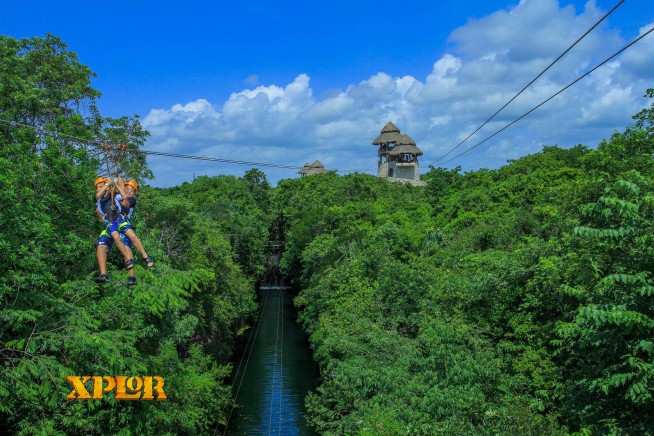
- Ziplining through Xplor Park in the Riviera Maya, near Playa del Carmen.
- Galloping down an old railroad track to the gorgeous cenotes in Cuzamá.
- Wandering the Maya ruins of Chichén Itzá and Ek Balam.
Things to Do in Cancun

Located on the northeastern coast of the Yucatan Peninsula, most trips will start in Cancun since it’s home to the main international airport in the Yucatan Peninsula. Cancun is also the easiest place to rent a car (I found a great deal for our road trip via RentalCars.com), or arrange buses to explore the region.
That being said, unless you’re into the party scene, you will likely just want to get in and out of Cancun. There are far better cities and towns to do most anything that Cancun has to offer. Let’s assume you have to stay a few days in Cancun, however. Here’s what to do in the city, as well as how to use Cancun’s amenities to prepare for your Yucatan road trip.
Immerse yourself in the turquoise waters of Playa Delfines.
Cancun is best known for its gorgeous beaches. Start your beach experience at Playa Delfines, one of the most picturesque stretches of sand in the area. It offers pristine waters and stunning views. Bask in the sun, take a refreshing dip, or simply relax with a book while enjoying the gentle breeze.
This is a good family-friendly beach if you have time to pass in the city. We spent an afternoon splashing in the waves here. The beach was clean, clear, and relatively shallow. It features good ood parking, and the kids enjoyed it. Note, however, that the waves are too strong for very tiny kids to safely play in the water.
If you want a livelier atmosphere, Playa Tortugas or Playa Chac Mool both have vibrant beach scenes. There you’ll find beach clubs, water sports activities, and beachside restaurants and bars.
Spend a night out on the town.
Alongside its beaches, Cancun is probably most well known for its thriving nightlife scene. There is no shortage of bars, nightclubs, and entertainment venues across the city. If this is your cup of tea, head to the Hotel Zone, where you’ll find a variety of lively nightclubs that host world-class DJs and offer a vibrant party atmosphere.
Alternatively, explore the downtown area to discover more intimate bars and lounges, where you can savor handcrafted cocktails and enjoy live music performances. Obviously this side of Cancun is not as kid-friendly. You can still enjoy the city at night as a family, but it’s more centered around good food.
Eat the streets in the Parque de las Palapas.
My nephews just loved spending our evenings in this parque, which was just a three minute walk from our hostel.
As the sun sets, the park transforms into a bustling hub of activity. This was the first place that I sampled enticing street foods during my first visit to Mexico back in 2010, and it’s where I always head each time I find myself in Cancun. This plaza features numerous stalls and vendors where you can indulge in mouthwatering tacos al pastor, crispy marquesitas, and flavorful esquites, while enjoying the live music.
Local cultural performances often take place here too, featuring traditional music, dance, and colorful costumes. It’s fun to find a comfortable spot to people-watch, observing the diverse crowd of locals and tourists who gather for leisurely walks and conversations.
Shop and eat at Mercado 28.
Head to Mercado 28 (Market 28) in downtown Cancun for street food stalls selling tacos, quesadillas, tamales, elotes, tortas, cochinita pibil, ceviche, and empanadas, all through the market’s maze-like corridors. It also doubles as the spot for souvenir shopping—handicrafts and traditional Mexican products alongside the food.
Stock up at Walmart.
Not gonna lie, we stayed in Cancun so briefly. We used it as a base to stock up for our trip with a case of water, snacks, snorkel gear, hats, and then we hit the road out-of-town. If you’re planning to road trip the Yucatan, then stopping at Walmart is a no-brainer since you can fill the car with snacks, water, and anything else you need to make the road trip fun and easy!
Sleep somewhere central.
- Airport adjacent Airbnb: We stayed at this fantastic rental the night before our flight and it perfectly served our needs. It’s best if you have a car as it’s outside the city. The amenities make it amazing for families with kids. Since Airbnbs book up fast, consider using a VRBO as well.
- Hostel Ka’beh: Has a nice vibe, though a definite party backpacker atmosphere. I’ve stayed here several times over the years for a cheap bed and good company. It wasn’t great for families though. Cancun International Suites is a good midrange option located near the city centre. If you’re looking for a high-end hotel near the beach try Beachscape Kin Ha Villas & Suites.
Best Things to Do in Isla Mujeres
Isla Mujeres is a great stop for singles, couples, or families. The island has beautiful beaches and a Turtle Farm doing amazing conservation work. If you’ve already rented a car, leave it at the docks in a secure garage (was a cinch to find) and take the ferry over. Book your ferry tickets online ahead of time. You can rent a golf cart on the island to easily get around.
Learn about the conservation work at the Turtle Farm (Tortugranja).

One of the clear highlights of our entire trip, my nephews raved about the Turtle Farm for weeks—it was one of their favorite things that we did while traveling the Yucatan. There are little turtles they can often touch, pools of turtles in varying stages, and a good message about conservation.
You can get a taxi out to it, or rent a golf cart or scooter for the day. They breed and release thousands of sea turtles, was great as a family, kids loved feeding turtles and seeing all the different colors and types.
Drive the island in a rented a golf cart.

Drive around the island for a day or two and explore some of the points on the opposite end of the island. Makes for a full day adventure if you bring swimming gear and plan to explore and have lunch at the expat/local spot in the center of the island.
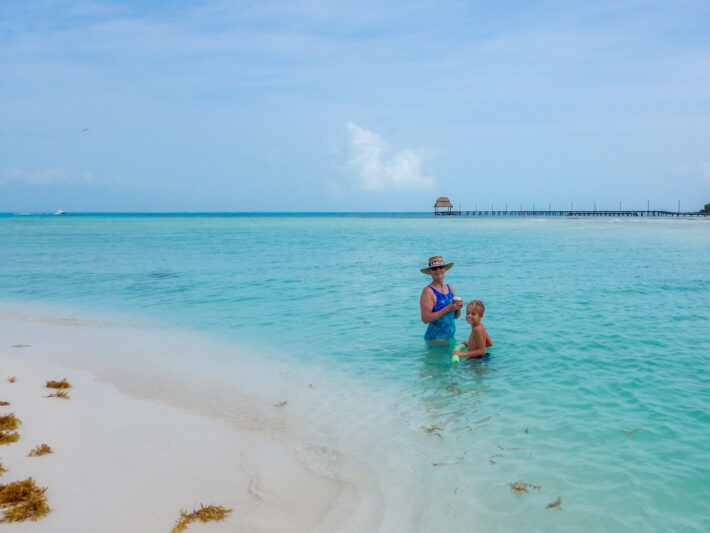
Frolic in the waters of Playa Norte.


Playa Norte features incredible clear and shallow waters. This beach was a hit with my nephews and it’s the best beach for kids we saw on our entire Yucatan road trip. If you took my recommendation in Cancun then you should have your own pool noodles to float in the wide, shallow waters. Bring drinks and sand buckets for the kids and you’ll never want to leave.
Catch a good night’s sleep.
- Budget: Poc-na hostel: What a gorgeous spot and so much space. We didn’t stay here but our apartment was next door and I’d stay here if I was solo.
- Midrange: Apartamentos Trinchan was a comfortable mid-range option when we stayed—small kitchen, suites big enough for four, a great coffee shop next door. Its listing now carries a possible-closure notice, so I’ve pulled the link; call ahead or check current listings before counting on it.
Eat something tasty.
There is no shortage of tasty food on the island—these are the places that got our repeat business.
- Manana: Delicious guacamole and incredible fresh juices.
Things to Do on Isla Holbox
I haven’t made it to Holbox yet, but it’s one of the most recommended stops in the region, especially in whale shark season.
Holbox is a small, car-free island off the northern tip of the Yucatan, reached by ferry from Chiquilá (about 3.5 hours by ADO bus from Cancun, then a 20-minute ferry ride). Golf carts and bikes are the only way to get around once you’re there.
Swim with whale sharks.
From June through September, Holbox is one of the best places in Mexico to swim alongside whale sharks—gentle giants that gather offshore to feed. Tours are regulated, so book through a licensed operator rather than a random dock tout.
Kayak through bioluminescent water.
On dark, moonless nights—best in summer and fall—the water around the island lights up with bioluminescent phytoplankton. Night kayak tours are the way to see it.
Spot flamingos on a 3 Islands Tour.
Between April and October, boat tours head out to the flamingo habitat nearby—worth combining with a stop to snorkel or bird-watch along the way.
Rent a golf cart and just wander.
There are no cars on Holbox, so a rented golf cart (or a bike) is how everyone gets around—renting one for a day is part of the island’s appeal, not just a logistics decision.
Sleep somewhere beachfront.
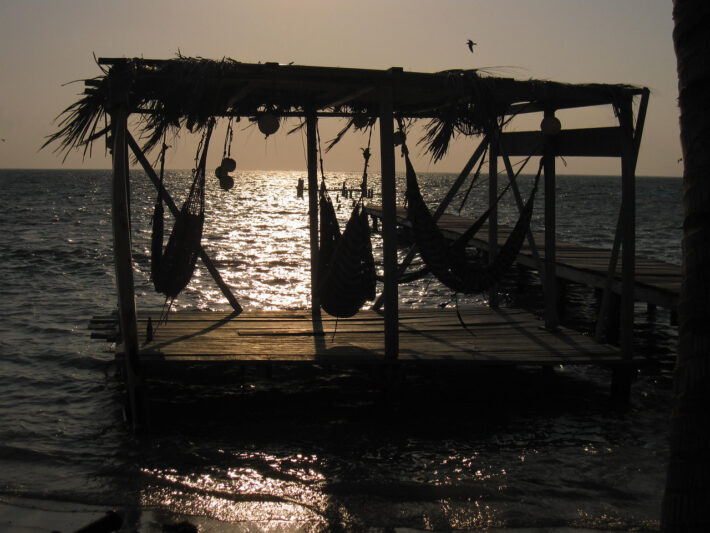
Budget travelers do well at hostels near the town center; if you want the beach right outside your door, look at a beachfront guesthouse with a pool or a palapa tower for sunset views.
Things to Do Around the Riviera Maya (Tulum, Cozumel, & More)

Though this stretch of beaches in the Yucatán is best known for huge, sprawling resorts, it’s popular for a reason—the beaches are gorgeous and there is a strong tourism infrastructure.
I recommend a few days here to visit some of the hotspots like swimming with turtles and amazing snorkeling. If you’re visiting for the party scene, Playa del Carmen has leapt onto that scene in recent years.
Head to a Yucatan-style theme park for the day.


The theme parks near Playa del Carmen are a perfect kid activity (or fun with a group of backpackers!). What makes them unique is how they incorporate many of the high points of the Yucatan Peninsula. Don’t expect roller coasters and a canned experience you could have anywhere—instead you’ll have a adventure-filled day of cenotes and jungle ziplining.
My nephews and I visited Xplor (review here) and loved it. If we ever go back we’ll surely try out Xcaret or Xel Ha next time. All three parks have offer their own take and their own pace of experiencing the culture of the Yucatan Peninsula.
Dive off the coast of Cozumel.
Ferry over to Cozumel and dive at the best dive spots in the country. This island is the mecca for cruise ships, but for good reason. The snorkeling and diving is fantastic. My nephew still, years later, raves about the sheer number of fish he spotted on a random reef we stopped at just off of the coast.
Eat all the things on a food tour.
Consider a food tour of Cozumel or Playa del Carmen. Cozumel Chef has rave reviews for cooking classes and food tours in the area and would make a great outing.
Snorkel with turtles at Akumal.
On the way to Tulum, if you start early you can hit up this small beach community (about 20 minutes south of Playa del Carmen). This used to be a fun, off-the-beaten-path activity that was low stress on you, the traveler, and on the turtles.
Now, organized tours arrive by 10am, and it’s a bit tougher to justify doing this as a responsible traveler. That said, if you decide to do it, arrive well before then to slip into the water and swim with the sea turtles.
Enjoy the seaside Maya ruins at Tulum.
Miles of white sandy beaches near Tulum make this a popular backpacking stop. We just came for the ruins, and they are very pretty and sunny—bring a hat! My nephews and I stayed for one night but decided we had enjoyed the gentler waters of Isla Mujeres better, so we moved inland.
Stop at the Coba ruins.
If you have active kids this might be a better stop as you move inland as it’s impressive, less touristy, and you can bike to the ruins and then climb them for sweeping views of the jungly region.
Sleep somewhere nice.
- Playa del Carmen: We just loved Vainilla Bed and Breakfast. It’s in a non-touristy area with food and shops walkable, and a longer walk to the beach is possible. We had a rental car so it was nice to have a spot away from the hustle. Highly recommended, the woman who runs it is delightful and the homemade jams at breakfast were delicious.
- Tulum: We spent our time in Tulum at Hotel & Cabanas Zazil Kin and it was affordable and directly on the beach. You’ll have to splurge for A/C, but it’s an easy walk to the ruins and makes for a nice spot with kids. My nephews played in the sand right outside our bungalow door.
Things to Do in Bacalar
Another one I haven’t visited personally, but Bacalar comes up on nearly every Yucatan itinerary for a reason—the lagoon’s reputation, and its seven shades of blue, are hard to ignore.
Bacalar sits about four hours south of Cancun by car, or you can take an ADO bus from Playa del Carmen or Tulum. It’s built around the Laguna de Bacalar, often called the Lagoon of Seven Colors for the way the water shifts shade over limestone shallows.
Get out on the lagoon.
Boat tours are the classic way to see the lagoon, typically stopping at a couple of cenotes and a small island along the way. Sailboats make for a quieter trip than the motorized options.
Swim Cenote Azul.
One of the largest cenotes in Mexico, right on the edge of the lagoon. It’s an easy, inexpensive add-on to a day spent around the water.
Climb Fort San Felipe.
Built in 1733 to defend against pirates, the fort sits right in town. The small museum inside is worth the entry fee for the lagoon views from the top.
Paddleboard the calm water.
Bacalar’s lagoon is flat and calm, which makes it an easy, forgiving spot to try stand-up paddleboarding if you haven’t before.
Sleep on the water, not downtown.
The lagoon is the whole point of Bacalar, so stay somewhere with direct water access rather than in the town center—hostels and hotels right on the lagoon are the better choice here.
Things to Do in Valladolid
You’ll want to spend at least two nights here as there are several nearby cultural activities, and the town itself is beautiful. There is an old, historic charm to Valladolid and it’s very photogenic. There are also great places to eat and try a variety of Mexican foods.
Spend the day at Chichen Itza.

The major site for most travelers. It’s a large complex with a variety of Maya ruins. Make sure you either have a guide or eavesdrop on a guide at the ball court, as the explanation of the acoustics there is fascinating. This is a thorough online guide to the temples you can explore.
Soak in history at Ek ‘Balam.

Our favorite of the ruins in the area. Although Chichen Itza is the clear draw, Ek ‘Balam is far less touristy and you can climb to the top of the pyramid and see far over the jungle canopy. The site also has some gorgeous restored carvings that give a glimpse of what it might have been like at the height of the Maya empire.
Take a dip at Cenote Dzitnup.

Cenote Dzitnup (also called X’Kekén) sits just outside Valladolid, not far from Chichen Itza but not part of the complex itself. It has a twin next door, Cenote Samula—both are underground, cavern-style cenotes and a great way to cool off for the afternoon.
Admire the Catedral de San Gervasio.
Gorgeous cathedral on the main square that makes a nice backdrop to evenings spent in the plaza central.
Eat the street food.
In the main square of Valladolid, kitty-corner from the cathedral, is a cafeteria type area with tiny restaurants offering niche Mexican eats. We used this for both breakfast and dinner several times.
Sleep somewhere central.
- Budget: La Candelaria Hostel comes highly recommended for backpackers. They don’t accept children so it’s not ideal for families.
- Vacation Rentals: Though we used a hotel because it had a pool and that was imperative for the kids, I’d easily pick a VRBO on a future trip.
- Midrange: La Aurora Hotel Colonial is a good midrange option.
- Splurge: If you’re looking for something more high-end try Hotel Posada San Juan.
Things to Do in Izamal

All of us agree, there’s something special about Izamal. If we had only used our guidebook, we might have skipped this tiny, sleepy, yellow Mexican town. But I turned to my friend Wandering Earl for travel planning advice—he lived in the region for years—and he said this was a must-do.
Though we thought to spend just two days here, our hotel was great and the town was easy so we instead spent four days doing little more than playing with new Dutch friends and eating street eats in the central plaza. Plus it’s on the tentative list of UNESCO World Heritage sites in Mexico, so you know it’s going to be interesting.
Hike to the top of Kinich Kakmo Pyramid.

An easy walk in the town and it’s not too strenuous to get to the top and see the town laid out below. If you rent a horse carriage, this is one of the places they visit.
Explore the Izamal Monastery.

The Izamal Monastery (Colonial Franciscan Monastery of San Antonio de Padua) is fascinating, huge, and unique in the world. And, of course, it’s gorgeously yellow.
Wander the charming streets of Izamal.

Really we just walked the town with ice creams in hand and it occupied us for the day. We watched dogs splash in the fountain, we explored hidden nooks-and-crannies, and we generally just enjoyed the slow pace of life in this charming town.
Take a horse-drawn carriage ride through town.

My nephews pushed for a carriage ride. I was skeptical, but it turned out really cute and super fun for the kids. They loved hearing the horse hooves clop-clop-clop through the streets as we jostled along.
Even when we passed by places we had already seen on foot more than once, the horse and carriage made it all more fun as they pointed and laughed.
Eat the street food in the Mercado Municipal.

There aren’t a heap of places to eat in Izamal, but then there are a few street food carts every evening in the town’s central park. The boys lived for the pork sandwiches from the cart right in front of the monastery.
Eat early to ensure you eat at all.

Eat early as the town closes down early and you will be hungry if you wait too late. These are two good spots.
- Kinich El Sabor de Izamal. (Calle 27 #299, between Calles 28 & 30) A good range of Mexican dishes and we all enjoyed what we ordered.
- El Toro Restaurante. (Calle 33, between Calles 30 & 32) Close to the main square and makes a good spot for lunch or dinner.
Sleep somewhere great.
- Budget: We stayed at Hotel Macan Ché and it was thoroughly lovely; they have a very neat cenote-shaped pool where the boys lived for four days. If you’re there in the off-season you could try your luck without a reservation and likely get a slightly better rate.
- Midrange: Hotel San Miguel Arcangel is well located, right on the main square and looking out over the convent. It’s a good, basic but clean option that makes a good spot to explore.
Things to Do in Mérida, Cuzama & Celestún

As you head into this region of the Yucatán Peninsula, the pace tourism drops off a bit. Mérida is known for its language schools, but also for its stunning colonial streets and walkable city center. After leaving Izamal, we stopped at the cenotes of Cuzamá for an afternoon and it was fantastic—then we crashed in Mérida that night.
From Mérida, it’s an easy drive to one of the two biosphere reserves in the region. We opted for Celestún, which is a beach spot for Mexican vacationers more than tourists. The Celestún Biosphere Reserve is the real reason to come and one of the best things to do in the region—it’s home to thousands of mating flamingos. Alternatively, you could venture to Rio Lagartos to see the flamingos as well.
Pass an evening in the Plaza de la Independencia in Mérida.

The plaza at night is magical. The historic colonial streets make for pretty explorations, but for traveling with kids this plaza hums with life as the sun sets. My nephews were endlessly entertained with the vendors, the other kids, and the sweet treats.
Check out the Big Museum of the Maya World in Mérida.

This is a good place to tie together many of the themes and history from other parts of the trip. It has a wide range of activities and exhibits.
Take a horse-drawn cart to the three cenotes of Cuzamá.

Use the map at the top of the post to find Chunkanan, which is where the horse-drawn carts leave for the three cenotes. It’s about 10 minutes outside of the town of Cuzamá. Make sure you go all the way to the end of the road to the right CBO (community-based org).
There is a different group that will try to flag you into their parking lot, but keep going so that you are spending your funds with a responsible local business fairly and ethically supporting the surrounding community.
Visit the Celestún Biosphere Reserve.


Hire a boat from the collective on the beach and speed through the ocean and into the wide river expanses. Wear a bathing suit as you’ll have the chance to take a dip in some clear blue waters.
Sleep somewhere great.

Hotel Santa Maria in Mérida worked out perfectly. It was very affordable and close to everything. The rooms were basic but clean and had A/C. They also have a pool and free parking. I’d stay here again.
Eat something tasty.

We stayed at Gutierrez Hotel & Restaurant in Celestún. This place is right on the beach and we enjoyed it. The restaurant attached is terrific, and I loved that I could sit in the shade while the boys dug in the dirt. We called and booked via telephone, but they are online.
This site has a long list of other kid-friendly activities in the region.
Onward travel
Having spent a number of months backpacking Central America and Mexico across multiple trips, plan your time in the following locations.
Mexico » Yucatan Peninsula | Yucatan with Kids | Oaxaca City | San Pancho | Guanajuato | Chichen Itza | Secret Mud Beach | Cultural Immersion | Taco History | Colonial Mexico
Guatemala » Antigua | Tikal | Rio Dulce | Xela | Chichicastenango | Learning Spanish | Semana Santa | Easter Traditions
Belize » Chetumal Border | Culture
Honduras » Copan Ruinas | Utila | Culture
Things to Do in Campeche
I haven’t been to Campeche yet, but it’s the region’s one walled colonial city and an easy add-on from Mérida.
Campeche City is about 2.5 hours from Mérida by car or ADO bus, or roughly 6 hours from Cancun. The historic walled center—a UNESCO World Heritage Site—is compact enough to cover in an afternoon.
Walk the walled city.
Most of the sights—the cathedral, the central plaza, Calle 59—sit within about 15 minutes of each other on foot. Several of the old city’s seven surviving bastions now house small museums.
Watch the sunset from the malecón.
Campeche sits on the Gulf side of the peninsula, so sunsets here face the water—the seafront promenade is the spot for it.
Day-trip to the Edzná ruins.
About an hour outside the city, Edzná was occupied from roughly 400 BC to 1500 AD and is known for the Building of the Five Stories—a unique pyramid-and-palace structure—plus an impressive ancient water-management system of canals and reservoirs. Without a car, book an organized tour rather than relying on public transport.
Eat pan de cazón.
Campeche’s signature dish—layered tortillas, black beans, shredded shark, and a habanero-tomato sauce. Worth seeking out specifically here; it’s not common elsewhere on the peninsula.
Sleep inside the walls.
Staying inside the historic center puts you walking distance from the plaza, Calle 59, and the malecón. If you’re driving, you may prefer a spot just outside the walls where parking is easier.
Yucatan Travel Guide: Stories from the Blog
I have traveled the Yucatan Peninsula many times, sometimes solo, and sometimes with my family. Each story was written live on my travel blog as I backpacked the region. Within these posts you’ll find detailed guides and stories about cultural quirks, fun activities, and things I enjoyed doing in every area of the Yucatan.