
Last updated on October 8, 2026 by Shannon
When you’re planning world travel—either a quick trip or long-term travel—you have a dizzying number of options to review when it comes to picking the best travel insurance.
I first used World Nomads in 2008, and I continued using it for more than a decade—but since then, I don’t think it’s the best travel insurance for most travelers. I stopped recommending World Nomads back in 2022.

I’ve done extensive research over the years—I’ll review who I think World Nomads is still right for—including what’s covered and the types of trips where it’s ideal. Then I’ll discuss why I use IMG travel insurance and SafetyWing on my travels now, both of which offer travel medical insurance.
Of the three, my most recent (and most significant) personal experience with a travel insurance claim is with IMG Global. In 2025, my son needed five stitches in his cheek during a trip to the U.S.—the kind of incident that can rack up a genuinely scary bill at an American hospital. Because I’d paid for a $0 deductible on that trip, it cost me nothing. IMG paid out more than $4,500 without issue once the hospital sent the bill, and the claim settled in 2026. That single visit basically paid for years of travel insurance premiums on its own. So I’ll go into what you should know about IMG, too.
Note: I stopped buying World Nomads policies in 2017—I personally felt like the quality of coverage changed. Other travel insurance companies offer better coverage at a better price for the many months I spend traveling every year—that’s what informs this review of World Nomads. I share my own personal considerations: what I look for in coverage when choosing travel medical insurance for me and my son. I may receive a commission from some of the links in this post, which does not affect my recommendations.
Should You Buy World Nomads Travel Insurance?

Only you can make the call of if travel insurance is worth it for you in general, but travel insurance provides essential medical, gear, and trip protection for everything from short vacations to long-term, adventurous backpacking trips. I think travel insurance is worth it, when you understand what exactly you’re insuring, and which company will best protect you.
What you’re looking for is the best travel insurance for your specific trip. If you drill down to understand how they differ, and review each policy for how it would work on the trip you have planned, then you can find the right one—it might not be World Nomads. Slick marketing does not mean it’s right for your trip.
You want a company that successfully pays claims, has an easy online system for making those claims, and fewer loopholes than competitors.
Because every insurance company has sneaky loopholes in place to ensure you were following the rules, so I review the specific advice needed to successfully make a travel insurance claim—there are a few loopholes you should know before buying any travel insurance!
Below I’ll review why I bought a World Nomads insurance policy for my eight years of long-term world travel, and why IMG Patriot Platinum is what I actually buy now. I’ll also cover where SafetyWing fits—and where, after doing my own deep-dive into it this year, I decided it wasn’t the right fit for my life right now.
What is the Best Travel Insurance?
Let’s review which types of world travels pair best with the different travel insurance companies. The basics of who should generally pick each insurance company looks like this:
What Types of Travelers Should Buy World Nomads?
| Traveler | World Nomads | SafetyWing | IMG Global |
|---|---|---|---|
| Long-term travelers | x | x | x |
| Backpackers | x | x | x |
| Digital nomads | x | x | |
| One-month vacations (or less) | x | ||
| Expats | x | x | |
| Senior travelers | x* | x | |
| World travels including the U.S. | x** | x** | x |
** World Nomads and SafetyWing offer limited U.S. coverage for those primarily traveling outside the U.S. and just doing short trips stateside. IMG sells medical travel insurance for non-residents visiting the U.S. for longer periods of time.
Anyone claiming they know the flat-out best travel insurance is wrong: You have to review travel insurance policies based on your exact circumstances.
World Nomads
World Nomads was once the only viable option for backpackers—it was the top name in insuring world travel when there was no real competition. It’s both travel insurance and travel medical insurance.
It includes the adventurous activities common on long-term trips and while backpacking, and the plans are designed with just a couple customizable add-ons, so you get a package that works for a generally large average of people.
The policies cost a lot though—it’s the most expensive of the three I reviewed here. I stopped using World Nomads a few years back when their Trustpilot rating plummeted to a dismal 3.3, and their claims process left a lot to be desired. Since then, they’ve been acquired by IMG (completed in 2026)—though the two companies still market distinctly different products to different types of travelers—and their rating has recovered to a solid 4.2. That recovery makes World Nomads a decent option again, as long as your trip actually fits inside the coverage bands they sell.
IMG Global
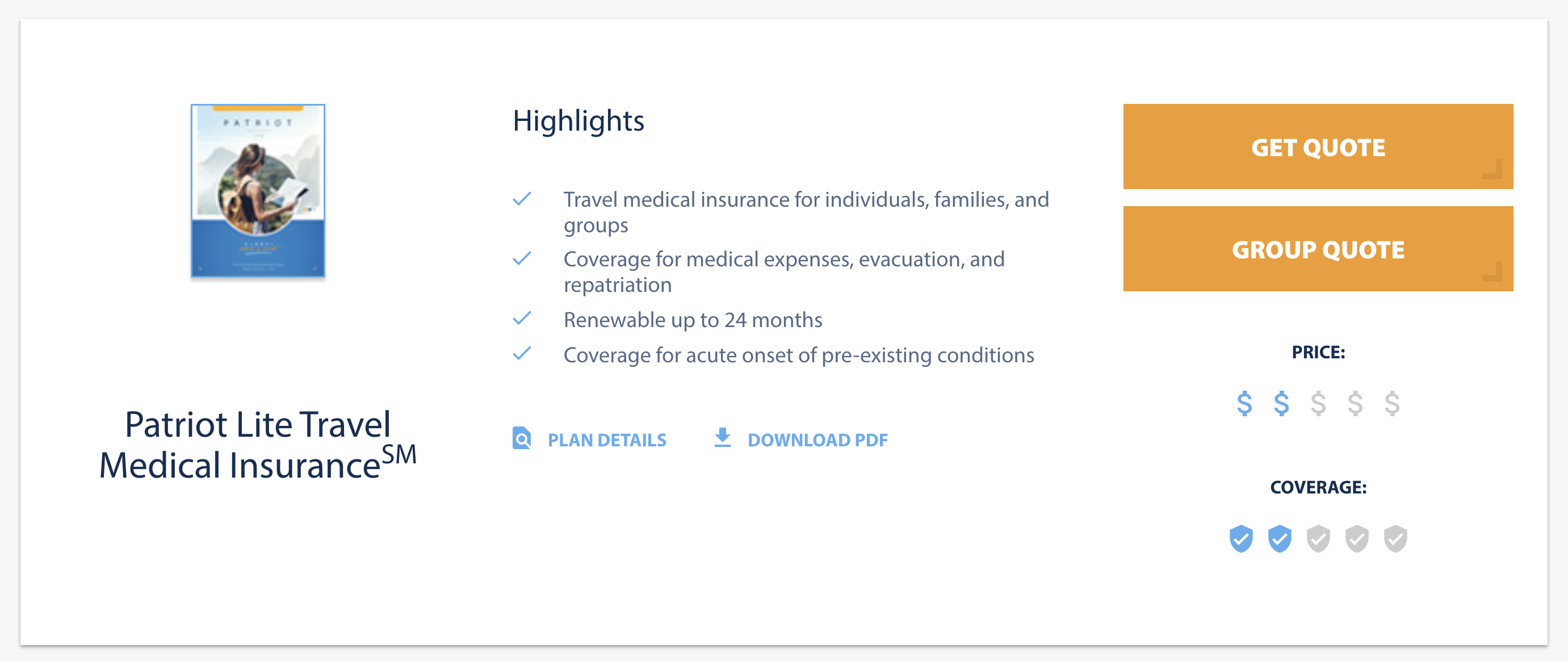
IMG Global isn’t well known in the backpacker world since its marketing isn’t as shiny, but its 4.6 rating on Trustpilot is well deserved. It’s an insurance company with both travel insurance and travel medical insurance policies designed for long-term travelers, expats, seniors, volunteers, and more.
Everything I loved about World Nomads is available with IMG Global, but it’s also a lot more flexible—when you pick a policy, you can choose deductibles and coverage levels. The Patriot Lite policy is a travel medical insurance that would work for many travelers, or the iTraveledInsured policies provide excellent coverage if you’ve booked a lot of expensive aspects of your trip—cruises, tours, etc—and want to protect that investment.
SafetyWing
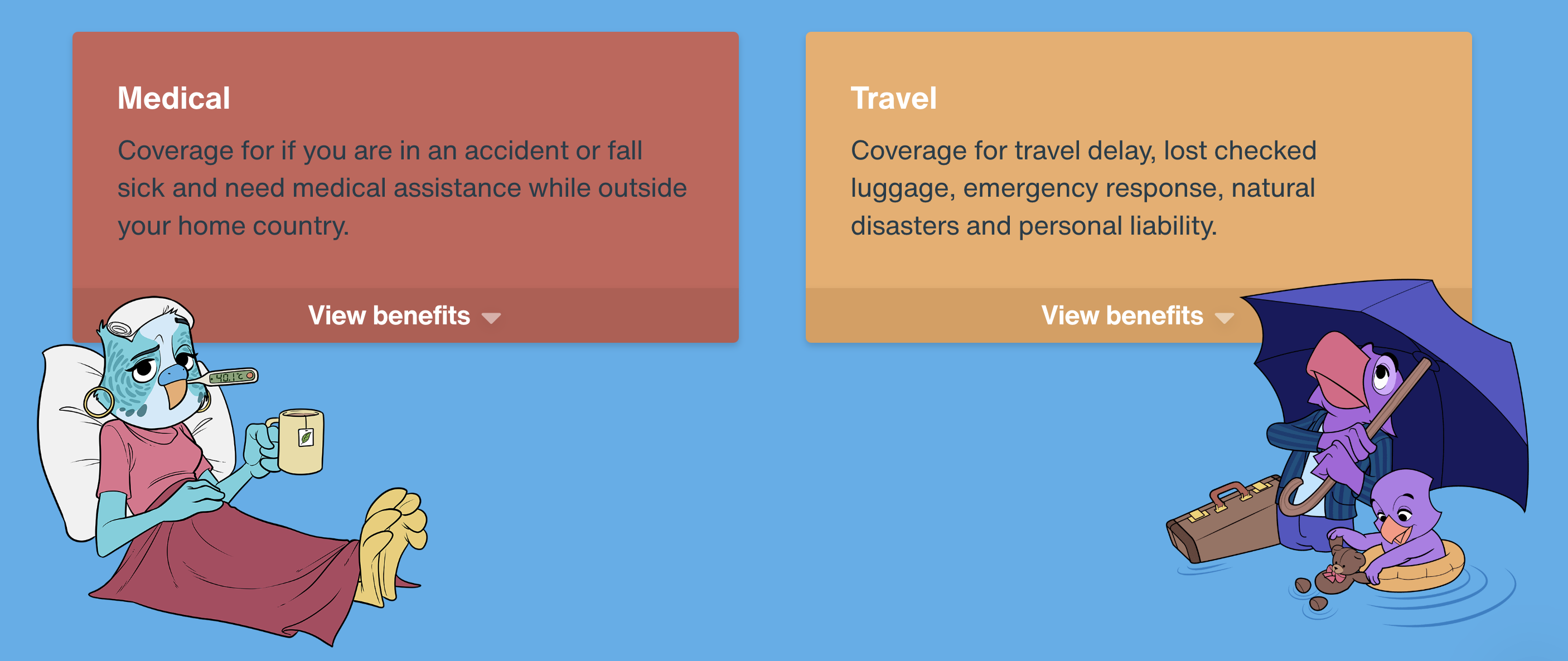
SafetyWing launched in 2018 and rose alongside the remote work movement, and it’s genuinely popular—it has a 4.3 rating on Trustpilot. I’d never actually used it myself, though. Earlier this year, as my son and I started weighing whether to give up our long-running Spanish health insurance in favor of more nomadic travel, I did the same kind of deep-dive research into SafetyWing that I do for everything else on this site.
SafetyWing now sells one product, Nomad Insurance, split into two tiers (the older “Nomad Health” name is gone). Essential is travel medical insurance only—$62.72 per 4 weeks for ages 18-39, a $250 deductible, and no coverage for pre-existing conditions, maternity, or cancer treatment. Complete is real health insurance—routine care, wellness, mental health, and cancer treatment, with a $0 deductible—for $177.50 a month at that same age bracket.
Complete is the plan I actually priced out for my own situation, and I came away underwhelmed by the cost-to-value ratio. At over $2,100 a year per person, it landed in the same range as comprehensive private health insurance in Spain—I got quotes around €1,200/year for both me and my son combined—without matching the breadth of coverage a local plan gives you. SafetyWing makes the most sense if you’re genuinely untethered: no home base anywhere, moving through many countries a year, wanting one global plan instead of juggling local insurance plus travel coverage. If you have, or could get, an affordable health insurance home base in a country with strong private healthcare, you may find—like I did—that local coverage plus a travel medical policy for when you’re abroad works out cheaper and more comprehensive than paying for SafetyWing year-round.
Why are travel insurance policies prices so wildly different?
It all comes down to what’s covered, and who the insurance companies both target and cover. SafetyWing’s Nomad Insurance Essential plan is inclusive, meaning many older travelers can use it, but its primary audience is 18-39 year olds—those are the cheapest policies. The plan also has a $250 deductible and a lower policy maximum than World Nomads, for example.
World Nomads, on the other hand, has built a handful of policy options and you can’t customize the quote much, so they’re making money on people who choose a plan and are actually over-insured for their planned trip.
One of the reasons I love using IMG Global is because I can choose the exact deductible I want, and the policy maximum too—it’s the only one of the three to allow that. And so the prices are competitive. World Nomads does not allow that option; the policies are packaged up and sold as-is, including coverage limits, deductibles, adventure sports, and more.
Backpackers and long-term travelers need the flexibility and security of knowing they won’t go bankrupt if something happens on the road. It’s why I can unequivocally say that travel insurance is useful—I lean on IMG Global for that security myself, and SafetyWing is a reasonable option if you’re the kind of untethered traveler it’s actually built for.
With both companies, in addition to buying a policy online, you can extend your insurance policy, or even buy one when you’re already traveling. They both offer a nice online interface so you can take care of business and get back to traveling—a good travel insurance lets you travel without the worry, that’s the entire point!

What’s Covered by World Nomads (And What’s Not)?
The coverage on your travel insurance policy is the most important part—so this is where it’s vital you take time to understand exactly what buying travel insurance can get you on a trip. It’s everyday protection for you, for your luggage, and also in the event of BIG issues with a capital B (think catastrophic weather event, traumatic injury, etc).
Let’s review the five key coverage areas on any World Nomads policy:
- Overseas medical care
- Medical evacuation (Medevac)
- Baggage claims
- Theft on some belongings and electronics (read the policy details!)
- Trip cancellation coverage
Beyond these five areas that any good travel insurance policy must have, these are a few other things that are bonuses and also included—at least to some extent. Coverage on these areas depends on your country of residence:
- Natural disasters
- Pregnancy complications (but not birth)
- Emergency dental
- Stolen passport
Once you know what is covered by World Nomads, it comes down to the extent of coverage. You should not sign up for a policy that skimps in any of these areas. But some coverage does really depend on your trip, especially when we get into limits.
IMG allows you to tweak and adjust coverage limits—this is essential for me when I’m traveling home to the U.S. as an expat. I usually pay extra for a low deductible if I am traveling in places with expensive healthcare systems, and I’ll pick a higher deductible traveling in places where a medical visit might cost $50 and I probably wouldn’t go through the hassle of claiming that on the insurance anyway. Note that this is my calculus when buying travel insurance—your situation my vary!

Adventure Activity Coverage
Before I left on my world travels, I made a list of all of the crazy and wild adventure activities that I wanted to participate in while traveling—then I used the World Nomads’ A-Z List of Adventure Activities to check they were covered in a policy.
Each and every activity I hoped to experience was on the list of what’s covered—I really wanted to know that rock-climbing in Laos was covered just as fully as scuba diving on the Great Barrier Reef, and it was. In later years, I’ve done the same with the sports rider for IMG Global—some things aren’t covered by IMG that are covered on World Nomads, but they were all very dangerous things like canyoning, which I wasn’t going to do anyway. With other policies (like the expat insurance I use with IMG), adding any adventure sports requires paying for an additional rider, and the coverage is not as robust—so it’s worth checking before you do the activity, not after.

World Nomads‘ coverage was designed by a world traveler—a Aussie named Simon Monk who wanted to demystify the entire travel insurance process. That’s why the policies seem single-handedly designed for long-term travelers and backpackers—they are!
Only some travel insurance policies offer adventure sports riders (and even basic outdoor travel activities may fall under that!)—review the activities carefully.

Is World Nomads Travel Health Insurance?
Insurance companies do not, by default, offer regular health insurance as a part of their travel medical policies. Coverage is provided for emergency medical expenses—that’s a key reason you’re buying the policy, but note that this is not the same as health coverage like regular doctor visits.
Travel medical insurance is not designed to mimic health insurance. That’s why, written into the policy, your travel insurance will end either once you step foot on home soil, or within about two weeks—check your policy.
World Nomads will not provide to regular checkups, it’s only meant as a backstop to emergencies that crop up while traveling.

Buying Global Medical Insurance for Travelers
IMG Global and SafetyWing’s Nomad Insurance Complete offer health insurance policies meant for expats with a residence overseas, or living on the road as a digital nomad or remote worker. The IMG Global Medical Insurance plan does cover many of the same aspects as traditional health insurance, and you can even buy them with a $0 deductible (I bought a $0-deductible expat policy for my first year living in Spain, which was a condition of my visa).
IMG & SafetyWing Coverage for Global Healthcare Policies
| Covered Health Emergencies | Not Covered by Traditional Travel Insurance |
|---|---|
| Hospitalization | If you’ve taken drugs or alcohol |
| Day surgery and outpatient treatment | Minor rashes/non-emergencies |
| Visits to registered medical practitioners | Reckless behavior |
| Prescribed medicines | Non-emergency treatment that can wait until you return home |
| Ambulances | Certain pre-existing medical conditions |
| Extra expenses to get you home, if medically necessary | Ongoing treatment at home |
Making Travel Insurance Claims Online
Most insurance companies now allow you to file your claims online. A seamless system is a huge must for long-term travelers and backpackers especially because you can’t wait until the end of your trip to sort it all out—you’re going to have to file your insurance claim on the road.
For World Nomads, SafetyWing and IMG Global, you can process all of your claims online, and there are no caps on the length of time you can be insured. This is not the case with all travel insurance policies. Some max out at three months and a few still don’t have an entirely online claims process.
For most insurance companies, if it’s a medical emergency and you have time, you are obligated to contact them and let it go through their authorized providers—that speeds up the process. Either way, I found the online claims process easy and the company offers 24 hour helplines for immediate assistance, as well as helplines for figuring out the sometimes bureaucratic process of filing a travel insurance claim.
travel tip
Travel Insurance Coverage When Riding a Motorbike
If you’re going to pilot a motorbike, you need a motorcycle license in your home country as well as an international driver’s license with motorcycle certification (this requires a prior motorcycle license, at least in the U.S.). Without these things, your travel insurance may not cover you whatsoever should you get in a wreck or injure yourself or others while on a motorbike.
TL;DR: World Nomads Coverage Review Recap
- Having travel insurance through World Nomads and then IMG Global made my life easier as a digital nomad living on the road for 15+ years by offering an entirely online process.
- The adventure sports coverage is included in World Nomads policies by default, meaning there’s no chance you overlooked a crucial coverage step in the select-it-yourself policies. With IMG, make sure that you add this rider into your policy if you’re doing anything more than sunning yourself on a beach.
- IMG Global is my travel insurance of choice for long-term travel now, after using World Nomads during my solo backpacking years and later digging into SafetyWing as an alternative. For the last decade, IMG Global has offered me the flexibility I needed to live and travel overseas.
- You are only covered for those things you are legally allowed to do—no drugs or drunk driving, and no driving without a proper license.
- Wondering what the best travel insurance is for anyone visiting the U.S. as a non-resident? I like IMG Global, because this is where World Nomads and SafetyWing coverage have huge gaps for many international travelers (because the U.S. healthcare system is so whack, citizens of most countries aren’t offered the type of full coverage I believe essential to long-term travels in the U.S.).

How to Help Your Claims Get Approved
Travel insurance is the single best way to protect yourself against the unknown facing you on the road. During my more than a decade of travel, I’ve had dysentery, Giardia, scabies, strep throat, and a host of health issues. I’m a healthy person, but travel sickness is a part of long-term travel.
Although I’ve never had major catastrophic health problems, nor been robbed of any key gear, I would never take the risk of backpacking the world without emergency help available. Travel insurance companies have a huge network of providers, and once you activate them, they negotiate (often in the local language) with those providing your help or care. That’s a huge relief when things are going south.
You can find terrible reviews online for all travel insurance companies. There are some circumstances where the traveler just didn’t fit within the policy wording and they weren’t covered. That’s tough. It is imperative that you read the requirements for making a claim if something goes wrong on your trip.
When reviewing any policies, even the best travel insurance has some loopholes. Here are key cautions and warnings to heed:
- Document your valuables. To make a claim, you must prove you bought it (receipts), that it was with you (take a photo of all valuables before you leave), and that it was stolen (a police report). Each step here is vital. Many negative travel insurance reviews are from people who didn’t have a copy of the police report, or couldn’t generate ownership proof. Read your policy and understand exactly what it requires to make a claim.
- Document your illness. Call your insurance company as soon as you are ill; they will help you find the best providers in the region. Plus, it states in your policy that you have to do that! When buying a policy, you agree that they will choose a provider and be involved in the process—this is true for selecting hospital care, medevac providers, and more. If you don’t do this, they may not cover your bills. Also, keep your paperwork! There will be a lot of back-and-forths as you make the claim—the more information you have the better.
- Follow the law. One sticky situation for backpackers is the rampant use of motorbikes in Asia. If you are not licensed to drive the vehicle in your own country, then even the best travel insurance may not cover you in an accident. This is a huge loophole. And it sucks. But double check things like this before assuming you’ll be covered if something serious happens on a remote stretch of mountains on a winding Thai road .
- Read your policy. Seriously. It’s dry and boring. It will take at least an hour. But read it, understand what it covers, and highlight anything that isn’t clear. If you’re unsure, email or call them! They answer questions before, during, and after you’re a client. There is also extensive Q&A in the comments below as other travelers and I hash out the fine print.
- Understand what’s not covered. From pre-existing conditions to extreme sports, there are a few things you’re just not guaranteed in a general travel policy. But, every travel insurance company is different. The high-end Select plan from TravelEx covers pre-existing conditions, so if that’s a huge factor for you, then the significantly higher cost might be worth it. But if you’re a backpacker planning a long-term trip that will include adventure sports, then you should instead look for policies from IMG and World Nomads that are designed to meet that need. If you’re a family planning to travel the world for a year, and you will do adventurous things, World Nomads might still work—they have family plans—but also look to an IMG policy with the sports rider (you must add the sports rider, truly).
- Understand the target market of your future insurance company. This helps you understand if it provides the breadth of coverage generally needed by someone of your age, health, and style of travel.
Cheatsheet of Coverage Comparison
| What’s Covered? | World Nomads Standard | World Nomads Explorer | SafetyWing Nomad Insurance Essential | SafetyWing Nomad Insurance Complete | IMG Patriot Plus | IMG iTravelInsured | IMG Global Medical |
|---|---|---|---|---|---|---|---|
| Price† | $$ | $$$ | $ | $$$ | $ | $$ | $$$$ |
| Emergency medical | x | x | x | x | x | x | x* |
| Routine healthcare | x | x | |||||
| Lost luggage, trip delay | x | x | x | x | x | ||
| Trip expense reimbursement | x | x | x* | x | |||
| Gear theft | x | x | x | x | x | ||
| Adventure sports | x* | x | x** | x* | |||
| Adjustable maximums and deductibles | x | x | x |
* Note that you will have to choose add-ons / riders for some of these policies to receive the above coverage, such as a sports rider, device protection plan, or the XE vs SE version of a policy. Always read your policy to ensure it covers what you expect, and reach out to the company to review any specifics that are unclear.
** SafetyWing Essential covers standard leisure activities by default (hiking, snorkeling, cycling, horse riding). Extreme sports—scuba diving, paragliding, bungee jumping, off-piste skiing—require a separate Adventure Sports add-on (+$10/4 weeks).
It’s your responsibility to know what’s in your policy.
FAQ About World Nomads & Travel Insurance
These answers describe how these policies generally work, based on my own experience and research—exact numbers, age cutoffs, and what counts as an “adventure sport” can vary by your nationality and the specific plan you buy, so always confirm the details on your own quote before you rely on them.
After more than ten years on the road, I moved to Europe in early 2018 and built my life around a Spanish home base with local health insurance. My son and I are now moving into a more nomadic stretch of travel, and IMG Patriot Platinum is what covers us—whether we’re back in the U.S., traveling Europe, or further afield.
Generate an IMG quote to see if it’s a good fit for your travel situation. If you’re the kind of traveler SafetyWing is actually built for—no fixed home base, moving constantly—it’s worth a look too, but price it against local insurance in a country you could call home before assuming it’s the cheaper option.
A bit about this World Nomads review
I am travel writer and online marketer—I am not an expert and you should always conduct your own research. I write from my lived experience, as well as 18+ years of feedback from friends and readers. The fact is, I’ve used both World Nomads and IMG Global for well over a decade, so this is a first-hand, honest travel insurance review and no one paid me to use them—my hard-earned money bought a policy on every trip.
Disclosure: I am not a licensed insurance agent, nor a medical professional. While all of the information in this post is accurate to my knowledge, you must do your own research and verify all aspects of your travel insurance before securing a policy. I cannot be held responsible for your use of any of the information provided.
*Please note that I make a small commission—at no additional cost to you—on purchases you make through a select few product links. This never affects my recommendations.
Hi, IMG do not mention motorbiking in their adventure sports. If travelling to Mongolia, to do a motorbike advanture tour (incorporating offroad riding), doe IMG and Safetywings cover that, or is World Nomads the only option?
I read your article and your reasons were enough to want me to switch from world nomad to IMGlobal. I am preparing for a month long trip to Italy with my wife. I went to trust pilot and read the reviews of IM global and they are terrible. So many recent posts about not paying claims. You should rethink your article. That’s not helpful information.
I’m not really sure what you were reading—TrustPilot still shows IMG at 4.6 with very few 1* reviews. The same cannot be said for World Nomads. Good luck finding one you feel comfortable with.
WorldNomads, through their service partner TripMate, just denied my claim because they do not cover independent overland travelers. You must book or tour through a third party. I couldn’t believe it. I’ve used them for years, and in fact talked with a rep about my motorcycle trip from my home near San Francisco to Baja, Mexico. It took 30 emails and conversations to come to this conclusion. Aarg!
IMG doesn’t seem to have trekking or hiking options in adventure so not suitable for any climbs on mountains. Also they didn’t respond to my query sent 48 hours ago so not sure how reliable they are.
I went through this article which is helpful and checked out IMG which was great. It provides lot of options and a relatively lower quote but it also mentions you as an agent for correspondence, so you are associated with IMG I guess. They don’t show any option for hiking/trekking on mountains in adventure sports, so not sure how if they are covered or not.
Sorry I wasn’t able to get through your complete article. It was too expensive on a telephone. But one important thing I just noticed on world nomads is that your trip is covered if you have a round-trip ticket. With some insurers, if you have a one-way ticket, your insurance ends when you reach your destination. This is a significant aspect to consider.
Hi, your IMG link takes me to Patriot Insurance. Is this the correct IMG insurance coverage page?
Thanks,
Yes, the Patriot plan is the most popular of the IMG policies. You can view them all here: https://producer.imglobal.com/international-insurance-plans.aspx?imgac=537536
Could you please provide more details on your review of World Nomads travel insurance? What are the main benefits and drawbacks you found, and how can travelers decide if this insurance is the right fit for their needs? Any additional tips for choosing travel insurance would be greatly appreciated. Thank you!