
Last updated on August 2, 2025 by Shannon
Honduras, a land of contrasts and vibrant traditions, often feels like the American South of Central America—a place where the pulse of life slows down under the relentless heat and wide-brimmed cowboy hats are the norm.
Imagine stepping off a bus in a Honduran border town as you head to an ancient Maya site, the sweltering air embracing you like a welcoming yet heavy blanket. Men, hats tilted to obscure their eyes, study newcomers from their perches in the town square.
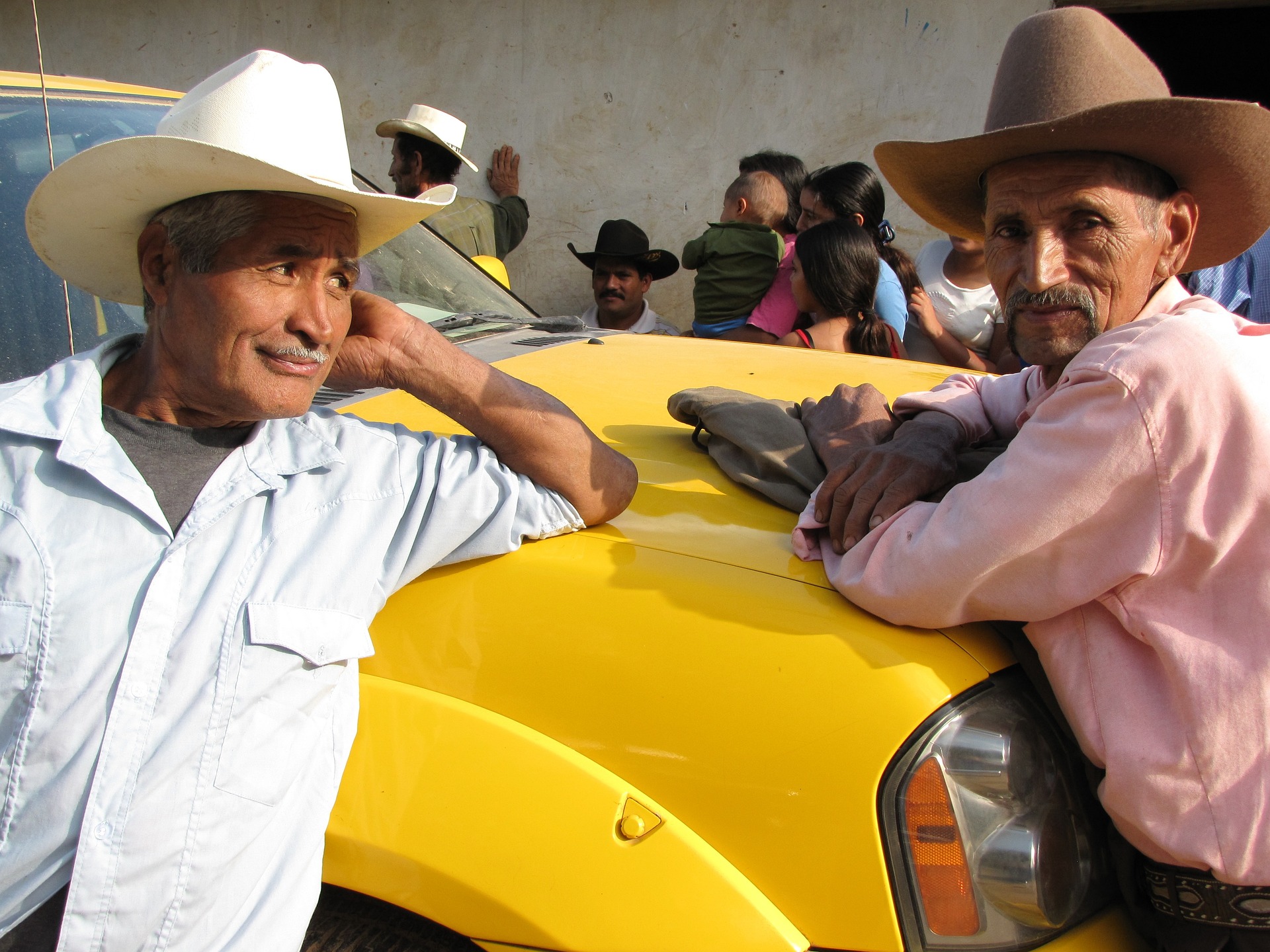
The culture feels instantly different than wherever you’ve just left—in my case Guatemala. It’s a blend of indigenous roots and Spanish influences, marinated in its own unique historical and social context. For travelers, Honduras offers a different rhythm, a chance to engage with a culture that fuses the past and the present in surprising, often challenging, ways.
The History That Has Shaped Honduras
When I think about the country’s history, it’s as though I’m standing at the confluence of several great rivers of culture and circumstance. The Mayan civilization once thrived here, leaving behind archaeological gems like Copán.
Spanish colonization added a layer of complex socio-political dynamics that are still palpable today, most notably in cities like Comayagua, where colonial architecture and religious landmarks stand as enduring symbols of this era.
And let’s not forget the heavy American influence in the 20th century, particularly in the banana industry, which has also left its mark most prominently in the northern coastal regions like La Ceiba and Puerto Cortés.
Over time, these disparate influences have blended into a unique Honduran identity that’s as rich as it is complicated. Understanding this historical layering helps decode the behaviors and cultural attitudes you’ll encounter.
Modern Day Life

Walking through Honduras is a journey in dichotomies. The influence of the American South can be felt in the languid pace, where life meanders slowly enough for you to taste every second. It’s a place where the elderly dictate the speed and where traditional foods, like “pollo frito” (fried chicken), are lovingly prepared and sold at small roadside stands.
Yet, there’s an edge to the atmosphere.
Amid the slow rhythm, there’s a sense of urgency driven by economic hardships and social challenges. If you plan to travel here, know that while it can be deeply enriching, it will also require adjusting to the challenges many locals face daily—something that’s not apparent at first glance.
What are the Primary Cultural Groups?

In the tapestry of Honduras, each thread represents a distinct cultural or ethnic group that collectively gives the nation its unique character. In Honduras, you’ll predominantly encounter mestizos, who are of mixed Indigenous and European descent. They constitute about 90% of the population.
However, this isn’t a one-size-fits-all category; the mestizo group in Honduras has been flavored by a multitude of regional influences.
Indigenous communities also play a significant role in shaping the cultural landscape. Among them are the Lenca, Miskito, Tolupan, Chortí, and Pech communities. Each brings its own traditions, language, and worldviews to the table.
In the Mosquitia region, the Miskito community is particularly strong, living in ways that have remained relatively unchanged for centuries.

Then there’s the Afro-Caribbean influence, most notably represented by the Garifuna community, who reside mainly along the northern coast and the Belizean border. Their culture—a blend of African, Indigenous, and European elements—is celebrated for its music, dance, and culinary traditions, adding a vibrant hue to the country’s already colorful fabric.
In comparison to its neighbors, Honduras has fewer Maya people than Guatemala and fewer Nahuat speakers than El Salvador. While you’ll find Garifuna communities in Belize, the cultural imprint they’ve made in Honduras is distinct, shaped by the different challenges and histories they’ve faced here.
Honduras also has a small but notable Arab and Palestinian community, mostly concentrated in the business sectors.
Unlike its Central American neighbors like Guatemala, which has a larger indigenous population with a prominent Maya presence, or Nicaragua with a stronger Creole and Miskito influence, Honduras offers its own unique blend of cultures.
This is what I found most striking as a traveler intrigued by the cultural anthropological nuances of places that seemingly formed from the same foundations.
What Can a Tourist Expect?

Visiting Honduras is like embarking on an untamed expedition, and your experience will differ greatly depending on where you venture. In terms of transport, domestic flights are reasonably reliable, but if you’re more of an adventurer like me, try the public chicken buses; they’re a cultural experience in themselves, albeit not for the faint-hearted.
And yes, safety is a concern, especially in bigger cities like Tegucigalpa and San Pedro Sula. Exercise the same precautions you would in any other unfamiliar location—avoid sketchy areas, especially at night, and keep your belongings secure.
The true beauty of Honduras lies off the beaten path. Places like the Bay Islands offer incredible diving opportunities—I earned my advanced divers certificate on Utila and will never regret spending two weeks there.

And eco-friendly options like Pico Bonito National Park provide a sustainable way to appreciate the country’s incredible biodiversity.
While the language may be different, the people usually communicate in a universal tongue of warmth and curiosity. They are as interested in you as you are in them, making every interaction feel deeply personal, as if exchanging fragments of two very different but equally intriguing worlds.
As someone who’s trodden the bumpy roads of Honduras and felt the same heat that seems to rise in visible waves from the earth, I can attest that the country is both a challenging and enriching destination.
Honduras is a tapestry of history, culture, and contrasting realities that begs you to delve deeper, asking you to engage not just as a tourist but as a thoughtful traveler. The cultural déjà vu moments I felt—reminiscent of my upbringing in Florida and my travels in the American South—serve as a reminder that even in foreign lands, we often find reflections of our own worlds, altering and enriching our perceptions in ways we never anticipated.
Here’s what to expect from the culture of Belize, and how it differs from Honduras.
this website is great especially for my World Geography Project .
Driving from Philadelphia to Florida, my daughter told me my drawl kicks in as soon as we cross the Mason-Dixon line. She has a pretty good ear, so who am I to disagree?
Nothing wrong with a drawl! I picked one up when I moved to Texas and it makes my life so much easier now.
Nice! Glad to see that I'm not the only one ;-)
I'm from the South! The only time my drawl comes out is when I've had one too many…. Alas, this sounds like an amazing location! We plan on being in Honduras in February or so (maybe March, who knows?)
Agreed on the drawl! ;-) As for Honduras…it was my experience that there
are pockets of great things to do, but that some of the neighboring
countries might be better for a more in-depth backpacking experience, the
region is great and Guatemala was a fav though, so have a blast and let me
know once you head that way if you need tips!
Great comparison of Honduras with the American south. I can definitely see that, although perhaps the women's clothes were a little tighter in Honduras.
We kind of grouped Honduras, Nicaragua and El Salvador into one category for our Central America travels and Guatemala was on its own. We only realized once we left how unique Guatemala is in this region.
I laughed out loud at the clothes comment…that is certainly true! :-) I
didn't make it to the countries south of Honduras, but I find it so
intriguing that Guatemala has managed to stand out so apart from the others
despite proximity.
I certainly haven't noticed any drawl the two times we've met!
I had such a quick experience in Honduras that I didn't really have time to make such observations. But it's interesting that you found it to be quite different from the other countries around it, countries that are thought to be quite culturally similar. Although, I will take a guess and assume that there were much fewer seniors driving Mercury Grand Marquis in Honduras than in Florida!
No drawl – score! I think that most people tell me I sound like a southerner
because I use the “ya'll,” I'm thinking I got away easy though if that's the
only evidence! ;-)
I was actually surprised by how little the Honduran culture resembled
Guatemala and the others…it was really quite different…though, no, there
weren't a lot of Marquis rolling down the road at 15 mph!