
Last updated on August 2, 2025 by Shannon
Traveling Southeast Asia was an incredible whirlwind. Seven weeks seemed like enough to make the backpacker loop through Thailand, Laos, Vietnam, and Cambodia, but that isn’t even remotely the case.
On my round the world trip, I thankfully adjusted my itinerary and saved Vietnam for another trip, which gave me more time in Laos and Cambodia. Once I finished ziplining at the Gibbon Experience in Laos, I had just enough time to dive deeply into a visit to the iconic temples of Angkor Wat—which I would return to just two years later so my teen niece could be equally wowed.

I hopped on a puddle-jumper flight out of Luang Prabang and landed in Siem Reap, Cambodia just an hour later. It would have been a gross oversight for me to leave Southeast Asia without a visit to Angkor Wat, easily one of the most recognizable UNESCO sites in the world.
Arriving in Siem Reap and Getting Settled

Landing in Cambodia was a shock to my senses. Laos is widely regarded as the most laid-back and quiet of the Southeast Asian countries, and after more than a month in Laos, I wasn’t prepared for the bustle and energy of a big tourist city.
It’s not just the traffic in Siem Reap, Cambodia—although there is a lot of it. And it’s not just that the city is hopping with activity—although it is.
It’s the sum total of everything that just crawls up your skin and lodges in your brain as you walk the streets.
Siem Reap has aggressive child begging issues. That’s largely the fault of the tourists for funding the beggars, and a systemic Cambodian issue that there is enough poverty that begging needs to happen.


The entire change of pace both Luang Prabang and the peaceful quiet of the Bokeo Nature Reserve had me off kilter. Instead of jumping right into touring Angkor Wat, the key reason I was in town, I holed up my lovely guesthouse—which boasted a pool, a godsend in the hot season—to adjust, calibrate, and recharge. After all, this is one of those “main events” of backpacking the region and I wanted to be prepared to explore and enjoy!
(Years later, when I visited with my niece, we also used our first day in Siem Reap to recover from a long travel day on the boat from Battambang at the Cashew Nut, a hotel we really loved.)
In the first days, I shopped the markets and powered up with delicious vegetarian restaurants. The choice of veggie restaurants in Southeast Asia’s bigger cities is definitely a reason to visit. Though I love the charming towns, it’s nice to have a selection of interesting options!
The begging is hard not to avoid. Within a minute of leaving your hotel and guesthouse, you’ll likely discover the street kids and beggars in your area. Some approached and clasped my hand. Others followed with quiet pleas.
I’ve been back to Siem Reap since, when traveling with my niece, and the vibe hadn’t much changed. One reason I find it overwhelming is because of the idea that it’s not always a good thing to pass money to the beggars—these children are sometimes run as a business and might not see much of the money.

Within walking distance of our guesthouse, Laura and I found a fabulous night-market and we were still quite close to the touristy areas of the city. I actually liked that we were in the thick of things after going off the grid and getting horribly ill in Laos.
Laura and I spent our first evening camped out at an exquisite gourmet vegetarian restaurant. The best part, it was affordable. The total price of dinner, drink, appetizer, and dessert: $10. And this restaurant had my favorite unique drink to-date, a cold and tasty Tamarind Ice Tea. It was bizarre and the first sip was face-scrunchingly tart, but after that it was wholly refreshing and just what I needed after a blisteringly hot day.
And boy am I loving the warmth here! While others sweat profusely in the baking hot heat, my Florida-girl self is loving every second of it!
It didn’t take long to recharge. Tasty food, rampant free WiFi at nearly every restaurant, and I was in heaven. In fact, I managed to crank out some mad work while I was in Cambodia, which is topping up the travel fund nicely. I am not sure what I will face in India, so I wanted to log good hours for my client now, while I could.
Exploring Angkor Wat by Bike

The flight from Laos to Cambodia was very dear, but I came here to visit Angkor Wat. I’ve read National Geographic for most of my life, and this is one of the big items I’ve always wanted to explore in person.
Laura and I woke up early and slathered ourselves in of sunscreen. I also rocked a large floppy hat, sunglasses, and a face mask to combat the dust and traffic pollution—I was the height of attractive let me assure you! Kitted out for an entire day out at the temples, she and I rented bicycles and headed out to the main temple complex at Angkor Wat.

We opted for the three-day pass to the temples and a wave of joy, excitement, and the thought finally rushed through me when I rounded the bend and first sighted the huge moat and iconic towers of Angkor Wat.
The complex lies a bit outside Siem Reap, so we biked for a while, finally making a long shady stretch before we rounded a bend in the road. Then it was just there. Huge, ancient, and humbling.

We secured our bikes in the large parking area, we flashed our passes, and then joined the heaps of other tourists with mouths shuffling across the long bridge. I admit, I gapped. I stopped and photographed it all. It was just impossible to take understand the magnitude of this beautiful ancient city.
I knew only a bit about Angkor Wat’s history before I arrived. King Suryavarman II built the temples in the 12th Century as a holy city by for his people. Even more though, is that Angkor Wat is just one of a dozen of pagodas in the area. Although the three spires of the main temple are most iconic and emblematic of this site, it’s spread across acres of land. This wasn’t just a temple, it was a thriving and active city.


Angkor Wat is a labyrinth of intricately carved walls, over-hangings, and statues. When Laura and I entered, we both noted that there was a strange energy in the temple complex. It’s hard not to sound new-agey, but there was an odd vibe when we entered and we both felt it enough to turn to each other and note it. It wasn’t negative or unwelcoming, just odd.
And who knows, perhaps we’re off our rockers, but our initial inauspicious comment about the energy lead to a thoroughly frustrating visit. Within a few minutes of arriving, we lost sight of each other in the twisting hallways.


Then we each spent the next four hours looking for each other. How you can lose someone for four hours in just one single location I do not know, but we were both dehydrated and exhausted by the time we found one-another by the food-stalls.
Without a cell phone, we had resorted to asking the local children and vendors to keep watch for one another. (In fact, Laura’s description was “a tall girl with an ugly brown floppy hat”—apparently they knew exactly what she meant as they helped bring me to her). It wouldn’t have been a huge deal, but we had locked our bikes together (and yes we both checked at the bikes), so it was all a tad overwhelming.

Anyhow, even in the mad hunt for my traveling companion, I managed to see a great deal of the complex. At times, I lost myself when I would pass the intricate carvings of dancing ladies carved into the walls. As I passed throughout the different areas, I would often pop into the back of groups guided in English or Spanish. Then, as they belabored a point I would drift off to find other fascinating parts of the complex.
The long wall of images are Bas Relief carvings that circle the perimeter of the temple and tell the story of various battles. I loved the description of the carvings dedicated to the story of the Ramayana.
I’ll admit that I first dove into this story when I had a brief but heartfelt obsession with the movie The Little Princess. The guides nearby explained how some of the fading reliefs represented various aspects of Rama’s journey. So neat.

On my search for Laura, I sat down at one point for about an hour—I figured if I stopped moving she might pass by me. And in that decision to take it slow, I found myself in a long chat with a handful of Cambodian monks.
They spoke basic English, and after the standard pleasantries of my age, marital status, and the number of siblings (everyone asks you these three questions), I was able to probe them about their education and life.
It was interesting, strange, and fun. They laughed a lot when I said something, I was never sure how much of the laughter was from a lack of comprehension and how much was because they were talking alone with a Western woman.


Once Laura and I reunited we bought some bracelets from the children who had found me and brought me to Laura. Then we took their advice and biked to a sunset spot just down the road.
The sunset temples are set about 15 minutes into the hills, and we dodged slow-moving tourists who were clogging the hiking paths. And even after the long day, somehow we arrived at the spot—and it was perfect—just in time to watch the sun take its last bow.
We explored other areas too—from the Tomb Raider temple to far out and dusty temples. Angkor Wat delivered in terms of fascinating history and a lot to see and explore independently.
Perhaps given the size and complexity of the Angkor Wat complex, I actually booked a one-day tour when I visited with my teen niece. I wanted her to have some extra comfort and a bit more of an educational lens on the visit.
We also did three-day passes though, so we arranged a tour one day and saw the main sites, and then used a tuk-tuk for lesser-known temples on subsequent days. This combination is a rock-star way to get the most out of an Angkor Wat visit—expert information and a tour guide, but plenty of time for independent exploration.
What are the best temples at Angkor Wat?
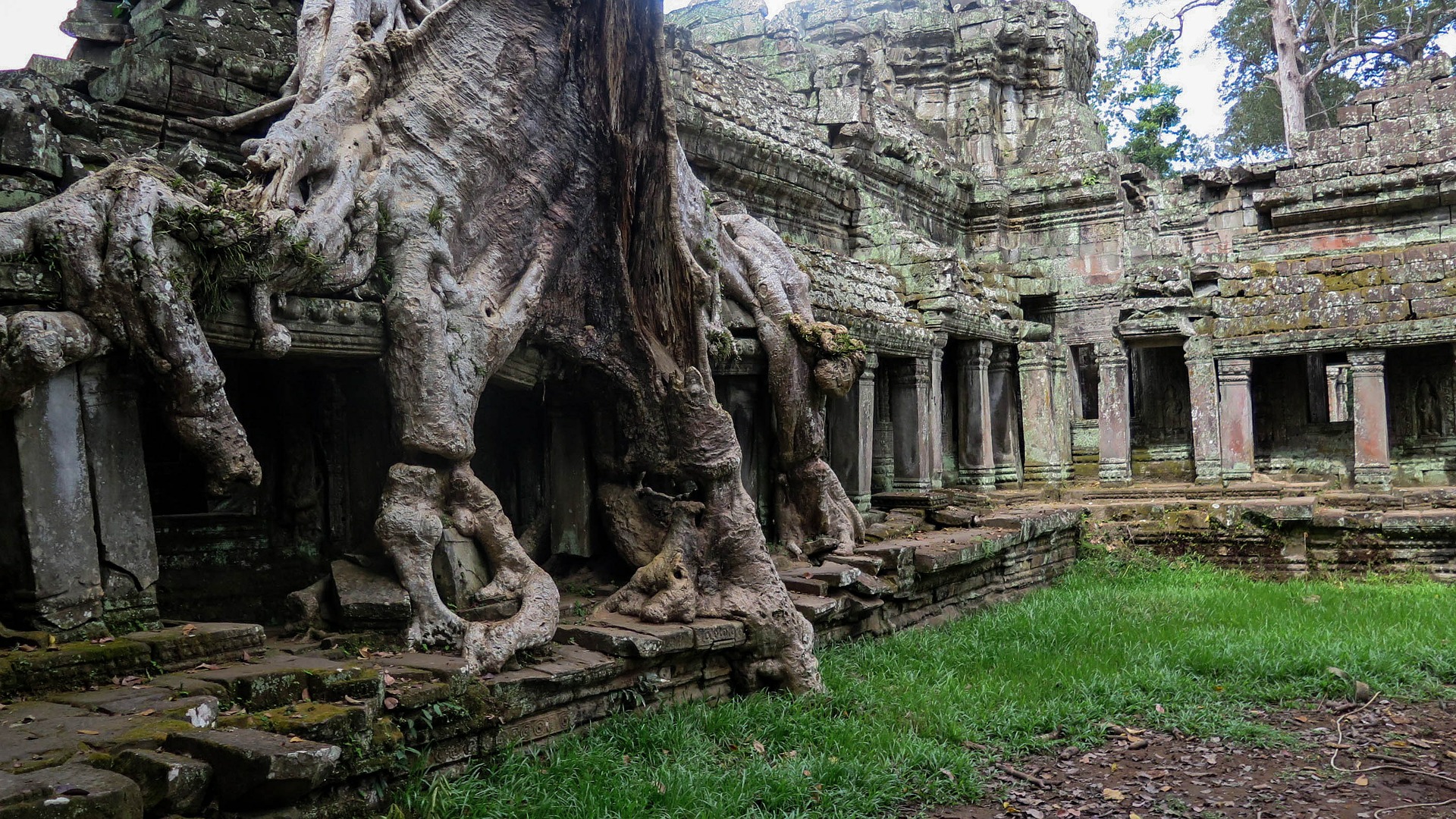
My favorite temples that you should absolutely have on your list—in this order—include: Angkor Wat, Ta Prohm, Banteay Srei, Bayon, Srah Srang, Preah Khan, and East Mebon (in that order).
Angkor Wat

Angkor Wat is the most well-known temple in the complex given that it’s the largest religious monument in the world. It’s a UNESCO World Heritage Site and one of the finest examples of Khmer architecture left in existence.
Ta Prohm
Chances are, you already plan to visit Ta Prohm and pose Tomb Raider style. It’s probably the second-most visited temple in the Angkor Wat complex. The overgrown jungle setting, with tree roots wrapping around the temple ruins, makes for an iconic photo at the ruins.
Banteay Srei
The intricate carvings at Banteay Srei and delicate red sandstone construction make this temple complex visually stunning—and also distinct. Some of the ruins will begin to resemble each other if you’re touring across several days, and Banteay Srei is a nice way to break up some of the sameness during your visit.
Bayon Temple
You have to visit Bayon Temple—this Buddhist temple is most known the massive stone faces carved right into the temple’s walls.
East Mebon
East Mebon was built in the 10th century—you’ll most admire its large central tower complete with elaborate stone carvings.
Preah Khan
Preah Khan is a large temple complex with an interesting maze-like layout. It’s has a peaceful atmosphere, which is welcoming especially if you’ve visited Ankor Wat that day for sunrise or sunset—which means you were shoulder-to-shoulder with thousands of other tourists.
Thommanon
Thommanon is a small temple that is located near the entrance to Angkor Thom. Pop in here to admire well-preserved carvings and an overal elegant design.
Pre Rup
Pre Rup is a temple mountain offering some of the most stunning views of the surrounding area. It is a popular spot for sunset viewing—one of the most popular, in fact.
Angkor Wat FAQ
When should you visit Angkor Wat?
The weather in Cambodia is generally hot and humid, with temperatures ranging from the low 70s to the mid-90s Fahrenheit. The wet season, which runs from May to October, is characterized by heavy rain and high humidity. The dry season, which runs from November to April, is generally more comfortable, with lower humidity and less rainfall.
Also, there are several festivals held in Cambodia throughout the year, including the Water Festival in November and the Cambodian New Year in April. These festivals can be a great time to visit Angkor Wat, as they offer a chance to experience local culture and traditions.
How do you visit the Angkor Temples for sunrise?
Seeing a perfect sunrise or sunset is coveted by Southeast Asian travelers, and even though the temples are crazy-busy, it can be a beautiful experience. Arrive to the temples by 5:30am for sunrise, and between 5:15pm and 6pm for sunset.
For a general sightseeing day, plan on leaving around 8am, so you catch the cooler morning hours to start.
Hot tip: Enter the Angkor complex after 5pm and you don’t need to use a day on your pass. If you time it right, you can watch sunset on your first night, and then use your following day to fully explore.
Angkor Wat by bike vs tuk-tuk, which is better?
Rent a bike for $2/day if you like to ride and/or if you’re on a tight budget. Tuk-tuk drivers cost $20 to $25 for a full day and this is ideal if it’s too hot for bikes, or if you’re venturing to the further temples.
On my second trip through Angkor Wat, my niece and I booked a day tour with Urban Adventures for our first day exploring, and this was a fascinating and fun way to learn the history and ask all the questions from a local who knew the answers.
Where to stay in Siem Reap
Booking.com is a great booking website in Southeast Asia, so start your research there. My niece and I stayed at the Cashew Nut, and the pool is a real highlight—when it’s hot, you’ll be glad for it. Siem Reap is a well-traveled city, so you can find budget dorms for as little as $3/night, but spend in the $15-$25 range and you really get a lot more for your money.
Best guidebook for travelers.
Download a copy of Cambodia: The Temples of Angkor is perfect if you’re keen to know a deep history of the temple complex and you’d like a DIY. Cambodia Lonely Plant and Southeast Asia on a Shoestring Lonely Planet guides are also good resources.
How to be a responsible traveler in Cambodia.
There are a lot of things you should know before you go to Cambodia to make sure you have a responsible, ethical trip. This free Guide to Responsible Travel in Cambodia outlines the best practices of travelers, including how to support Siem Reap’s thriving social enterprise scene, and how to give back and volunteer, too.
How to Plan Your Time in Southeast Asia
📍Navigate more effectively.
Bookaway is super handy to assess the full range of transport options between two cities—it shows everything from flights to trains, buses, minibuses, and more. If you’re booking a rental car, I’ve always found the best deals on RentalCars.com.
🛏️ Find great accommodation.
Agoda has the widest and most affordable selection in Southeast Asia. It’s part of the Booking.com family, but has better reviews for SEA. You can book hotels, hostels, and even vacation rentals.
❗Yes, you need travel insurance.
IMG Global is the travel insurance I’ve used for well over a decade of traveling solo, and with kids. Here’s why.
Book Tours Ahead of Time
I use Get Your Guide to book locally run tours since I can assess the options, read reviews, and lock in a date.
✈️ Book affordable flights.
Expedia and Skyscanner are the first places I look for low-cost flights.
🧳 Smart packing can save your trip.
Shop my favorite travel gear, including all of the packing essentials for traveling, gear to keep you safe in Southeast Asia, my favorite travel books, and more.
📖 Read up on any off-the-path activities.
Travelfish is among my go-to resources for anything in Southeast Asia. It’s updated far more often than print guidebooks and has extensive local insight and a fairly active forum, too. If you head off-the-path, this should be the first place you check for tips, transport advice, etc.
☕ Peruse all of my tips for round the world travel, or learn how to move and live abroad.
Backpackers Guide to Southeast Asia
A free rundown of everything I learned from years backpacking Southeast Asia, and a beginners guide of sorts for anyone traveling through Thailand, Laos, Vietnam, Myanmar, and Cambodia.
Update from the road: I arrived in India and have joined forces with my cousin. I was sad to say adieu to Laura, we had incredible adventures these past two months. Everything from our surprising, random meeting in Bangkok to tubing to rock climbing and ziplining. I will surely miss that lady. For now, it’s onward to the Indian adventures.
What a great article! We’re currently dreaming of going to Cambodia again – we’ve been
there before and we love, love love it! Here’s to a year with loads of travel plans and new experiences!
Yikes! Lost for four hours!!! And I thought getting lost at the Louve in Paris was bad!
Wow! Think of the stories you are going to have to share with your kids!! This is all just amazing!!