
Last updated on August 2, 2025 by Shannon
Huddled under one lone awning in the middle of the outback, as the rain poured down around us, we all looked forlornly at the broken down tour bus while our tour guide Jess presented us with a choice:
- admit defeat and return to the previous night’s campground near Uluru.
- head a couple hours down the road toward Kings Canyon in hopes that the river hadn’t overflowed—if it hadn’t, we could hike the Canyon in the morning.

At this point, it was a tough call. We were wet, cold, and tired. We had spent days with a pervasive damp. All we wanted was to see the Australian Outback the way most travelers experience it—unrelenting heat and sun.
Instead, we had the choice to visit King’s Canyon, located in Watarrka National Park in the Northern Territory, with the unknown factor of if there would be rain or sun.
Misadventures in Australia’s Outback


It was day three of our Outback Adventure and the unrelenting rain was a real downer. Although the our visit to Uluru was rained out, and the base walk and Kata Juta portions severely were affected by the rain too, nothing compared to the fact that one of the buses broke down in the middle of nowhere.
My tour bus was fine, but our company had two tours running that weekend and we couldn’t leave the other bus stranded. All 42 of us waited in the rain under a tiny shelter as the one working bus sped down the road, back to town, to (hopefully) pick up an alternative bus.
When Jess returned, the sun was setting and we were still hours from our planned camp.
Naturally though we took option two—I mean, we really wanted to see King’s Canyon! We had all paid for an Australian Outback tour, so we were committed to the end.
Forging a River En Route to King’s Canyon.

Naturally, of course, just 20 minutes from our campground we encountered deep overflow from a nearby river that had completely flooded the road.
Poles on the side the of road are there to measure depth, and according to Jess, it was too deep to cross. Well, too deep to cross with people in the bus, at least.
That meant we all hiked up our pants, doffed our socks and shoes, and waded across the stream while Jess backed up the the tour van enough to get some momentum when she drove/floated across the deep stream.
Thankfully, we al made it! And still in good spirits, too. Because by this time we had all adopted an “us against the elements” mentality—and clearly we were winning.
In fact, by the time full darkness fell the rain had cleared enough to sleep in swags under the stars. Staring at the stars from a cushioned sleeping bag hundreds of miles from the nearest light was just as spectacular as you could imagine.
After so much rain, the sky was crystal clear. Without a speck of light pollution, millions of bright, twinkling stars pinpricked the velvet darkness.
Best Things to Do at King’s Canyon

As a reward for surviving two days of flooding and endless rain, we woke to a spotlessly clear and baking hot morning sun. The heat of the day dried us out as we hiked through Kings Canyon—everyone took a relieved dip in the watering hole for good measure. These are the highlights of how to spend a day at King’s Canyon under a sunny sky.
Hike the Kings Canyon Rim Walk

Embark on the moderately challenging Kings Canyon Rim Walk for the best overall experience of King’s Canyon. The trail is approximately 7.4 kilometer in length and follows the edge of the canyon, providing stunning panoramic views of the surrounding landscape.
Tackle the Kings Canyon Rim Walk early in the morning—temperatures can rise quickly in the outback. Some hikers even start the hike in the dawn hours using a headlamp to get there before any others, and to watch sunrise over the canyon.
Be sure to carry plenty of water and wear comfortable shoes—the hike can be quite strenuous at times, with steep inclines and uneven terrain.
The rim walk typically takes between three to four hours to complete, depending on how often you stop for photos. And there’s a lot to look at! Stop at all of the lookouts, you’ll be glad you did.
Towering sandstone cliffs and the lush oasis of the Garden of Eden are two key features, but keep an eye out for the colorful birdlife and wildlife that call this area home, such as black-footed rock wallabies and wedge-tailed eagles.
The trail ends at the summit of the canyon, which provides an unforgettable vantage point of the surrounding landscape.
Wonder at Nature at the Lost City

The Lost City is a fun sight to seek during your time exploring Kings Canyon. This unique geological formation is situated in the sandstone cliffs of the canyon and is believed to have formed over millions of years due to natural erosion.
What is it? Well, a series of fascinating rock formations resemble a ruined city, with towering spires, deep canyons, and winding gorges. The formations are made up of sandstone shaped by wind and water over thousands of years, which has resulted in unique and striking formations.
The Lost City of King’s Canyon is also thought to have been a significant site for the local Aboriginal people, who lived in the area for thousands of years and likely passed down stories and traditions about the area’s unique formations.
Grab a Snack at Kings Creek Station

For a taste of life on the land in the outback, a visit to Kings Creek Station is a must-do. This working cattle and camel station, located near Kings Canyon, offers a range of activities that usually entice families and those looking to make a full day out of their time at King’s Canyon.
You’re visiting King’s Creek station for the traditional Aussie barbecue, which is cooked over an open flame and features local produce and meats. It’s the perfect way to refuel after hiking the rim, and offers authentic flavors of the outback.
If you’re interested in learning more about life on the land, you can also take a guided tour of the cattle station, where you’ll learn about the daily operations of the station, the challenges faced by farmers in the outback, and the unique traditions and cultures of the region.
Camel riding is among the more popular activities at Kings Creek Station—the camels are well treated, so if it’s been a dream to ride a camel, this is a better place than say, Egypt. That said, I definitely gave it a pass.
Sit Under the Shade of the Garden of Eden

The Garden of Eden is a beautiful and serene spot inside King’s Canyon. This lush oasis is situated at the base of the canyon and features a natural waterhole surrounded by a diverse range of plants and wildlife.
The Garden of Eden is believed to have formed over thousands of years due to the unique geological formations of the area, which create a microclimate that supports a range of plant and animal life. As you explore the area, you’ll see a variety of trees and plants, such as cycads and ferns, that are not commonly found in the arid outback region.
It’s important to note that swimming in the waterhole not permitted as the area is a sacred site for the local Indigenous people. It’s essential to respect the cultural significance of the Garden of Eden and take care not to disturb the fragile ecosystem.
Walk to Kathleen Springs
If you’re not up for the King’s Canyon rim hike, which is rated as challenging, then instead hike to Kathleen Springs, a 2.6-km out-and-back trail near King’s Canyon that feeds into Kathleen Gorge.
This hike is rated easy and it’s accessible too, with a paved walkway or boardwalk the entire route. It’s pretty year round and ends at a watering hole.
View the Canyon from a Helicopter

A helicopter tour over Kings Canyon is a thrilling way to see the stunning landscape from a different perspective. Tours usually last 30-minutes and take you over the canyon and nearby Watarrka National Park, offering views of the towering sandstone cliffs, winding creek bed, and lush Garden of Eden. You’ll also see the “Lost City” formation.
Viewing King’s Canyon from the air allows you to see the intricate patterns and shapes of the formation that are not as obvious from the ground.
Learn About Local Culture and Traditions
The Karrke Aboriginal Cultural Experience and Tours is located near Kings Canyon, and offers a unique opportunity to learn about the culture and traditions of the local Aboriginal people, the Pertame (southern Arrernte) people.
You’ll be treated to a traditional Welcome to Country ceremony—visitors are greeted by a local elder and given an introduction to the culture and history of the Pertame people.
Throughout the tour, aboriginals share their spiritual beliefs, traditional customs, and the significance of the land. The tour also includes a guided bush tucker walk to learn about the native plants and their uses in traditional medicine, bush tucker, and craft.
Other highlights include boomerang and spear throwing, dot painting, and making traditional jewelry.
Spend a Night Stargazing
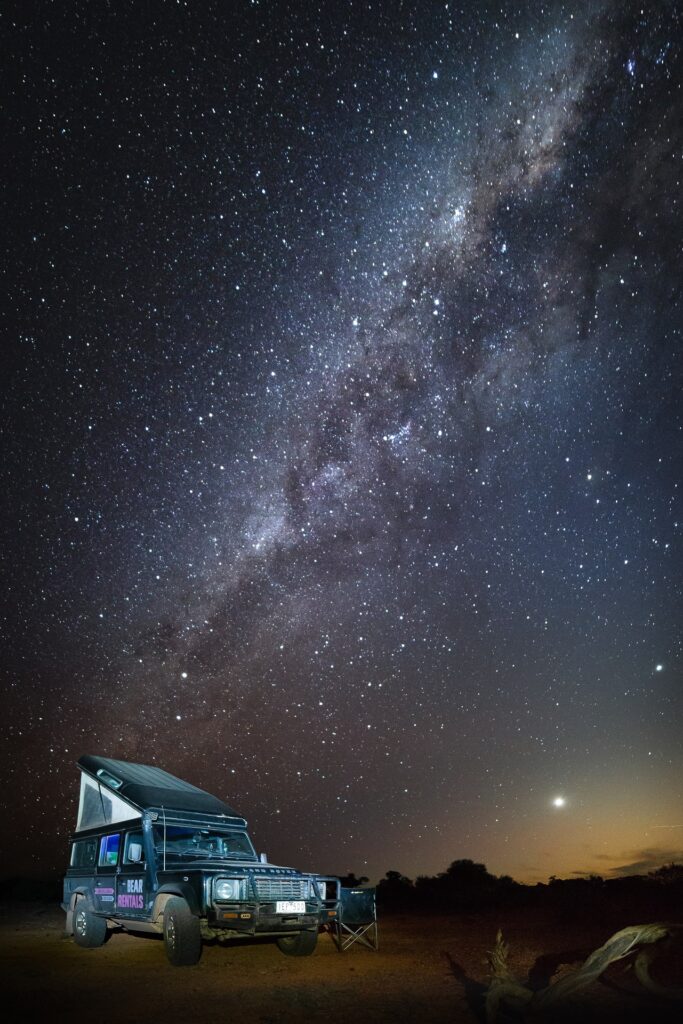
Stargazing under the outback sky is among the more magical experiences in this region of Australia. The remote location of the canyon, far from city lights and pollution, makes it an ideal spot for taking in the beauty of the night sky.
When the sun goes down, the sky comes alive with a dazzling display of stars, planets, and constellations.
The lack of light pollution in the outback means that the stars appear brighter and clearer than you’ve ever seen them before, creating an awe-inspiring sight that will leave you breathless.
Sleep under the stars if you can. Campsites and accommodations in the area offer outdoor camping experiences where you can pitch a tent or sleep in a swag (a traditional Australian canvas bedroll) and fall asleep under the stars. Alternatively, you can take a guided tour that includes stargazing.
As you fall asleep, look for the the Southern Cross, a famous constellation that can only be seen in the southern hemisphere. It’s an important symbol in Australian culture and features on the country’s national flag.
And of course stare in wonder at the Milky Way, which is unmistakeable on a clear night with a slender moon. You can also spot Jupiter, Saturn, and Mars—all visible planets in the Southern Hemisphere.
Is King’s Canyon Worth Visiting?
Yes! Kings Canyon is definitely worth visiting. The stunning natural beauty of the canyon and the surrounding Watarrka National Park make it a must-see destination for anyone traveling to the Australian outback.
The Kings Canyon is the Rim Walk alone is worthwhile—considering it takes just 3-4 hours and is suitable for anyone with a reasonable level of fitness, there’s no reason not to stop at King’s Canyon during your tour of the outback.
Should You Worry About Rain at King’s Canyon?
No, it’s unlikely. Kings Canyon and Uluru are both located in the Red Centre region of Australia, which is known for its hot and dry climate. The area receives very little rainfall throughout the year, with most of the precipitation occurring during the summer months (December to February).
If you’re visiting during those months, then sure, you might get rained out. In that case—be careful! When rain does occur, it can be heavy and lead to flash flooding . . . which is what we experienced.
Essential Travel Planning Resources
❗Yes, you need travel insurance.
IMG Global is the travel insurance I’ve used for well over a decade of traveling solo, and with kids. Here’s why.
🧳 Smart packing can save your trip.
Shop my favorite travel gear, including all of the packing essentials for world travel, gear to keep you safe on the road, my favorite travel books, and more.
🛏️ Find great accommodation.
Booking.com is essentially the only hotel booking site that I use. It has a wide and affordable selection of traditional hotels, but also hostels and vacation rentals, too. Use these pro tips to find the best travel accommodation.
📍Navigate more effectively.
Rome2Rio is super handy to assess the full range of transport options between two cities—shows everything from flights to trains, buses, minibuses, and more. If you’re booking a rental car, I’ve always found the best deals on RentalCars.com.
✈️ Book affordable flights.
Expedia is one of the first places I look for low-cost flights.
☕ Peruse all of my tips for round the world travel, or learn how to move and live abroad.
Wow. We were in the Outback for 7 days and never even saw the threat of rain. One of our guides had lived there for 10 months and he said that the most rain he had seen was a light drizzle one day. I can't believe that it rained so hard while you were there. Definitely an experience to remember.
I still don't know if you're the lucky one or me! :-) I would have loved to
have seen it sunny and dry – but at the same time, the rain was certainly
unique! Did you guys take a week long tour out there? (perhaps I should
check the blog ;-)
I still don't know if you're the lucky one or me! :-) I would have loved to
have seen it sunny and dry – but at the same time, the rain was certainly
unique! Did you guys take a week long tour out there? (perhaps I should
check the blog ;-)
I would have bet money against there being that much rain! Wouldn't have
believed it if I hadn't been there. :-)
Totally think all the flooding and outback madness made the experience one to remember. Somehow I just never imagined the Australian outback could possibly be drenched in rain. ;)
I would have bet money against there being that much rain! Wouldn't have
believed it if I hadn't been there. :-)
Wow. We were in the Outback for 7 days and never even saw the threat of rain. One of our guides had lived there for 10 months and he said that the most rain he had seen was a light drizzle one day. I can't believe that it rained so hard while you were there. Definitely an experience to remember.
Totally think all the flooding and outback madness made the experience one to remember. Somehow I just never imagined the Australian outback could possibly be drenched in rain. ;)