
Last updated on July 7, 2025 by Shannon
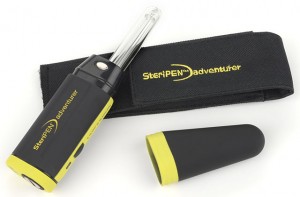
I believe in traveling light, but what’s “necessary” varies—especially when it comes to staying healthy on the road. And it’s also a tough call about recommending how travelers should stay healthy on the road.
Why Do You Need a SteriPen?
I’ve written about how sick I’ve gotten over the years. I almost died in Laos from contaminated fresh vegetables. Staying healthy while traveling is a tricky subject and one that a lot of travelers assume that they can handle without much planning.
Carrying a SteriPen or water purification device like the LifeStraw is a good fallback for those on long-term trips, or for trips involving remote travel. Throughout this SteriPen review I’ll detail the whys and hows of this device, the top alternatives, and how they work.

Many backpackers travel overland through remote areas. It’s in the most remote parts of my yearlong round the world trip that I needed my SteriPen to save my hide (that and my travel insurance, because it surely saved my life, too).
In remote areas, I used the SteriPen on tap water or tea to avoid parasites—and it worked.
Now, I didn’t have a SteriPen or a LifeStraw when I first packed for my round the world trip. But, my cousin brought a SteriPen for us to use throughout India and Nepal, and it came in handy.
The vast majority of the time we used it on water from the tap in India, and neither of us got sick (from the water, that is). Though we had some issues with traveler’s diarrhea, it wasn’t from drinking water but rather a few poor food choices.

Of note is that many serious water purification options aim for survival situations and disaster preparedness—those cost a lot.
For travelers, this SteriPen review aims to assess which are a good fit for trips that might include a range of situations where you need water purification as an option, but you’re likely not relying on the device for a years-long water solution (and you need it to be portable!)


What are the Primary Ways to Purify Water While Traveling?
- UV light: Pen-style devices (like the SteriPen) neutralize microbes using ultraviolet light—no chemicals, batteries required.
- Boiling: Bring water to a full boil for 1 minute. Reliable, but slow and requires a stove.
- Chemical tablets: Iodine or chlorine dioxide; lightweight and packable, but often leave a taste.
- Filters: Straw, pump, or bottle filters (like the LifeStraw); remove bacteria and protozoa.
Review: What is a SteriPen?

A SteriPen is small, pen-like electronic device that emits ultraviolet light and purifies either half a liter or one full liter of water at a time. The device operates on batteries and works with clear water by killing the DNA of harmful microbes and bacteria.
A light wand sticks out of one end of the device—you push the button either once or twice to purify a full liter of water or a half-liter, then submerge the light wand end into the water.
The light turns on and stays on while you agitate the water with the light wand until the dose is complete. (Models vary slightly on how to operate it, so read the directions!)
Once the water is safe to drink, about one minute later, the light turns off and flashes green. If it flashes red, you have to repeat the dose because something went wrong.
For example, if you accidentally lift the wand out of the water during a treatment a sensor will flag that the water was not properly treated and flash red.
UV light is used in water treatment plants around the world—it safely neutralizes microbes when used inside a water bottle.
SteriPen Adventurer – Quick Pros & Cons
When paired with my single-wall stainless steel Nalgene, here’s how it netted out on my rural travels, trekking in the Himalayas of Nepal, and cleaning tap water from my hotels in India.
| 👍 Pros | 👎 Cons |
|---|---|
| Lightweight, USB/battery-powered | Needs clear water—no filtering of sediment |
| Eco-friendly, reduces plastic use | Spare batteries (CR123) can be hard to find |
| UV kills bacteria/viruses in ~1 min | Device is more fragile than filter straws |
Review: How Does a LifeStraw Work?

This device is a straw that you use to suck water through the filter and into your mouth. You can submerge the LifeStraw into any water source—a water bottle or a river—and the straw cleans the water as it passes through the hollow-fiber membrane.
The company also sells a LifeStraw Go water bottle and filter combination, but I find that impractical for travelers. If it’s built into your water bottle, then you are using your filter 100% of the time, even if you head to Europe or some such.
The LifeStraw comes off as more of an emergency backup option for hikers than something that travelers would want to use daily for the four months that I used my SteriPen in India and Nepal. It will work in a hairy situation, but it’s not necessarily the best option if you want regularly filtered purified water.
LifeStraw – Quick Pros & Cons
I’ve also paired this with a stainless steel water bottle—it’s all my son and I drink from.
| 👍 Pros | 👎 Cons |
|---|---|
| Affordable (around $20) | Doesn’t remove viruses or chemicals |
| Long-lasting (filters up to 4,000 L) | Harder to share or use with other drinks (like tea) |
| Lightweight and compact | Requires strong suction to drink through |
| No batteries or moving parts | Can’t pre-filter large amounts of water for cooking or groups |
Shop the LifeStraw on Amazon.
This is a super popular product with 100,000+ positive reviews. The roughly $20 price point means it’s a good backup option for travelers. Check the current LifeStraw price now.
Should You Buy a Water Purification Device?

It depends. Let’s review a few key circumstances. If you’re traveling extensively and for quite some time through countries with developing infrastructures: YES. These devices lower a traveler’s eco-footprint, saves money in the long term, and save you from tricky situations with water that just seems suspicious.
- The SteriPen is not something many travelers will use every day of a trip, but when you do, you’ll be glad it’s in your bag. But, if you’re backpacking around the world just once and only in these developing regions for a limited time then the SteriPen is likely an unnecessary extravagance.
- No matter the length of your trip, I recommend world travelers at least pack an affordable alternative like the LifeStraw. You need a solid fall-back if you’re stuck without clean water.
After my cousin left my trip, I headed to Europe and did not need a SteriPen. I have one now, however, and I brought it on my travels through Africa. Again, although I didn’t use it all of the time, I was happy to have it when I was stuck in a circumstance where I needed to drink something made with local water.
Both devices reliably purify clear water—from taps or rivers. Having one in your pack is smart travel insurance.
Between the SteriPen and its affordable alternative, the LifeStraw, you should have something in your bag that is small and handy.
Quick Tips: Stay Healthy While You Travel
💩 How to Shit Around the World
This no-nonsense book covers everything you need to know about avoiding diarrhea, parasites, and all the messy realities of staying healthy on the road. It’s frank, funny, and a must-read if you’re traveling in developing countries for any length of time.
🦠 How to Avoid Travel Sickness
A decade of trial and error taught me hard lessons—this guide shares all the illnesses I’ve dealt with and how I now avoid them. From water to food to meds, it’s everything I wish I’d known sooner.
💧 Oral Rehydration Salts (ORS)
Don’t skip these. ORS packets are essential in any travel medical kit. Dehydration—not the bug itself—is often what turns food poisoning deadly. I never travel remotely without them.
💡 SteriPen Adventurer Opti
Perfect for long-term travelers or outdoor adventurers. The SteriPen is compact, effective, and helped me avoid countless bouts of stomach issues during months on the road.
🧴 LifeStraw Personal Water Filter
Budget-friendly and reliable, the LifeStraw is a great backup option for RTW travelers, hikers, and anyone who wants peace of mind without batteries or bulk.
🛡️ Best Travel Insurance Options
I’ve used IMG Global for over a decade—it’s saved me more than once. Whether it’s a medical emergency or trip mishap, good insurance is worth it.
How to Stay Healthy on the Road
With more than a decade of experience traveling all over the world, I share every lesson learned about how to avoid getting sick when you travel—and, more importantly, how to handle any inevitable travel sicknesses.
I have used the Steripen Adventurer and always carry a spare set of Lithum batteries. The Eveready brand claim a 10-year shelf life
I have used it while backpacking and in Third World countries, so far no problems getting sick
There is a USB rechargeable version that you can use a battery pack and/or a solar cell panel to recharge, I don’t have first hand knowledge how convenient they are.
One question is if it works with colored drinks, for example in Peru there is a “Chicha Morada”, it is a purple drink and I don’t know if the Steripen will work.
Given that it’s UV light, darker beverages will not work. I’ve used it on green teas I was served lukewarm in Laos and the light fully penetrated the liquid. That’s what you need for sterilization.
I bought the Steripen that uses the AA batteries…..if you buy lithium AAs they last a very long time. Or you can use rechargeable Nimh types, or bring a few extra regular alkaline AAs.
I like the portability and the fact it nukes viruses as well as bacteria and spores.
It also never needs money spent on new filters, as it doesn’t need them. It’s also very easy to use. The AA version comes with a prefilter for really nasty water, and Steripen makes an adapter for the other models that fits all Steripens, or you can just use a coffee filter or a bandana.
The AA model is called the “Steripen Classic 3”.
I’m currently researching what type of water cleaning system to get that isn’t going to compromise it’s effect in freezing temps. I volunteer on city Emergency Response Team and have a bugout bag in a sealed container in my truck 24/7. I live in the Rockies and the temps in my truck go below freezing. Recently read a blog of a person who questioned the specs of water filters in freezing temps. He contacted all makers with a few who talked around the issue, others didn’t comment at all, only one maker responded LifeStraw. Last week I contacted LifeStraw and their statement was that their filters are designed to work between temps of 33-140, if exposed to temps under 32 degrees their advice was to change the filter or discard the unit. Granted most folks store their gear in the house, but in the garage or shed the filter can be compromised. Seems there is no good answer for my situation, currently going to use the SteriPen Ultra as a backup to a filter; use cannister with mouth covere with fine cloth to filter out debris, use filter, then the SteriPen to be safe. Hopefully SteriPen battery will heat up if keep next to body during cold. Solar/power pack to recharge battery.
That sounds like a good approach. If the SteriPen turns on, then it should work to kill the bacteria, so you would know at least that it’s not functioning, versus the LifeStraw, which would not give any indication if it was compromised by the temperatures.
regarding use of Steri pen, as you quoted
“A light wand sticks out of one end of the device—you submerge that end into the water and then push the button either once or twice to purify a full liter of water or a half-liter.”
Be Careful as different models of pen have different ways of using them
I was getting the red light of fail constantly using the same method as above.
After many emails to tech support the problem was (for my model you start with the pen different)
Start with pen out of the water, Power on, you have 15 seconds to then dip the pen in water submerging the contacts or sensor.
This completes circuit and start the Process of cleaning the water.
swirl till green light shows
the difference between the air and the water is how it know when to stop basically
so moral of the story read the instructions, and follow them, as clean water is the same color as bad water… but so far it been great little piece of gear to have (now the idiot in charge is skilled enough to use it)
That is SUCH a good point. I had the same experience of the learning curve putting it into the water, yet somehow didn’t articulate that well when writing. I appreciate you pointing that out and have updated the post to reflect it!
I’ve had my Steripen since 2008… 8 trecks in Nepal plus backpacking at home. Works great, provided good (not Asian knockoff) batteries are used.
The sensors DO need occasional cleaning. A wipe and Steripen works.
Thanks for sharing your experience! Working after more than nine years is a testament to a good product. Mine is also still working since around that same time. Cheers. :)
Mine worked great in South America but now I am in India and it just stopped. It charges but the uv light does not come on. I think it is the sensors. . It tried tech support until it kicked me out. I love it when it works.
Oh nooo! That is the worst when it stops unexpectedly. My cousin and I ran into a problem on a long trek, where the brand new batteries we had bought in India weren’t good enough (likely knock-offs or very old), so they couldn’t power it. We ended up having to do exactly what we had tried to avoid — buying bottled water high in the Himalayas! Hope it starts working again for you.
Thanks for the extra tips Rob – you are very right about the batteries, we
took two sets and it just did us since the ones that we bought (which were
energizer but could have been sitting on the shelf for years maybe) didn't
work.
You are spot on about the filtering, it doesn't take out the floaties, but
we never got sick from it either – it never came to needing a coffee filter,
but that's an awesome tip if I ever do need it down the line.
Cheers and thanks for lending your advice since it seems it's been working
so well for you – it's a genius little product, I just think the whole
battery situation is a bit troublesome for long-term travel in particular,
perhaps they're work on that though! :-)
Purchased the Steripen Adventurer and love it. Small, lightweight, very effective. It doesn't filter the water. I see some people think of it as a filter. It disrupts the DNA in all the Bacteria, viruses, crypto and giardia and protozoa etc. So they can't reproduce and make you sick. They get passed right through you with no ill effects. Drawback is the problem with the Charger for it if you get that. It takes about three or four days to fully charge a set of batteries. I use the disposable lithium CR123 batteries and take about four sets of them with me. That's enough for almost 200 litres of water for drinking and brushing teeth. That's a lot of water. Four sets take up little room. Lithiums weigh very little. But in a major city, you may find a branch of a big battery manufacturer like Energizer, and they can get you good batteries, not the cheapy third world unknown batteries that don't work. I prefilter cloudy water through a couple coffee filters if it is not clear. Don't want to drink floaties. ;) I've yet to get sick with the Steripen. The only drawbacks are the slow solar charger, and the availability of batteries, so take extra sets.
Thanks for the extra tips Rob – you are very right about the batteries, we
took two sets and it just did us since the ones that we bought (which were
energizer but could have been sitting on the shelf for years maybe) didn't
work.
You are spot on about the filtering, it doesn't take out the floaties, but
we never got sick from it either – it never came to needing a coffee filter,
but that's an awesome tip if I ever do need it down the line.
Cheers and thanks for lending your advice since it seems it's been working
so well for you – it's a genius little product, I just think the whole
battery situation is a bit troublesome for long-term travel in particular,
perhaps they're work on that though! :-)
Purchased the Steripen Adventurer and love it. Small, lightweight, very effective. It doesn't filter the water. I see some people think of it as a filter. It disrupts the DNA in all the Bacteria, viruses, crypto and giardia and protozoa etc. So they can't reproduce and make you sick. They get passed right through you with no ill effects. Drawback is the problem with the Charger for it if you get that. It takes about three or four days to fully charge a set of batteries. I use the disposable lithium CR123 batteries and take about four sets of them with me. That's enough for almost 200 litres of water for drinking and brushing teeth. That's a lot of water. Four sets take up little room. Lithiums weigh very little. But in a major city, you may find a branch of a big battery manufacturer like Energizer, and they can get you good batteries, not the cheapy third world unknown batteries that don't work. I prefilter cloudy water through a couple coffee filters if it is not clear. Don't want to drink floaties. ;) I've yet to get sick with the Steripen. The only drawbacks are the slow solar charger, and the availability of batteries, so take extra sets.
There's 2 styles of Steri-pens that I've seen, the one pictured and the one I bought.
The one I have has a filter (that fits quite a few styles of bottles) to get rid of the floaties before zapping the water and uses regular AA batteries. They still do recommend lithium batteries (averages about 200 charges of .5 litres) to using over alkaline batteries (which gives only 20-40 charges).
I'm glad you mentioned the batteries, I'll have to pack some spares so I don't run out :)
That's really great to know Catia, I had no idea that the other SteriPens
used a different battery – AAs are so much easier to find then the small
specialty ones! Next time I am looking at these I will definitely consider
the one you mention. :-)
That's really great to know Catia, I had no idea that the other SteriPens
used a different battery – AAs are so much easier to find then the small
specialty ones! Next time I am looking at these I will definitely consider
the one you mention. :-)
There's 2 styles of Steri-pens that I've seen, the one pictured and the one I bought.
The one I have has a filter (that fits quite a few styles of bottles) to get rid of the floaties before zapping the water and uses regular AA batteries. They still do recommend lithium batteries (averages about 200 charges of .5 litres) to using over alkaline batteries (which gives only 20-40 charges).
I'm glad you mentioned the batteries, I'll have to pack some spares so I don't run out :)
That's just crazy that you guys had the exact same battery problems! As you
say, that's a real detraction from the device considering it's designed for
travel outside of the states – thanks for weighing in on this with your own
experience. I'm actually not taking one with me on this upcoming trip –
while I also love the green value of it, the batteries were a big issue for
us too.
So I guess that means that you guys aren't using it anymore?! I'm going to
do some research on the other straw device you mention, that seems like a
much more viable option than continually seeking out the right batteries in
developing countries :-)
I fell in love with the idea of the SteriPEN when I first saw it used by an American guy biking across Burma a couple of years ago. So, before we left for the Latin America portion of our journey I bought a SteriPEN Adventurer (with a solar-powered charger) and was super excited to reduce our environmental footprint (i.e., reducing plastic bottle waste).
Unfortunately, I seem to have gotten lemon rechargeable batteries that died after about a month (it would take one night to charge the batteries & it could only power the device to clean 1/2 a liter). And, because I didn't have spare batteries with me the device became obsolete because the batteries seem impossible to find outside the United States. They are CR123a batteries, not regular CR123 batteries.
So, I'm torn. I love the idea of this device, but it could have been better designed to take batteries that you can purchase in the countries where you need to use the device (i.e., developing countries).
I just learned about another device that was developed for children to use in Africa, but would also be great for travelers. It is a straw with a filter at the end so it cleans water as you suck through the straw.
That's just crazy that you guys had the exact same battery problems! As you
say, that's a real detraction from the device considering it's designed for
travel outside of the states – thanks for weighing in on this with your own
experience. I'm actually not taking one with me on this upcoming trip –
while I also love the green value of it, the batteries were a big issue for
us too.
So I guess that means that you guys aren't using it anymore?! I'm going to
do some research on the other straw device you mention, that seems like a
much more viable option than continually seeking out the right batteries in
developing countries :-)
I fell in love with the idea of the SteriPEN when I first saw it used by an American guy biking across Burma a couple of years ago. So, before we left for the Latin America portion of our journey I bought a SteriPEN Adventurer (with a solar-powered charger) and was super excited to reduce our environmental footprint (i.e., reducing plastic bottle waste).
Unfortunately, I seem to have gotten lemon rechargeable batteries that died after about a month (it would take one night to charge the batteries & it could only power the device to clean 1/2 a liter). And, because I didn't have spare batteries with me the device became obsolete because the batteries seem impossible to find outside the United States. They are CR123a batteries, not regular CR123 batteries.
So, I'm torn. I love the idea of this device, but it could have been better designed to take batteries that you can purchase in the countries where you need to use the device (i.e., developing countries).
I just learned about another device that was developed for children to use in Africa, but would also be great for travelers. It is a straw with a filter at the end so it cleans water as you suck through the straw.
Considering how long you'll be in those regions, I think it could really work well for you…as long as you bring some batteries!! :-)
Very nifty! Might investigate this for my travels… In Africa for two months & Asia for four months next year!
Considering how long you'll be in those regions, I think it could really work well for you…as long as you bring some batteries!! :-)
Very nifty! Might investigate this for my travels… In Africa for two months & Asia for four months next year!
I didn't know such a thing existed, pretty cool. I guess though it wouldn't help if the water were murky. Would be disinfected probably but look gross. I could see something like this being very handy especially in some remote places.
Yeah, it wouldn't work for murky water – and I stopped using it when there were large, visible floaties because that was just gross! But it really did come in handy along the way :-)
Yeah, it wouldn't work for murky water – and I stopped using it when there were large, visible floaties because that was just gross! But it really did come in handy along the way :-)
I didn't know such a thing existed, pretty cool. I guess though it wouldn't help if the water were murky. Would be disinfected probably but look gross. I could see something like this being very handy especially in some remote places.
I think I'd probably agree with you – three days seems hardly worth the price tag! Another traveler mentioned an interesting option of the filter-inside water bottles, but I haven't much looked into that, could be beneficial though if the cost were more reasonable :-)
I was totally sold on this until I saw the price. I'm going to Egypt next year and could use it, but I'll only be there for about 13 days, so I'm not sure if it's worth it.
Interesting read for sure!
I think I'd probably agree with you – three days seems hardly worth the price tag! Another traveler mentioned an interesting option of the filter-inside water bottles, but I haven't much looked into that, could be beneficial though if the cost were more reasonable :-)
I have a water bottle with a built-in filter… had never heard of this device before. Glad it worked for you :)
I've wondered how the filters work – the thought of relying on a filter in India made me nervous…but I take it yours works well?
I was totally sold on this until I saw the price. I'm going to Egypt next year and could use it, but I'll only be there for about 13 days, so I'm not sure if it's worth it.
Interesting read for sure!
I've wondered how the filters work – the thought of relying on a filter in India made me nervous…but I take it yours works well?
I have a water bottle with a built-in filter… had never heard of this device before. Glad it worked for you :)