
Last updated on July 7, 2025 by Shannon
One of my primary reasons for taking a trip around the world without flying was because I wanted to get a full appreciation of the size of the world. After exactly one year on the road without leaving the ground, and still having not made it all around yet, I can say—it’s big.
Really big.
And it’s more amazing that I ever would have imagined.
Why I Decided to Travel Overland Without Flying

Modern plane travel is one of the miracles of modern convenience. One can get on an airplane in the heart of Middle America one afternoon and wake up the next morning in Italy or China. These days, you can get to about anywhere in the world from a major city in the States in 24 hours—give or take a few.
I love the ease of flying, but at least for me, there flying fosters a disconnect there that I wanted to eliminate at least once in my life. I wanted to feel the miles—feel the distance—know that I had actually traveled. In some sense, I wanted to earn my first journey around the world.
Most of the tips I could give you about an around-the-world trip without planes would be the same sort of tips you’d normally read about any long trip—websites with good hostel/hotel reviews, key phrases you should learn in a language before you arrive, safety issues, and so on.
Instead, I’ll try to make these tips and thoughts more focused on the uniqueness of a ground level circumnavigation—when you just want to get to Europe, China, New Zealand, etc without flying.
Overland Travel Takes Longer: Plan for Perpetual Movement

You move constantly when you’re traveling overland. Assuming you’re traveling on a budget, whether one of time or money, you can’t really stay anywhere for too long. I originally wanted to finish my circumnavigation inside of a year, but it’s going to take me about sixteen months, as it turns out.
The longest I’ve stayed in any one location is roughly a week, and I’ve only pulled that off a few times. My stay at most locations is usually about three or four days. The reason for this is quite simple: ground travel takes a hell of a lot more time than hopping on a plane.
As a recent example, I had to travel from Chiang Mai, Thailand to Hong Kong to catch my freighter to Australia—it took me seven days and I was moving for at least eight hours each and every one of those seven days.
The same mileage could have been taken care of by a six-hour plane ride. If you take a trip similar to mine, it’s going to be primarily about traveling; that is it’s very nature.
One’s Not the Loneliest Number: You Learn About Yourself

You’re going to be traveling solo for most of your trip, unless you have a boyfriend/girlfriend/spouse that is as dedicated to your quixotic quest as you. One of the joys of traveling is meeting people on the road that you get along with, and then traveling together for a while.
Unfortunately, few people will will be traveling as ‘quickly’ as you, so that backpacker tradition of traveling together for weeks becomes more difficult to manage—not impossible, but difficult. Your route around the world is also going to be pretty linear, and you obviously can’t just hop on a plane and jump over a few countries to hook up with some people you want to see.
For a time on this trip, I really wanted to meet up with a few people in Asia, but my times and locations were pretty set, given my freighter’s departure date and places I wanted to see in my limited time, and they couldn’t get away from their obligations (damn the real world) in the time and location window I had available.
The bonus on this front is that you will know yourself better than you have ever imagined—a few hundred hours spent on buses, trains, and boats looking at the sights pass by while in your own company tends one toward self-reflection.
Don’t forget to book travel insurance for your trip—a great policy provides coverage in case of medical emergencies, lost or stolen gear, adventure sports riders, and more. I’ve used IMG Global for more than a decade highly recommend it!
How to Book Passage on Freighters, Cargo Ships & Cruises

Overland travel is surprisingly expensive. People often assume it’s cheap—but freighter crossings and slow routes add up quickly. You’ll see less in each place, and pay more to get there—but for me, that was the point.
The easiest way to do the oceanic crossings is by cargo freighter. To some travelers, booking passage on freighters and cargo ships seems harder than it is—you have so many options. Plus, if you catch the winds right, you might also be able to hitch a ride on a sailboat for a crossing—try Find a Crew to sort out possibilities on that front.
Of you can check repositioning cruises too, when the major cruise lines need to move a boat to a different location, you can often book a discounted fare.
Also, few travel agents specialize in booking passages on freighters. I’ve primarily used Hamish Jamison at FreighterTravel.co.nz, but a google search quickly reveals a few others who do the same thing. I understand that you can also book directly with the shipping company, but I haven’t researched the logistics since I had already booked my passages for this trip.

In any case, expect to pay approximately 130-150 Euros a day for passage on a freighter—plus port taxes. Crossing the Atlantic without flying is about a ten-day trip and crossing the Pacific is about double that.
I added Australia and New Zealand to my trip, so I had four total passages covering about forty days total. Do the math and you quickly realize that you can buy an entire round-the-world airline ticket with a dozen stops for just the freighter expense alone.
You then have to add the expense of traveling overland everywhere verses just hopping on a plane and getting there quickly. I have made plenty of legs on this trip via multiple buses or trains that would have cost a fraction of the price, if I’d flown on one of the many low-cost air carriers out there.
Reduce Your Carbon Footprint: Skip the Flights
I’ve talked about overland travel sometimes costing more, but that’s not to say that it is all negative—I’m unbelievably happy with my journey. For one thing, air travel is incredibly damaging to the environment.
As a general rule, a plane emits about as much CO2 as would every passenger if they drove the same distance in their individual cars.
Additionally, since the airplane emits it’s CO2 (and some other pollutants) into the upper atmosphere, there is an additional negative effect. There is a reward, at least in my eyes, for seeing this much of the world with such a relatively small carbon footprint.
I’m not saving the world or anything of the like, but I get some satisfaction from not using the worst environmental mode of travel out there—the jet plane.

Feel Each Footstep Round the World & Soak in the Unique Rewards
This trip has been incredibly rewarding. I’ve enjoyed talking with hundreds of travelers about their own journeys and can only try to explain why my particular route and method satisfies me. I would never claim my trip is any ‘better’ than anyone else’s out there—everyone should plan the trip that is right for them (and there ought to be a lot less judgment on the various forums and blogs out there on others’ choices!).
That being said, for me, the reward for me in my current ground level view is in getting a complete feel for the enormity of our planet. Travel books from decades gone by amaze me—the stories of those who traveled before ATMs, before the internet, before the hostel circuit, before guidebooks, before cell phones and so on and so forth.
Reading books about what they experienced on the road has always fascinated me. They were the first westerner sometimes in off-the-beaten-path places. Getting from place to place meant more than just braving the touts and hawkers at a bus station. The obstacles they had to overcome in their journeys inspired me to plan my around the world trip without flying.

In comparison to those adventurers, my journey has been relatively easy. But at least part of the reward for me has been the challenge—I can’t go back in time to The Great Railway Bazaar, or some of the other great journeys from years ago, but I experienced at least some of those challenges in my own journey.
I’m sure there are many people who can say they experienced every mile around our great planet on the ground in recent times, and I’m simply happy to be a part of the club.
Quick Guide: How to Cross Oceans Without Flying
- Cargo Freighters: The most popular option for overland travelers crossing oceans. Expect to pay €130–150/day. Agents like FreighterTravel.co.nz can help, or contact shipping lines directly.
- Sailboats: Platforms like Find a Crew let you match with private boats looking for help on long crossings.
- Repositioning Cruises: When cruise lines move ships seasonally, you can score long-distance routes at a discount.
- Ferries: Useful for regional travel—especially across the Mediterranean, Baltic, or Southeast Asia.
💡 Tip: Use tools like Rome2Rio or Bookaway to map out land segments and find local transit.
The Best Overland Journeys in the World
If you travel overland around the entire world, you’ll want to take some of the more iconic routes that cover a lot of land (or ocean), and then connect them with your own plans.
The Pan-American Highway

The Pan-American Highway is the world’s longest road network, stretching over 25,000 kilometers from Prudhoe Bay, Alaska to Ushuaia, Argentina. It crosses deserts, rainforests, and mountains—offering a deep dive into the cultures and landscapes of two continents. Plan for several months to complete this epic overland journey without ever boarding a plane.
The Trans-Siberian Railway
The Trans-Siberian Railway spans over 9,000 kilometers across Russia, connecting Moscow to either Vladivostok or Beijing. This iconic route cuts through Siberia’s vast landscapes and remote towns, offering a window into Russia’s history and cultural diversity. Nonstop, the journey takes 6–7 days to Vladivostok or 5–6 days to Beijing.
The Silk Road

The Silk Road is a historic trade route linking Xi’an, China to Istanbul, Turkey. Passing through countries like Kyrgyzstan, Uzbekistan, Iran, and Turkey, it features ancient cities, stunning architecture, and rich cultural crossovers. The full route spans thousands of kilometers and can take weeks or months to complete, depending on your pace and detours. It’s a popular overland option between Europe and Asia.
The East Coast of Australia

This 2,000 kilometer route between Melbourne and Cairns is best done over a month or more, and it includes Sydney, the Great Barrier Reef, the Whitsunday Islands, Fraser Island, and the tropical rainforests of Queensland.
Coastal Route 1
A two-week road trip from Los Angeles to Washington State via Big Sur and the Oregon coast—a beautiful U.S. leg to end or begin an overland journey.
Cairo to Cape Town
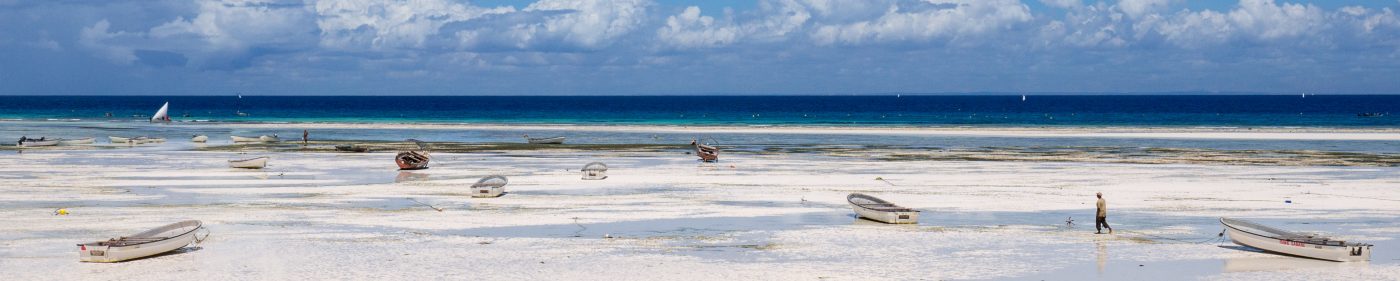
The Cairo to Cape Town route spans the entire length of Africa, taking you through deserts, mountains, savannas, and coastal regions. It’s a diverse and unforgettable journey—one that requires flexibility, time, and attention to safety.
Highlights Along the Way:
- Egypt: Cairo’s ancient pyramids, Nile temples, and chaotic charm.
- Sudan: Nubian culture and the lesser-known ruins of Meroë.
- Ethiopia: Rock-hewn churches in Lalibela and the Simien Mountains.
- Kenya: Masai Mara safaris and Nairobi city life.
- Tanzania: Serengeti, Ngorongoro Crater, and beach time in Zanzibar.
- Zambia: Victoria Falls and wildlife in South Luangwa.
- Botswana: The Okavango Delta and elephant-rich Chobe National Park.
- Namibia: Dunes of the Namib, Fish River Canyon, and Etosha’s wildlife.
- South Africa: Cape Town, Table Mountain, and the scenic Winelands.
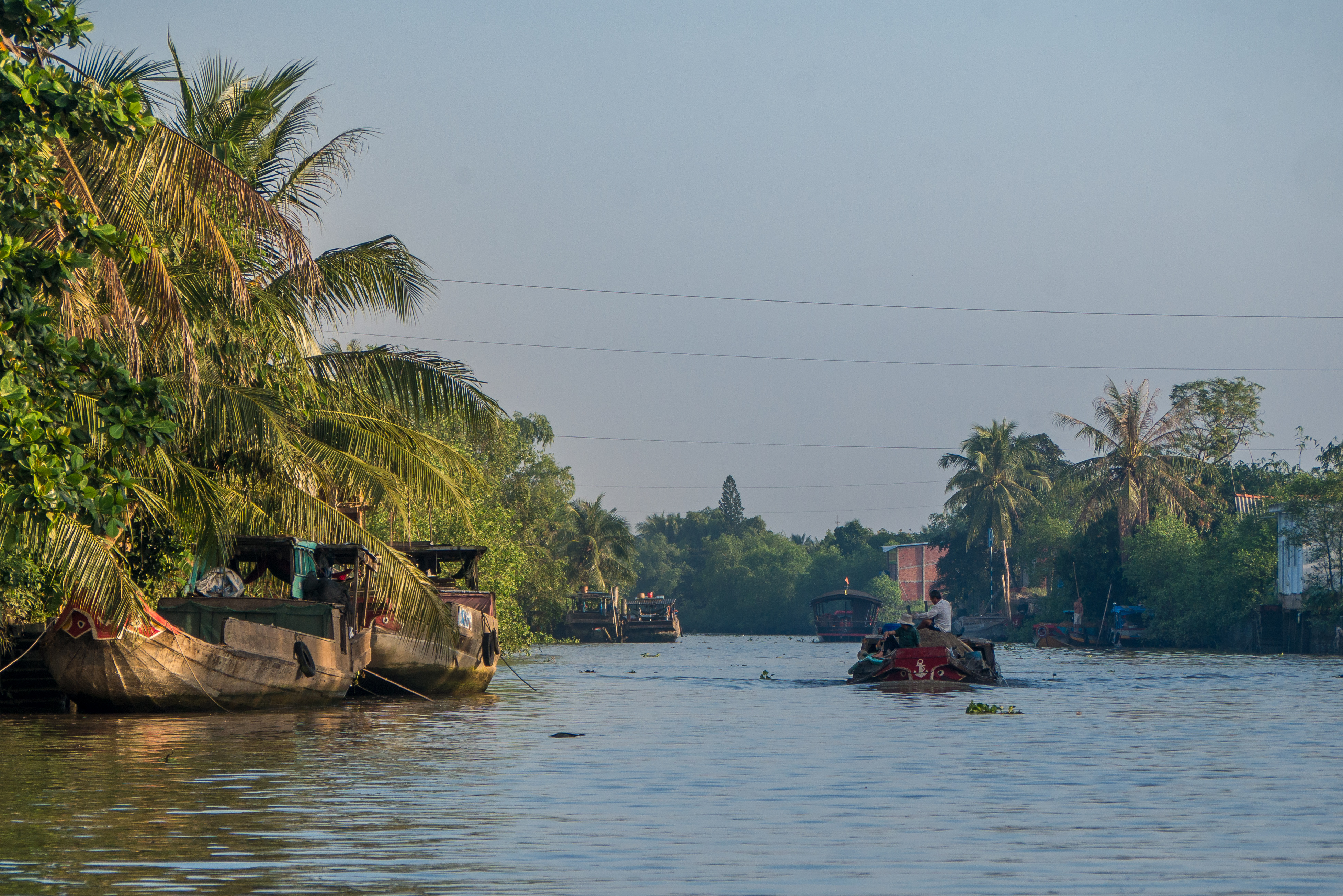
Traveling the world without flying shifts how you experience it. Trains, buses, ferries, and freighters force you to slow down, uncover hidden corners, and connect more deeply with people and places along the way.
Slow travel becomes a mindset—one that lets you savor the journey as much as the destination. Whether you’re riding the Trans-Siberian, following the Silk Road, or weaving along a remote coastline, every mile brings its own reward.
And by choosing overland routes, you’re not just exploring differently—you’re traveling more sustainably, with a lighter footprint and a richer sense of place.
Know Before You Go: Overland Travel Tips
- ⏳ It takes longer: Budget 1.5–2x more time than if you were flying.
- 🚢 Freighters aren’t cheap: Ocean crossings cost more than you think.
- 🧭 You’ll be solo often: Set expectations for a self-guided, flexible journey.
- 🧰 Have a plan B: Visas, weather, and border politics can shift quickly.
- ♻️ Your carbon footprint shrinks: Overland is slower, but greener.
It sounds wonderful, however, after googling other sources I see contradictions with them. For example, the suggested Africa route sounds great theoretically, however, it is about passing very danger countries like Sudan, moreover, it is officially not even recommended foreigners to use the public transport in South Africa. Africa is also full of the infections. How do you practically manage these dangerous aspects? Did you got some vaccinations before? Do you travel with the personal guards in these countries? Moreover, you need to bring a bit more of cash if you travel overland and not always e-tickets are possible, so, you are the perfect target for the criminals.
Super comprehensive list! One more thing to remember: download offline maps to navigate your destination without using data. Have a fantastic trip!
Your journey has been inspiring especially as my wife won’t fly anymore . We are following your footsteps a an would appreciate any help getting from russias, China etc to Australia, New Zealand to chile
Thankyou in advance
Hi Mar, you know, I never did this route, but instead allowed a friend to share his story. He blogs at https://www.goseewrite.com — he doesn’t have very intuitive navigation to find his overland trip, but he started in 2008, so you could navigate through his archives and find his stories and advice on specific parts of his journey that way.
You have me sold now on these two books. One of the two will likely be the
first that I start out with when I leave! I had a really depressing book at
the beginning of my last travels, and it was not great – I am all for the
laugh out loud funny :-) Thanks for the detailed rec Troy!
Shannon- The first two books (Goliath Expedition & Don't Tell Mom…) are such sweet books to read. If you read anything at all while traveling, I would pack those two with you when ya leave out. They are perfect books to read while sitting on a bus, train or plane. You won't get bored with them and their both ALL TRUE!
I picked up the “Don't Tell Mom…” book in Brisbane at the airport when i was flying back to Dubai. The title was what grabbed me and since it was non-fiction I thought I would give it a go. I was laughing so hard in the terminal, waiting on my flight, that people thought something was wrong with me. I had it read by the time we got to Dubai and didn't sleep a wink because so. :)
Well — I just got off my third freighter — this one from Australia to NZ. The last one back home is going to be the biggie — 20 days. If anyone has any direct questions for me on these series of posts — email me at michaelshodson@yahoo.com — not the gmail address on my blogspot. Thanks, Michael
That's definitely tough when your specific train route doesn't have good
stops – but it is probably worth a second look to check if there's a chance
you could train it on shorter distances instead of flights! :-)
I'm so used to taking the plane that when I need a train I panic! I so would like to travel more often by train, but I think in Europe they are not very well organised, or at least, I never find the connection that suits my needs! Maybe I need to sort my priorities first ;-)
That's definitely tough when your specific train route doesn't have good
stops – but it is probably worth a second look to check if there's a chance
you could train it on shorter distances instead of flights! :-)
I'm so used to taking the plane that when I need a train I panic! I so would like to travel more often by train, but I think in Europe they are not very well organised, or at least, I never find the connection that suits my needs! Maybe I need to sort my priorities first ;-)
here is a book by Jeff Greenwald called “The Size of The World” that he wrote about his travel around the world never taking a flight. It a fun read and you can really connect with his frustrations (esp when he was in the Middle East) about issues with land transportation only.
I did a blog post about it on my website and you can check it out below:
.
That is definitely one I will add to my list of books to pick up if I see them :-) I also love those other books in the post! If I was going to stay home for a bit longer I would add several of these to my library queue! Thanks for the rec T-Roy :-) (& sorry if you get this response twice – something crazy was going on w/my comments system :(
Shannon- The first two books (Goliath Expedition & Don't Tell Mom…) are such sweet books to read. If you read anything at all while traveling, I would pack those two with you when ya leave out. They are perfect books to read while sitting on a bus, train or plane. You won't get bored with them and their both ALL TRUE!
I picked up the “Don't Tell Mom…” book in Brisbane at the airport when i was flying back to Dubai. The title was what grabbed me and since it was non-fiction I thought I would give it a go. I was laughing so hard in the terminal, waiting on my flight, that people thought something was wrong with me. I had it read by the time we got to Dubai and didn't sleep a wink because so. :)
You have me sold now on these two books. One of the two will likely be the
first that I start out with when I leave! I had a really depressing book at
the beginning of my last travels, and it was not great – I am all for the
laugh out loud funny :-) Thanks for the detailed rec Troy!
I'm really jealous of your trip on the Transmongolian – it's on my bucket list to do it really slowly and explore along the way :-) You're right though, it adds a bit of excitement to the traveling when you add in a variety of it all, rather than the easiest point from A to Z :-)
That is definitely one I will add to my list of books to pick up if I see them :-) I also love those other books in the post! If I was going to stay home for a bit longer I would add several of these to my library queue! Thanks for the rec T-Roy :-) (& sorry if you get this response twice – something crazy was going on w/my comments system :(
I love taking different modes of transport (our last few holidays have involved bicycles, ferries, cars, and trains, as well as aeroplanes). When we took the transmongolian railway, I was actually surprised at how little time it took to get from western Russia to eastern China on the train…
I'm really jealous of your trip on the Transmongolian – it's on my bucket list to do it really slowly and explore along the way :-) You're right though, it adds a bit of excitement to the traveling when you add in a variety of it all, rather than the easiest point from A to Z :-)
Can't wait to read more about overland travel! I think the best part of traveling this way is the fact that not only do you get stories from your destinations, but from your way of getting TO those destinations.
That's so true. Some of my best stories are the overnight bus rides with
midnight border crossings in the freezing cold! :-) It really does add to
the experience if you're on a more adventurous mode of transport than an
airplane!
Thanks for this Shannon! I've been waiting eagerly. Overland does take a while, but I prefer that over flying everywhere. It just feels right, and the people I've met or events I encountered – you just don't get on an airplane.
Glad that you're enjoying the post – his tips next week give a bit more of
the specifics on how he's managed this trip without the plane flights, and
what sites/people he used to book trips :-)
I love taking different modes of transport (our last few holidays have involved bicycles, ferries, cars, and trains, as well as aeroplanes). When we took the transmongolian railway, I was actually surprised at how little time it took to get from western Russia to eastern China on the train…
Glad that you're enjoying the post. His tips are throughout with the specifics on how he's managed this trip without the plane flights, and what sites/people he used to book trips :-)
Can't wait to read more about overland travel! I think the best part of traveling this way is the fact that not only do you get stories from your destinations, but from your way of getting TO those destinations.
That's so true. Some of my best stories are the overnight bus rides with
midnight border crossings in the freezing cold! :-) It really does add to
the experience if you're on a more adventurous mode of transport than an
airplane!
Thanks for this Shannon! I've been waiting eagerly. Overland does take a while, but I prefer that over flying everywhere. It just feels right, and the people I've met or events I encountered – you just don't get on an airplane.