
Last updated on October 20, 2023 by Shannon
Whenever I return to the States for a couple of months between my long-term travels, most of my well-honed travel habits go AWOL. You see, I never lose anything on the road.
Truly, I have never left anything behind in 15 years of travel—yet in the two months following my first long-term trip around the world, I misplaced sunglasses, wallets, keys, and power cords.
Sometimes I can’t find them for days! It’s an organizational failure on my part, but also, perhaps, a testament to just how effectively I have mastered staying organized while traveling the world.

Since I started traveling the world in 2008, I’ve now learned to balance my packing habits, never leaning too heavily toward minimalism or maximalism. I had to learn how to effectively organize my bag. It was crucial to have the right items on hand without overpacking or leaving essential belongings behind.
The organizational travel tips I share are the ones that have survived the test of time—numerous trips, including with a toddler in tow now. No matter where you’re headed, these organizational ideas will help you make the most of your experience by saving you time and energy when preparing for your trip and navigating each new place.
Why Staying Organized is Important While Traveling

Staying organized while traveling is crucial for a smooth trip. It significantly reduces the stress that often comes with travel, allowing me to relax and enjoy my journey. When my belongings are neatly packed and easily accessible, it saves so much time and effort, making my trips more enjoyable.
One key reason to keep things organized during travel: It makes repacking and moving locations easier. There’s nothing worse than scrambling to pack up your belongings when it’s time to check out of a hotel or catch a flight. By organizing my belongings from the start, it’s a breeze to quickly pack up and move on to the next destination.
In addition, being organized helps me easily locate items when I need them. How many times have we all dug through a suitcase searching for something important, only to leave our clothes and possessions in a messy heap? Staying organized prevents this situation, giving me peace of mind knowing that my essentials are within reach.
Moreover, staying organized while traveling helps prevent losing important items, such as travel documents or valuable possessions. With a designated place for everything, I’m less likely to misplace things or leave them behind in a hotel room. This minimizes the risk of losing something important and reduces the anxiety that comes with trying to remember where everything is.
Tips to Stay Organized While Traveling
Start with a packing list.

Now that I live in Spain as my home base, I’m not living out of a single bag and a single long-term travel packing list. As such, every new trip needs its own custom packing list that accounts for the destination, weather, and if I bought a checked bag for the journey.
Using a packing list every single time helps me avoid overpacking. And I always try to pack fewer clothes by opting for a capsule wardrobe. This strategy allows me to have a versatile wardrobe made of a few staple pieces that mix and match with ease.
When building a capsule wardrobe, focus on selecting clothes that are both comfortable and stylish, and that transition well from day to night. A few key pieces I always include are neutral-colored bottoms, a lightweight jacket, a few shirts in different styles, and comfortable walking shoes that transition to night (which means not sneakers!).
I take only what I need, and my packing list keeps me focused on the right clothes for my destination and travel plans. It ensures I don’t forget essential items like toiletries, chargers, and documents. It also allows me to purposefully plan out other bulky aspects of my packing right now, like how many diapers I need to pack as backup until I can buy some locally. (Or I pack a full supply for trips of three days or less.)
Digital packing lists are easy to access and update on your phone or other devices, and you can reuse and update old packing lists as needed.
Use packing cubes like a pro.

Packing cubes are a game-changer for staying organized while traveling. I have used them since my first trip abroad and am an unpaid evangelist for their unmatched ability to keep things neat and tidy while traveling.
Although packing cubes don’t necessarily save space or weight, they definitely keep you ruthlessly organized during your entire trip. Plus, they come in handy for separating different types of clothing (think: tops, bottoms, socks, and intimates).
To get started with packing cubes, I first map out which types of cubes match my upcoming trip. For winter travel, I’ll need larger cubes to hold the bulkier clothes. During the summer, I can nearly always get away with one large cube for tops and bottoms and one cube for socks and intimates.
Using a packing system is worth the extra time upfront to learn how to Tetris the cubes into your bag. They just keep everything in its designated place, making it much easier to find what you need on the go.
I also bring an empty cube for dirty clothes during my trip, which helps keep clean and dirty items separate and organized.
For organizing smaller items like cables and chargers, cable organizers or a tech pouch come in handy. These allow me to keep all my electronics and their corresponding cords neat and tangle-free. Similarly, packing sacs are great for miscellaneous items like headphones, sunglasses, or small travel accessories.
One important tip is to be methodical when packing and unpacking. By putting each item back into its designated spot within my luggage, it’s easier to stay organized and ensure nothing is left behind.
New to packing cubes? This Eagle Creek Pack-It Reveal Cube Set would work best for most travelers.
Color code your packing cubes for families.
Now that I travel with my toddler son, packing cubes have become even more essential to staying organized. One of the most efficient ways I have discovered is using color-coded packing cubes for each family member. This keeps everyone’s belongings easily identifiable and makes unpacking at the destination a breeze.
Here’s how I utilize packing cubes by color for my family’s vacations:
- Choose different colored cubes for each family member. Assign a unique color to each person, making it simple to locate their items in a shared suitcase. For instance, I use blue cubes for my clothes, while my son gets white cubes. I have a yellow cube for our shared items—I usually pack all socks and underwear together in their own shared cube.
- Organize items within the cubes. Within each color-coded cube, I further categorize clothing and other items. For example, I might dedicate one cube to shirts, another to pants, and a third to accessories. This method helps streamline both packing and unpacking processes.
- Make daily routines easier. With belongings sorted by color, it’s simple for each family member to locate their items and get ready for the day’s adventures. Plus, it prevents family members from accidentally grabbing someone else’s clothes, which can be a real lifesaver when you’re in a hurry.
Fold, don’t roll your clothes.


I’m taking a firm stance here: Folding clothes is better than rolling them for organizational purposes. Although rolling does save space in the suitcase, it always leads to wrinkled clothes. Plus, maintaining those tight rolls throughout the trip is challenging and ultimately leads to a less organized bag.
By folding my clothes, I can easily thumb through every item and outfit in my packing cube, making it simpler to pack and repack.
The only time when rolling clothes is best is on the way home—if you’re loaded down with souvenirs and having a hard time getting everything back into your suitcase, it can help to tightly roll everything into evenly sized sausages. You can fit a ton more into your bag, and even though it’s a nightmare to unpack, you’ll be home and able to manage.
Use a hanging toiletry kit
Since receiving one as a gift more than a decade ago, I have jumped on the wagon for exclusively using a hanging toiletry kit. Not only does it keep things from exploding in your luggage, it also keeps bathroom counters clutter-free.
When I arrive at my destination, I simply unfold it and hang it up. This way, all of my toiletries are at arm’s reach, and I don’t have to worry about making a mess or losing items in a cramped bathroom.
With multiple compartments and pockets, you can place smaller items like razors and tweezers in secure zippered pouches, while larger items like shampoo and body wash bottles fit snugly in mesh compartments.
Keep unpacking to a minimum.

Some people say that you should unpack completely when you arrive at your destination, but I disagree. If you’re not staying in one place for more than four days, it’s best to keep everything in your packing cubes and only unpack specific items that need it, like formalwear that might need de-wrinkling.
Trust me, avoid putting your belongings into unfamiliar drawers, or you might forget to repack them when it’s time to leave. It’s better to keep things in one central location while you travel.
When your final days at a location approach, ensure that every time you use an item, you place it near your backpack or luggage. This method works great, especially for those odd items you might place on a nightstand, under the bed, or in a closet nook. By doing so, you’ll avoid leaving anything behind and maintain a high level of organization throughout your trip.
My key travel habits for my valuables include never taking off my watch, rings, or other personal effects—I wear them 100% of the time, even if that was not my habit at home. For the moments when something must be removed—like taking off my rings for diving and water sports—I have a designated spot in the zip pocket of a wallet, and I only take them off when I can put it in that spot!
Contain the stink of dirty laundry.

No one wants to open up their suitcase halfway through their trip to discover everything inside smells like stinky feet. My go-to solution for organizing dirty clothes is packing cubes, specifically the Eagle Creek Clean/Dirty cubes.
The Clean/Dirty cubes are perfect because they have a divider to separate clean and dirty clothes.
As I wear each piece during my trip, I transfer it to the dirty side. This not only keeps my suitcase neat, but also ensures that my fresh clothes remain unaffected by the soiled ones.
If you don’t have the specialized Clean/Dirty cube, instead just pack an extra cube and use it in the same manner.
For really smelly items, such as underwear and socks, I prefer using gallon-sized ziplock bags on some outdoorsy trips. Since these items tend to be the stinkiest, I seal them tight in the bags after wearing them. This prevents the unpleasant odors from escaping and mingling with the rest of my belongings.
If I’ll be at my destination for more than a week, I count on doing laundry. Then I can still pack light and use my clean/dirty packing cube system. I usually look for local laundromats or use laundry services provided by my accommodations.
Repack as you use things.
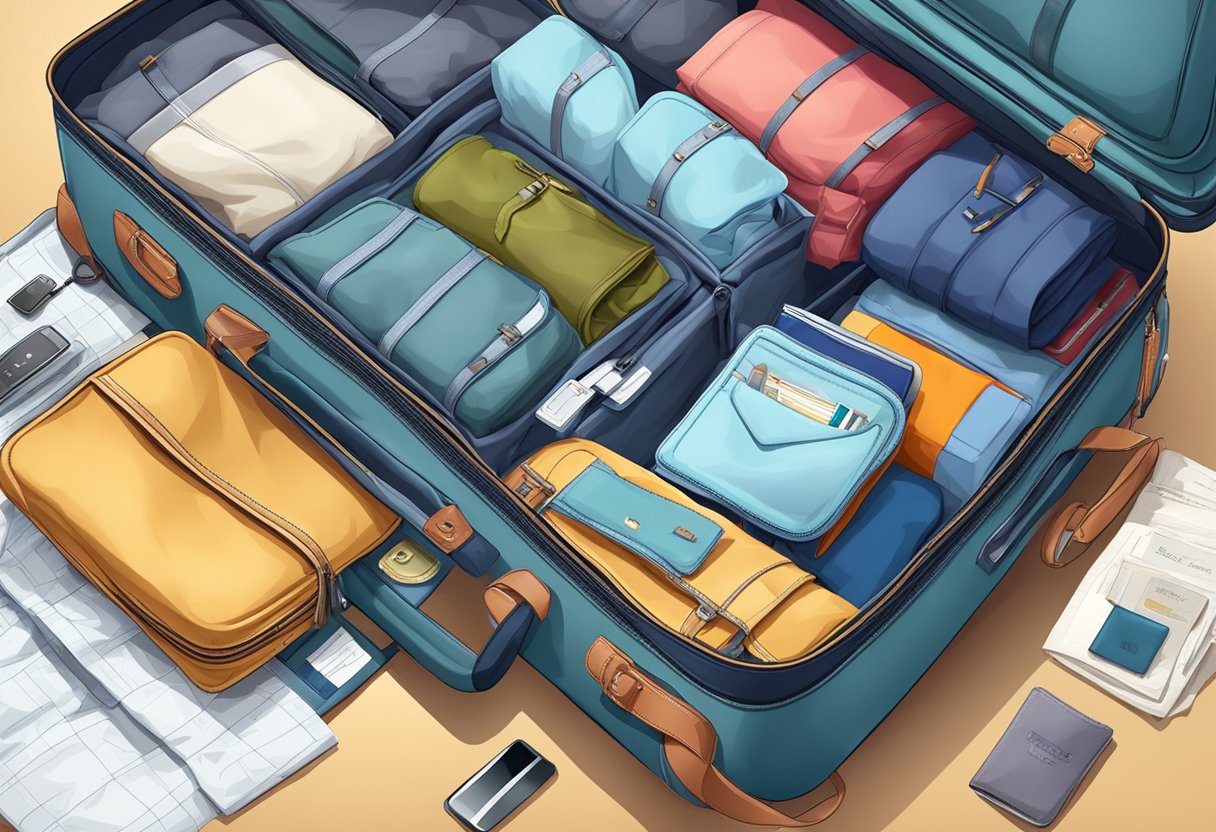
I’ve found it extremely helpful to repack my items, especially clothes, as I use them. It not only keeps my luggage organized but also ensures that I don’t leave anything behind.
Before I invested in the Clean/Dirty cubes, I would carry a packing cube specifically for dirty clothes. Each day after changing, I would neatly fold my dirty clothes and repack them in the cube. This simple routine tidies up my hotel room by avoiding piles of dirty clothes on the floor, and it makes repacking at the end of the trip a total breeze.
Plus, I always leave with all of my clothes—nothing gets lost. Small items like socks, shirts, or underwear could easily be misplaced in random corners of hotel rooms. By repacking daily, I ensure that none of my belongings are left behind.
Be methodical in how you pack.
Frequent travelers usually have a packing style—once you’ve found an ideal way to organize your suitcase, stick with it. Once I started using packing cubes, I stuck with the system that worked for me. Some people pack shirts in one, pants in another, while others pack entire outfits together—socks, undies, everything.
It doesn’t matter what you chose, but once you do, staying organized means sticking to it, and allowing yourself to count on your system. I love systemized packing to ensure that I have everything.
My laptop cord always gets packed in the same spot. Same with my camera, my towel (easy to leave behind), and other important items. This way, I can easily do a “last check” right before leaving and I know everything’s in the bag.
Arrive with certain trip logistics arranged.
My go-to move for any trip is to arrive at my destination with certain trip logistics already arranged. This means that before I set off on my journey, I’ve sorted out the details regarding accommodations, transportation, and other essentials.
My biggest concern is usually the logistics of transportation. If I’m going on a road trip, I make a point to map out my route, including any stops or detours I may want to take along the way.
Additionally, I’ll make sure my vehicle is in tip-top shape before leaving home. This includes checking the tire pressure, oil levels, and ensuring I have a roadside emergency kit. If I’m relying on public transportation or car rentals, I will book my tickets or reserve a vehicle ahead of time. This way, I’m confident that I have everything in place to travel smoothly.
To make my trips even more carefree, I also set up reminders for any important events or attractions I want to visit while I’m at my destination. By scheduling them before I leave, I can make sure I don’t miss out on any must-see spots or activities and have a itinerary to help me make the most of my trip.
Be prepared for things to go wrong.

Always keep the Boy Scouts motto in mind: “Be prepared.” While traveling is generally safe, anticipate bumps in the road. I always scan and photocopy essential documents, such as my passport, credit cards, vaccine records, and other crucial paperwork. I then email all of these documents to myself.
Having backup copies offers access to my vital information if the originals go missing, and you’re required to have your passport or a copy of it on you in many countries in the world.
I also bring my own lock for lockers and wear a money belt to keep valuable documents close at hand. This simple precaution gives me peace of mind, and I can fully enjoy exploring new places without worries.
Lastly, I pack a PacSafe for added security. While it may not be in use all the time, when the need arises, I’m grateful to have a secure place for my electronics and other valuables.
Strategically pack your carry-on and personal item.

I cannot stress enough how crucial the initial organization of your carry-on and personal can be. Over years of flying, I’ve found a ritualistic beauty in positioning my essential items for ease of access.

Place items you’ll need during the flight—headphones, reading material, snacks—in an easily accessible spot in your personal item, which will be stored under the seat in front of you. If it’s a purse, use a packing sac to ensure nothing’s rolling around lose.
If you have toiletries, especially liquid ones, keep that separate pouch at the top of your carry-on bag to swiftly navigate airport security. Think of your carry-on as a miniature mobile home.
You should always have a full set of clothes in your carry-on bag for each member of the family. This is important if your bags get lost, or if you’re traveling with kids, sometimes you all need fresh clothes if they get sick.
Counter to my previous advice, if I’m also checking a bag, I roll the clothes in my carry-on that are only meant as a travel-day backup—I want them to take up as little space as possible.
Use car organizers for roadtrips.
Road trips offer their own set of challenges and joys. Once you leave the asphalt for a dirt road leading to a hidden gem, you’ll be thankful you invested in car organizers.
These usually attach to the seat back, and separate compartments for food, first aid, and miscellaneous items save you the hassle of rummaging through bags when you need something. With a dedicated spot for everything, you’re less likely to overlook items when you make stops.
And always keep a trash bag hanging from the headrest that is reachable by everyone in the car.
Properly secure your travel documents.
A lot of people don’t know how to carry their passport when traveling, but it’s essential that you have a safe spot for it where it won’t get wet, wrinkled, or damaged. Passport wallets serve two key purposes: they fit your passport, IDs, tickets, and reservation confirmation; and they keep your passport from getting damaged.
Then, having a dedicated and easily accessible pouch for your travel documents is a game-changer. My family-sized passport holder lives in a designated, easily reachable section of my bag—and now that I travel with a toddler, I store it in my waist pack.
Use the right travel apps.
We live in a golden age of travel apps, and choosing the right ones can elevate your journey. Personally, I swear by apps like Maps.me for offline navigation and TripIt for itinerary management. They’re reliable companions that work well even in remote areas or during data outages.
But don’t just download apps willy-nilly; make sure they serve your specific needs. Your phone is your portable concierge, laden with tools curated by you, for you.
Manage the mess of electronics.
Between the phone chargers, camera batteries, and travel adapters, managing electronics feels like wrangling snakes. My lifesaver has been a dedicated electronics organizer. It’s a compact case with various compartments, each purpose-built for specific types of gadgets and cables.
I’ve also used a small packing sac for the purpose with great success. Either way, with everything neatly tucked away, you avoid the untangling game and make it easier to notice if something essential is missing.
Skip the plastic bags.
Traveling sustainably should be everyone’s concern, but there’s more reason that the planet to use packing cubes: everyone’s ability to get a good night’s sleep. Plastic bags are a nuisance in a hotel room if you hope to find anything while others are sleeping. The rustling of plastic is impossible to sleep through.
And if you’re gone for more than a couple of days, they just aren’t durable. If you bring a plastic bag to contain wet clothes, you’ll be sorely disappointed when it rips or leaks from small holes in the seams. Ziplocks or travel wetbags are a much better option.
Carry one empty packing sac for odds and ends

As you’re running out the door to catch a flight, you’ll undoubtedly have a few last minute things that need to get packed in the bag that you didn’t notice—maybe it’s your toothbrush or a pen, chapstick or extra hair ties. Or maybe you remembered you need a travel adapter or extra USB charger just before you walk out the door.
Reserve one packing sac for that extra bit of storage you need for odds and ends that don’t have another place.
Ruthlessly eliminate anything you packed “just in case.”

The last thing you want to do is start a trip packed to the seams, with your bag so full it has to be packed one certain way. Instead, take out a few of those “just in case” items. You can buy anything extra that you need on the road.
If your destination calls for sunshine the entire time, take out the rain coats. You can buy cheap ponchos if a summer rain shower moves through. Pick up another travel-sized shampoo on the road if you run out, rather than packing a full sized ones.
Look for ways to keep your case roomy. It’s much easier to organize your suitcase if there’s enough space inside to thoughtfully choose where things are located, rather than resorting to shoving things into every available nook and cranny.
Attach a carabiner to your backpack.

You should feel pretty ready to tackle you trip at this point. The last thing I always do is add a carabiner to my backpack or purse. A carabiner may seem like a simple piece of equipment, but its utility is boundless.
On the organizational front, it’s perfect for hanging additional items like water bottles, shopping bags, or hiking boots that you might not want inside your bag. That’s reason enough to bring it.
But to up your Travel MacGyver factor, a carabiner is the single best way to ensure your day bag or purse doesn’t get snatched while you’re eating or not paying close attention. I live in Barcelona, perhaps the pickpocket capital of Europe, and I use a carabiner religiously to attach my backpack and purse straps to the table or chair whenever I sit down to eat.
Just pack one. You’ll be thankful.
As I’ve noted, staying organized while traveling is essentially about creating a system that makes sense to your brain and then sticking with it. The worst thing you could do is tackle packing and organization willy-nilly—that’s a guaranteed way to loose things on a travel day when you’re repacking or navigating airports and train stations.
Creating your own travel system that incorporates the organizational tools you most prefer is the best way to ensure that you’re never really focused on travel organization on your trip, everything you need is just there in the background, helping you have an incredible trip.
Essential Travel Planning Resources
❗Yes, you need travel insurance.
IMG Global is the travel insurance I’ve used for well over a decade of traveling solo, and with kids. Here’s why.
🧳 Smart packing can save your trip.
Shop my favorite travel gear, including all of the packing essentials for world travel, gear to keep you safe on the road, my favorite travel books, and more.
🛏️ Find great accommodation.
Booking.com is essentially the only hotel booking site that I use. It has a wide and affordable selection of traditional hotels, but also hostels and vacation rentals, too. Use these pro tips to find the best travel accommodation.
📍Navigate more effectively.
Rome2Rio is super handy to assess the full range of transport options between two cities—shows everything from flights to trains, buses, minibuses, and more. If you’re booking a rental car, I’ve always found the best deals on RentalCars.com.
✈️ Book affordable flights.
Expedia is one of the first places I look for low-cost flights.
☕ Peruse all of my tips for round the world travel, or learn how to move and live abroad.
Love how clear and practical your organization tips are—perfect for keeping trips smooth and stress‑free!
Eagle Creek cubes are an absolute lifesaver for backpackers! As someone who has always travelled with them I find it so tough to understand people who don't! I love to be prepared and travelling is the ideal place for it. I especially love the feeling of knowing exactly where all my belongings are so that I can reach in to my bag and pick them out instantly.
I wrote a blog a while back about the sort of smugness you can have when you're really prepared here … The less than Sexy Travel Esseentials
Once you have tried them – and people who see me with the cubes, they never
go back to just cramming stuff into a bag! There's just no alternative in my
mind. How would you find things?! Will take a look at your post – great
title for it :-)
I'd have a hard time trusting my electronics to the pac safe! I feel better with them in my day pack. I definitely agree it's great to have set pockets for specific items – saves getting halfway down the block and thinking, did I remember my charger?
Great tips!
Thanks for weighing in Matt! Regarding the PacSafe, you'd be surprised by
the situations it comes in handy – like you, I would rather take my daypack
along to explore for the day…but on a rafting or diving trip…or when I
had no choice but to leave it in storage at an Indian train station…I just
felt a little bit better that if they wanted my stuff they couldn't snatch
and run, they were actually going to have to work for it!
I'm so with you, I don't know how many times I've lost my keys and ID at home.
BTW I have never seen the PacSafe mesh before, I wish I had known about it before I left.
The PacSafe has come in pretty handy sometimes when it is just impossible to
take my laptop along in a daypack…perhaps for your next RTW! ;-)
Eagle Creek Packing Cubes are the best thing ever. Like you, I still use them while home for these 8 or so weeks, surfing on friends's couches. Keeps all my stuff together and ensures my backpack doesn't explode all over their living room (or wherever I am crashing!)
Johanna
Agreed Johanna – they are a godsend for staying organized…I'm sure you
know just how many times you look at your pack and shudder at what it would
look like without them ;-)
Great post, I completely agree. I learned a whole new way of packing and staying organized thanks to our long term travels. I'm actually much neater at home now — I find a lot of relief in having a specific “home” for sunglasses and laptop cords. I can't believe that we lost almost nothing during our year of travel, and I probably lost 3 sweaters, countless sunglasses, wallet, cords just the year before in LA.
Like you, I tend to get lazier when we are in the States and visiting people. Stuff starts to spread out into different rooms and you just begin to forget things.
Can I tell you how much I love packing cubes? Everything is in its own colored cube so it makes it both easy to find and also to pack in a second. We backpacked in 2000 without cubes and I remember the disaster of my backpack. Now, everything is…almost… neat.
I love the “almost” – how true is that! The packing cubes are amazing but
it's just incredibly hard to make cramming everything into a backpack
look attractively tidy :-)
I am that girl who rummages through the bottom of her backpack only to find the lock i was looking for in the front pocket of my bag. It blows my mind how I managed to not lose things over several years of traveling. Or I might have already, I just didnt know. :D Thanks for the tips.
Well at least you don't notice! I have to admit…sometimes I put my lock in
the wrong place (mine belongs in the front pocket) and have had that endless
search as you pull out *everything* – once I found it days later in a pants
pocket…how ridiculous! :-)
Oh yes, how I agree with No 2! My packing cells and 'a place for everything and everything in its place' motto has seen me called several things by other backpackers in hostels ('very organised' being the most polite!!) but seriously, I can't recommend keeping all your stuff together enough. It makes life in shared dorms so much easier, and it means you can pack and unpack in only a few minutes. And you never, ever lose anything at the bottom of your bag!!
I'm with ya, it really does feel good to not be that person crammed into the
hostel room corner flinging their clothes around in search of their
toothbrush! :-)
Your first paragraph rings true with me….I am constantly on guard and have all of documents and important stuff at fingertip reach when traveling abroad. I have never lost/forgotten or worse, been robbed on any of my adventures. When I travel closer to home though, you can forget it. In fact, earlier this year, I went on a weekend trip a mere two hours from home and returned without ANY of my luggage! That's right….I just walked out the door when the weekend was over and left it all in the room!.
Earl left his whole bag at a guesthouse in India once – crazy! Like you
though, I am fortunate to have not lost anything or been robbed so seems
like our system is working!
I know the feeling! Although I don't mind misplacing a few things here and there if it means that I'm a laid-back person as opposed to being someone who is neurotic about making sure everything is in place all of the time.
But I will admit that the only way for me to remain somewhat organized while traveling is to simply travel with as few possessions as possible. If I only have thirty things in my backpack, I can count them every time I pack. So far it's worked out quite well, except for the one instance when I left my entire backpack at a guesthouse in India and wandered off to catch a train. Luckily, I realized my odd error before I jumped on board!
I can't believe you left your whole backpack! Earl I think you must not have
anything that if you lost it would be a freak-out session…When I first
left I was constantly having mini-heart attacks when I couldn't find my
glasses or contact case…that's what birthed the meticulous packing – I'm
still not sure what I would do if I ever lost both of them…I'm nearly
blind!
Great advice!!! If i was ever going to backpack, i think i would take you with me!
Aww, thanks Jo! And you had better take me, the whole lot of us would have a
blast on that round-the-world boat you have planned ;-)