
Last updated on October 9, 2026 by Shannon
As a native Floridian, I offer up a different perspective on the pros and cons of living in this sunny southern state. I lived in Florida for much of my life, but I’ve also lived elsewhere—in other places in the U.S. like Los Angeles, and I’ve lived abroad in places with a much lower cost of living, like Mexico and Thailand.
I currently split my time—I live on the Gulf Coast of Florida for part of the year, and I live in Spain and raise my son there for most of the year.

Pros and Cons of Living in Florida
Clearly, since I continue to return to the place I was born and raised year after year, there are benefits to living in Florida. But there are a number of disadvantages that ultimately convinced me that living overseas for part of the year was a better fit for the life I wanted to create.
Here’s the rundown of all of the factors that keep me a resident of Florida—of Clearwater, to be exact—but convinced me to live in Spain, too.
| Pros of Living in Florida | Cons of Living in Florida |
|---|---|
| It’s known as the Sunshine State for good reason. | The humidity is enough to wilt even the hardiest resident. |
| You’re never more than an hour or two from the beach. | The extreme weather is only getting worse. |
| The cost of living is mid-range for the U.S. | The cost of living in Florida has leapt higher in recent years. |
| No state income tax makes it a haven for residents and business owners. | A state sales tax makes every purchase cost more. |
| There’s a surprisingly huge amount of cultural diversity. | Roaches and mosquitos are a fact of life. |
| There’s no shortage of manatees, reefs, and wild beauty. | The cities are stuffed full of people. |
| Florida boasts world-class hospitals. | Healthcare outcomes in the state correlate to race. |
| Higher ed is strong, and Bright Futures pays for it. | Primary and secondary schools are mediocre compared to other states. |
| There’s always something to do outdoors. | Alligators are a fact of life. |
| Florida excels at the theme park game. | The minimum wage still lags behind the cost of living. |
| Our citrus and produce game is on point. | You will need a car—public transit barely exists. |
| You can travel the world while still near home. | High crime rates permeate most Florida cities. |
| You’ll save money on clothes and shoes. | Florida was ground zero for the opioid epidemic. |
| Cultural landmarks are spread throughout the state. | Tourists swarm the state year round. |
| The polarization of politics in the state is unsustainable. |
Pro: It’s known as the Sunshine State for good reason.
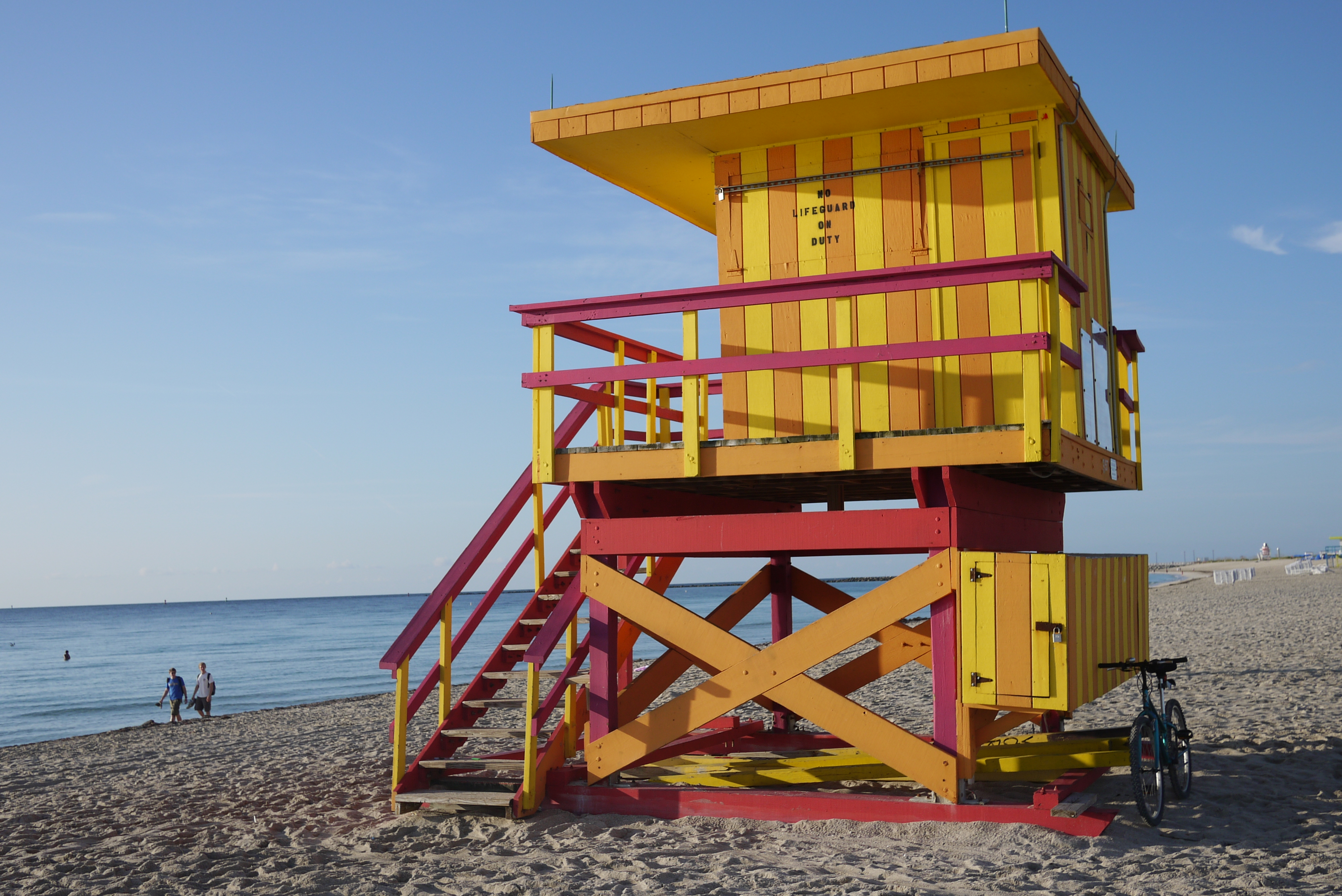
As that rare breed of native Floridian, one of the things I missed most when I left to travel was the abundance of sunshine. With an average of 237 days of sunshine a year, and daytime temperatures rarely dropping below 60°F even in January, you can wear shorts most of the year.
It’s also good for your mental health—I need all the help I can get some years. Sunlight exposure boosts serotonin production, so living somewhere this sunny means you’re less likely to deal with seasonal depression from lack of light.
Con: The humidity in August is enough to wilt even the hardiest resident.

The humidity in August is no joke. It’s not uncommon for it to hit 90% or higher, which makes the air feel like you’re walking through a sauna and makes an already-92°F day in Orlando feel well over 100°F. My toddler has permanent heat rash from July through mid-September when we’re in Florida since he adores playing outside.
It’s especially dangerous for the state’s many elderly residents and anyone with respiratory issues, and the heat waves keep getting stronger. Most people rely on AC to get through the dog days of summer, which is expensive and puts real strain on the power grid.
Pro: You’re never more than an hour or two from the beach.

Wherever you land in Florida, you can reach the coast in under two hours, and the state is skinny enough that living near one coast doesn’t rule out the other—it’s three to four hours, tops, from the Gulf to the Atlantic.
The two coasts feel different, too. The Gulf of Mexico runs calmer and warmer, better for swimming and sunbathing. The Atlantic has stronger waves—too strong for my taste—and cooler water, which surfers prefer.
Con: The extreme weather is only getting worse.

You can’t call yourself a true resident of Florida until you’ve faced down a hurricane. I lived through Hurricane Andrew in the 90s, which decimated Homestead, and then the four hurricanes of 2004—Charley, Frances, Ivan, and Jeanne—that knocked out power, caused massive flooding, and took out the old-growth oaks on the University of Central Florida campus while I was a student there.
Florida is already the most hurricane-prone state in the country by a factor of nearly double, and rising sea levels and warmer ocean temperatures are making storms more frequent and more powerful. Tornadoes happen here too, if hurricanes somehow weren’t enough.
Pro: The cost of living is mid-range for the U.S.

Florida sits around the national average for cost of living—more affordable than California or New York, though not as cheap as it once was. No state income tax helps offset the gap, and housing stays reasonable if you’re willing to live inland from the coast rather than in a trendier beach town.
Where you land in the state matters more than the state average: Miami and the other coastal cities run high because of demand, while a small inland town like DeLand can still be a great deal.
| State | Average Cost of Living | Median Home Price | State Income Tax |
|---|---|---|---|
| Florida | 99.5 | $315,000 | No |
| New York | 135.6 | $342,000 | Yes |
| California | 149.9 | $654,000 | Yes |
| Texas | 91.2 | $279,000 | No |
| Arizona | 97.7 | $332,000 | Yes |
| North Carolina | 92.0 | $278,000 | Yes |
| Nevada | 108.2 | $364,000 | No |
| South Carolina | 95.5 | $255,000 | Yes |
| Tennessee | 88.7 | $275,000 | No |
These figures shift year to year as home prices and inflation move, so treat them as a rough ranking rather than exact numbers—but Florida consistently lands mid-pack among the states people actually compare it to.
Con: The cost of living in Florida has leapt higher in recent years.

What’s actually changed is how fast it’s climbed. Post-pandemic prices in the state have shocked me every year I return from Spain—my dad has felt it acutely living on his social security check. The pandemic also brought a wave of new residents, which pushed housing prices up and made affordable housing harder to find.
Property taxes are notoriously high in desirable areas like Miami and Naples, and home insurance rates have climbed into some of the highest in the country, since insurers are wary of the state’s hurricane exposure. Flood insurance is getting harder to secure too, as more carriers pull out of Florida entirely—a real problem if you’re eyeing anything coastal.

Pro: No state income tax makes it a haven for residents and business owners.
I run my business out of Florida, and the lack of state income tax is a real advantage—LLCs, sole proprietorships, and S corporations are exempt, which makes it easier to bootstrap a small business. It’s also a draw for retirees, who can stretch retirement income further without a state cut on top of federal taxes.

Con: A state sales tax makes every purchase cost more.
Florida makes up for the missing income tax with a 6% state sales tax—above the national average—and it applies to nearly everything, groceries included. Some counties tack on more: it’s 7% in Miami and in my hometown of St. Petersburg.
It adds up fastest on big purchases. A new car, boat, or set of appliances carries that same 6–7% on top of the sticker price, which can mean thousands of dollars more than you’d budget for in a lower-tax state.
Pro: There’s a surprisingly huge amount of cultural diversity—and the food to match.

Miami is the best-known example, with its large Hispanic community and strong Caribbean and Latin American influence—Cuban coffee shops and Haitian art galleries sit blocks apart. But the diversity isn’t limited to Miami: Tarpon Springs, a small Gulf Coast town, has had a thriving Greek community since the early 1900s, built around sponge diving, and it’s where you want to go for real baklava.
Florida is also a collision of Southern and Northern culture—you get sweet tea and fried chicken in the same state as Broadway touring shows and craft beer bars, sometimes in the same neighborhood. Head toward the panhandle and you’re in fried-chicken-and-collard-greens territory bordering Georgia and Alabama; find the right roadside stand and you can still score slow-boiled salted peanuts statewide.
Pro: There’s no shortage of manatees, reefs, and wild beauty.

Florida is the only place in the world where you can swim with manatees in their natural habitat, and they live throughout the state’s freshwater rivers, not just the famous Crystal River spot—my dad regularly convinces me to boat in his little “gheenoe” to a place near our home where they congregate.

The Keys hold some of the best reefs in the country—John Pennekamp Coral Reef State Park and Looe Key among them—but there’s good snorkeling all along both coasts, and over 175 state parks if reefs aren’t your thing.
Con: Roaches and mosquitos are a fact of life.
South and Southwest Florida have some of the densest cockroach populations in the country, and yes, they fly here—look that up at your own risk before bed. The house I grew up in didn’t have central heat and air, which meant it was more open to the elements, and I still remember late-night bathroom trips interrupted by a roach on the toilet seat. Even well-kept homes get them in the garage from time to time.
Mosquitos are the other constant—you can’t step outside in the evening without repellent, and with a toddler who wants to be outside constantly, that means repellent on both of us, even through jeans.
Pro: There’s always something to do outdoors.

Spring training brings Major League Baseball to the state every year, three NFL teams (Go, Bucs!) and the Gator/Seminole/Hurricane college rivalries keep football season loud, and Daytona hosts NASCAR’s biggest race. The flat terrain is also made for biking fast, and there’s lake and river diving if the ocean isn’t enough.
I’m personally more likely to ride a Universal coaster than surf the Atlantic, but you can go from skydiving over Cape Canaveral to a quiet kayak with manatees without ever leaving the state.
Con: The cities are stuffed full of people.
Even smaller cities like Tampa and Orlando feel crowded during peak tourist season, and the traffic that comes with it is real—commutes get long, highways gridlock, and finding parking near a popular beach or park adds a layer of stress most people don’t expect.

Pro: Florida boasts world-class hospitals.
This isn’t theoretical for my family. Johns Hopkins All Children’s Hospital in St. Pete saved my niece’s life when she had a rare intussusception at six months old—we live 20 minutes away, and without immediate surgery, she wouldn’t have survived. Florida is also home to the Mayo Clinic in Jacksonville and the Cleveland Clinic in Weston, and because the state has such a large retiree population, there’s no shortage of doctors who specialize in geriatric care.

Con: Healthcare outcomes in the state correlate to race.
According to a report by the Commonwealth Fund, Florida ranks 45th out of 50 states on racial and ethnic equity in healthcare. Maternal health is where it shows up starkest: Florida’s maternal mortality rate runs above the national average, and Black women are three times more likely to die from pregnancy-related complications than white women—a gap tied to systemic disparities in the quality of care Black patients receive during pregnancy and childbirth.
I’m a white woman, so I can’t speak to this firsthand beyond what I paid for insurance. But given the state’s large immigrant and Black populations, it troubles me that this gap persists, and I’d weigh it seriously if I were a person of color considering a move here.

Pro: Higher ed is strong, and Bright Futures pays for it.

Call me biased since I’m a UCF grad, but Florida’s university system is strong—12 public universities including UF, FSU, and UCF, plus respected private schools like the University of Miami, Rollins, and Stetson. What makes it stand out, though, is Bright Futures: a merit-based scholarship open to any Florida high school grad who hits the academic bar. As a Florida Academic Scholars recipient, I got 100% of tuition and fees covered at UCF; the lower tier still covers 75%. My best friend Niki and I both rode it through graduation, debt-free, at a school we could actually afford.
Con: Primary and secondary schools are mediocre compared to other states.
When I was in high school, Florida ranked among the worst in the country for K-12. It’s made real progress since—14th nationally as of U.S. News’s 2023 rankings—but that number tells only part of the story.
The state’s embrace of charter schools and voucher programs is controversial: supporters see more choice for parents, but I side with the critics who see it diverting resources from traditional public schools—a problem that falls hardest on families without the means to drive across town to a better option. A wave of book banning in some districts has also sparked real debate about academic freedom, and it’s part of why I plan to keep my own son in school in Spain for now.
Con: Alligators are a fact of life.

Alligators live in every lake in the state, and if you move here, you’ll eventually have your own close call—they’re most active in warm weather and in the evenings, and they’re aggressive when they feel threatened or are protecting young. Attacks are rare but they happen, and sometimes with tragic outcomes—Florida sees more alligator attacks than any other state. Treat any lake, swampy park, or canal with real respect.
Con: The minimum wage still lags behind the cost of living.
Florida’s minimum wage finally reached $15 an hour as of September 30, 2026, the last step in a years-long phase-in. That’s real progress, but it still trails what it actually costs to live here: the MIT living wage calculator puts a single adult in my part of Florida (Pinellas County) at $18+ an hour, and a family with two working parents and two kids well above that. Some cities set their own floor higher—Miami Beach is at $15—but research your specific area before assuming the state number applies.
Worth knowing if you’re job-hunting here: the “lowest unemployment in the country” days are over. Florida’s jobless rate climbed for seven straight months and passed the national rate in early 2026—the first time that’s happened in years.
Con: You will need a car—public transit barely exists.

The roads and highways themselves are good—wide, well-maintained, and road trips across the state are easy. But public transportation is close to nonexistent. Buses exist, but not frequently or comprehensively enough to rely on, even in Miami or Orlando. I’ve lived in Mexico, Thailand, and now Spain, where getting around without a car is normal and affordable; Florida is a different story entirely. You will need a car.
One bright spot: the Tampa-to-Orlando train is clean, comfortable, and fast. Getting to and from the stations, though, still requires someone with a car on either end.
Pro: Florida excels at the theme park game.

Residents get steeply discounted tickets and annual passes to Disney, Universal, SeaWorld, and Busch Gardens—I had a Universal pass during college and used it weekly. The smaller, local parks are worth knowing about too: Weeki Wachee, Adventure Island, and Dinosaur World in Plant City, which thrilled my nephew to no end.

Con: High crime rates permeate most Florida cities.
Property crime—larceny, theft, burglary, car theft—is common across most of the state, per USAFacts, consistent with the broader pattern in Southern and Western states. Violent crime is an issue too, and Florida’s Stand Your Ground law, which allows deadly force in self-defense without a duty to retreat, has led to dangerous confrontations when more than one party is armed.
Pro: Our citrus and produce game is on point.

Florida oranges ruined California oranges for me permanently—sweeter, juicier, no comparison. The warm climate and fertile soil make growing your own easy too: my dad’s normal-sized lot somehow holds a mango tree, four papaya trees, a vegetable garden, a tomato hedge, and his ongoing experiments with coffee and macadamia. The Strawberry Festival in Plant City is worth the trip if you want a sense of how seriously the state takes its produce.
Con: Florida was ground zero for the opioid epidemic.
Florida was one of the hardest-hit states, with prescription painkillers overprescribed and pushed through pill mills that drug companies ran out of the state and a few others. My brother died from an opioid overdose during the early years of the epidemic—a devastating loss, and one I’ll never fully understand the path to, though Florida’s lax regulation of prescription painkillers at the time played a role.
The state has made real strides since, but fentanyl is now spreading faster here than in many other places—I lost another brother to it last year. I think about what might have been different with more proactive drug rehabilitation programs, and now that I have a toddler of my own, I think about the toll this culture takes on teens and young adults constantly. I wouldn’t wish this particular grief on any family.
Pro: You can travel the world while still near home.

The EPCOT International Food & Wine Festival each fall brings together more than 30 global food and beverage marketplaces at Walt Disney World—my friends and I make a tradition of it every year. And when you actually want to leave, Miami and Tampa both have solid international connections to the Caribbean, Europe, and Southeast Asia.
Con: Tourists swarm the state year round.
Disney World alone draws over 50 million visitors a year, and Orlando and Miami pull in millions more—tourism props up the economy, but it also means crowds, long lines, and traffic almost anywhere you go, plus real wear on the coastline and wildlife habitats that depend on it.
Pro: You’ll save money on clothes and shoes.

Small, but real: no winter means no $200 boots or parkas. Sandals and lightweight clothes get you through most of the year, and outlet malls are never far if you need to replace anything.

Con: The polarization of politics in the state is unsustainable.
Florida leans further right than it used to, and the fights over guns, abortion, and education have gotten ugly in recent years—it’s no longer enough to disagree with someone, you have to question their motives too. I’ve felt this shift sharply every time I come home over the past five years, and it’s made things tense in friend groups that used to steer clear of politics without even trying.
Pro: Cultural landmarks are spread throughout the state.

I’ve watched shuttle launches from Kennedy Space Center more times than I can count, taken countless visitors through the Salvador Dali Museum in St. Petersburg, and the Ernest Hemingway Home in Key West and the Edison and Ford Winter Estates in Fort Myers are both worth the detour if you want Florida’s history beyond the beach.
Con: Why I moved to Spain to raise my son.

Despite being a native Floridian, it added up to more than I wanted to carry as a single mom. Healthcare expenses alone can eat up a mortgage payment in Florida; in Spain, I pay $300 a month for $0-deductible insurance for both of us. There’s also no getting around the gun violence—it’s hard to reconcile with the life I want for my son.
And practically, Spain’s lower cost of living plus free daycare, free healthcare for tax-paying residents, and good public transportation have let me work less and be around more. That combination made the decision for me.
Pro: Why I still live in Florida part time
Even with all of that, I still spend three months or more in Florida every year. Family is the main reason, but access to nature—the Everglades, the Dry Tortugas, the rivers I grew up on—is real too. Spain is pretty in its own way, but Florida is home, and it fulfills me to keep returning to the places I’ve loved for a lifetime.
Frequently Asked Questions

What are the financial benefits of living in Florida?
No state income tax is the headline benefit—you keep more of your paycheck. Cost of living stays reasonable in many areas too, especially inland, though it’s climbed noticeably since the pandemic.
What are the health benefits of living in Florida?
Warm weather year-round makes an outdoor-active lifestyle easy, and the state’s hospital systems are strong. For retirees specifically, the sheer number of 55-and-up communities means it’s easier to build a new social network after moving—which matters as much for health as anything medical.
What are the biggest risks of living in Florida?
Hurricanes and the flooding that follows them are the big one, especially coastal. High humidity carries its own health risks, and insect-borne illness is becoming more relevant now that locally-acquired malaria cases have started showing up in Florida.

What are the pros and cons of moving to Florida from New York?
Lower taxes and lower housing costs are the obvious draw, plus the weather. The flip side is hurricane and flood risk, and culture shock—Florida leans more right than most of New York, and the pace of life is its own adjustment beyond politics.
Is Florida a good place to live for young adults?
I spent my 20s here and loved it, and my nieces and nephews are living that now. Outside Miami, plenty of cities still have a nightlife scene and a growing craft beer culture, and affordable, strong public universities mean young Floridians are better educated than the state’s reputation suggests.
Also considering moving to Mexico? Here’s the cost of living in a Mexican beach town.